Quick Answer
Choose a DHT test if you want to know whether elevated dihydrotestosterone may be driving your hair thinning before committing to a supplement. Choose Hair Growth for Men softgels if your goal is to support hair fullness directly and you accept that results are typically reported within 3–4 months. They are not mutually exclusive: testing can inform whether a DHT-related approach makes sense, while the softgels support hair health regardless of the cause.

want
What a DHT Test Actually Tells You
The DHT Test measures dihydrotestosterone, a hormone associated with male pattern hair loss, acne, and prostate enlargement. It does not diagnose hair loss or predict how you will respond to any supplement. Its value is context: if your level is elevated, you and your clinician have a concrete reason to discuss DHT-focused options. If it is normal, you can rule out one contributor and look elsewhere. The test requires a blood draw and is best interpreted with a clinician who knows your history.
What Hair Growth for Men Softgels Do
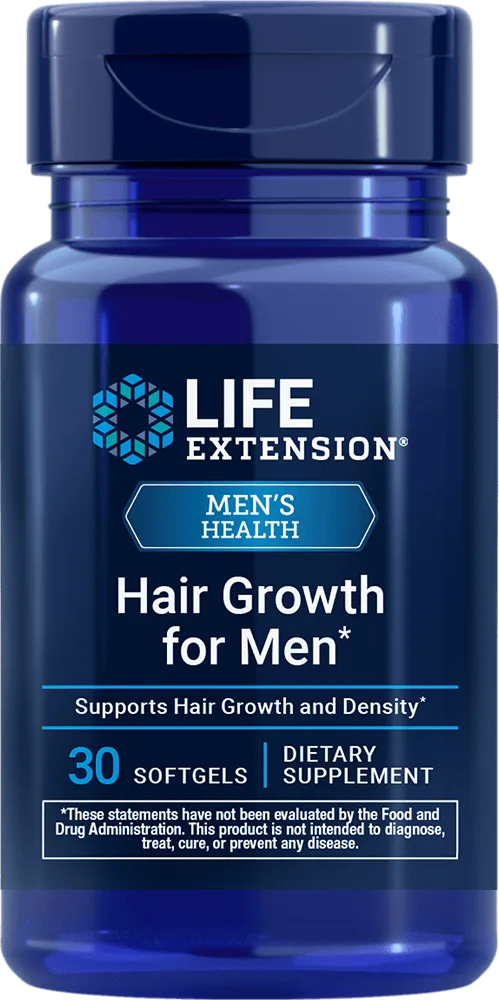
Hair Growth for Men contains two scientifically studied extracts that encourage hair health and fullness. The catalog reports results within an average of 3–4 months of use. That timeline matters: this is a daily-use product, not a quick fix, and you need to be consistent for at least a few months before judging whether it is working for you. It does not lower DHT, so it is not a substitute for testing or for addressing a hormonal driver if one exists.
The Trade-Off: Information vs. Direct Support
A DHT test gives you information but no hair benefit by itself. Hair Growth for Men softgels give you direct support but no information about why your hair is thinning. If you want to make a targeted decision, testing first can save you months of guessing. If you mainly want to support fullness and are comfortable with a 3–4 month window, the softgels are the more direct path. Some men do both: test to understand the landscape, then use the softgels as daily support while monitoring changes.
For Women Reading This Comparison
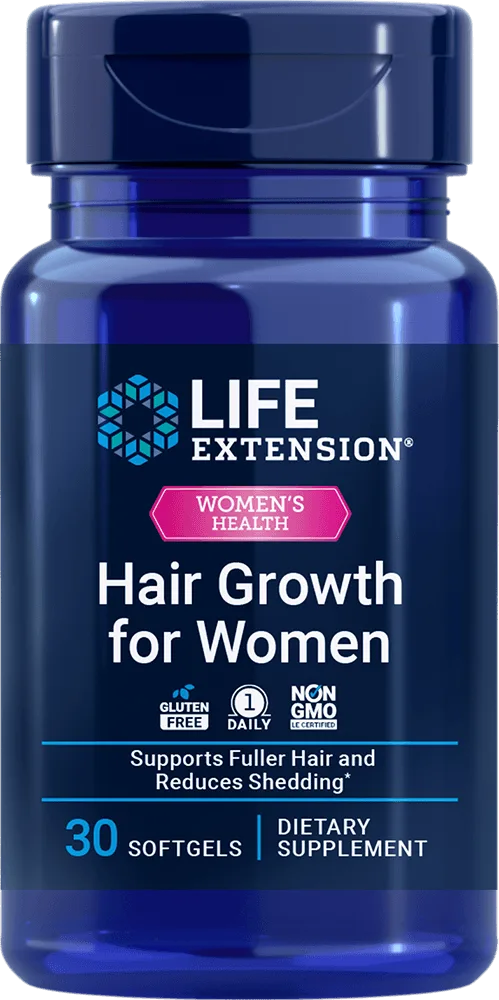
Hair Growth for Women is a separate formula with two scientifically studied extracts, and the catalog reports results within an average of 2–4 months. It is not simply a smaller dose of the men's product. If you are a woman with thinning hair, the women's formula is the appropriate starting point. If you suspect a hormonal driver such as PMOS (formerly PCOS), the PCOS (PMOS) Panel Blood Test evaluates markers commonly linked to that condition, including key hormones, AMH levels, insulin sensitivity, metabolic markers, and thyroid function. That panel is a broader hormonal picture, not a DHT-specific test.
Trade-Offs at a Glance
- Information vs. action: The DHT test tells you whether elevated DHT may be a factor; Hair Growth for Men softgels act directly on hair fullness without telling you the cause. If you want to make a targeted decision, test first. If you want direct support now, choose the softgels.
- Timeline: A DHT test gives a result from a single blood draw. Hair Growth for Men reports results within an average of 3–4 months of consistent use. Expect a waiting period with the softgels; do not judge them after a few weeks.
- Scope: DHT is one hormone associated with male pattern hair loss. Hair thinning can have other contributors, and the softgels do not lower DHT. If DHT is normal or you want a broader hormonal picture, discuss other testing options with a clinician.
Key Product Facts
- Hair Growth for Men, 30 softgels: Contains two scientifically studied extracts that encourage hair health and fullness, with results reported within an average of 3–4 months of use. Set a realistic 3–4 month checkpoint before deciding whether it is working for you.
- Dihydrotestosterone (DHT) Test: Identifies elevated dihydrotestosterone (DHT) levels, which have been associated with male pattern hair loss, acne and prostate enlargement. Gives you a concrete data point to discuss with a clinician if you suspect a hormonal driver.
- Hair Growth for Women, 30 softgels: Supports hair health, density and volume with two scientifically studied extracts, with results reported within an average of 2–4 months of use. Women should choose this formula rather than the men's version for a shorter reported timeline.
- PCOS (PMOS) Panel Blood Test: Evaluates markers commonly linked to PMOS (formerly known as PCOS), including key hormones and important AMH levels, insulin sensitivity and metabolic markers, thyroid function, and more. Relevant if you are a woman with thinning hair and want a broader hormonal workup rather than a DHT-only test.
Which Fits Your Situation?
Choose this if
- You want to know whether elevated DHT may be contributing to your hair thinning before buying a supplement.
- You are already working with a clinician on male pattern hair loss and want a concrete data point.
- You want direct daily support for hair fullness and accept a 3–4 month timeline.
- You are a woman with thinning hair and want the women's formula with a 2–4 month reported timeline.
Skip this if
- You expect a DHT test to diagnose hair loss or predict supplement response.
- You want a quick fix; Hair Growth for Men reports results within an average of 3–4 months.
- You are a woman considering the men's formula instead of Hair Growth for Women.
- You suspect a broader hormonal issue such as PMOS and need a panel rather than a single-hormone test.