Quick answer
Buy the dice that match how you actually roll. For most RPG players, a full polyhedral set with a readable high-number symbol is the best first purchase. If you need many of one die type, buy a bulk tube or set instead of several full sets. If you collect, buy for the symbol and finish, then add storage so the set stays intact.
Dice shopping gets confusing fast because listings mix material, finish, symbol design, and set size in one product name. This dice buying guide separates those choices so you can decide what to buy before you compare prices. The goal is not to find the single best dice set. It is to find the set that fits your table, your character, and your budget.
The biggest mistake is buying a beautiful set that is hard to read during play, or buying a full set when you really need ten of one die. A few concrete rules about materials, finishes, symbols, and storage will keep you from replacing dice you already own.
Start with the dice you actually roll
Before you compare polyhedral dice materials, count what your game uses. Most fantasy RPGs need a standard seven-dice polyhedral set: d4, d6, d8, d10, d12, d20, and often a percentile d10. Horror and sci-fi games may lean harder on d10s or d6s. If your system rolls fistfuls of d10s, one polyhedral set will not cover a single attack roll.
Match the set size to the system. A full set is the right first purchase for a new player. A bulk tube or a themed multi-die set is the right purchase when you already own a set and keep running out of one die type. Buying three full sets to get thirty d10s costs more and leaves you with duplicate dice you will not use.
- New player: one full polyhedral set covers most sessions.
- d10-heavy system: buy a tube or set of d10s instead of extra full sets.
- d4-heavy healer: a 10d4 set solves the healing-potion pileup.
Materials: what you are really paying for
Dice material affects weight, sound, durability, and how crisp the numbers look. The most common options are acrylic, resin, metal, and stone or gemstone. Acrylic is light, affordable, and easy to read, which makes it a strong default for a first set. Resin can hold sharp edges and layered colors, but sharp edges can chip if dice are dropped on hard floors. Metal feels substantial and rolls with a heavy clatter, but it can dent tables and is louder at the table. Stone and gemstone look distinctive, but they are heavier and often less consistent in weight.
There is no single best dice material. Acrylic wins on value and readability. Metal wins on feel and longevity if you use a dice tray. Resin wins on visual detail. Stone wins on display presence. Choose the material that matches where you roll, not just how the photo looks.
- Rolling on a bare wooden table: avoid metal unless you use a mat or tray.
- Rolling on a playmat: metal and stone are safe and feel great.
- Traveling to game stores: acrylic or resin is lighter and less likely to damage a bag.
Finishes, inking, and readability
Finish is the surface treatment: matte, glossy, frosted, or layered. Inking is the color in the numbers. A dice finish guide is less useful than a simple readability test. Hold the die at arm's length under the lighting you actually play in. If the number disappears against the finish, the set will slow every roll. High-contrast inking matters more than a fancy finish for everyday play.
Layered and swirled finishes can hide numbers when the color pattern crosses the face. That is a real trade-off, not a defect. If you love a busy finish, look for bright inking and a clear numeral font. If you play in dim rooms or stream your games, choose a matte finish with strong contrast.
- Check contrast, not just color: light numbers on dark dice read fastest.
- Busy swirls can camouflage numbers; bright inking fixes most of it.
- Sharp-edged resin looks striking but chips more easily than rounded acrylic.
Symbol dice: when the highest number is replaced
Some dice replace the highest value on each die with a symbol. This is a design choice, not a missing number. The symbol stands in for the maximum roll, so a d20 with a symbol on the 20 still rolls a 20. This works well when the symbol is easy to recognize and the rest of the numbers stay legible. It works poorly when the symbol is small, low-contrast, or easy to confuse with another face.
Symbol dice are a strong pick for players who want a set tied to a character, faction, or theme. They are a weak pick for anyone who needs to read every face instantly at a crowded table. If you are buying your first set, a standard numbered set is the safer choice. If you already own a workhorse set, a symbol set is a great second purchase for flavor.
- Symbol replaces the highest value, not a random face.
- Buy symbol dice for theme and table presence, not for maximum legibility.
- If two faces look similar at a glance, pass on that design.
Storage and set protection
Dice are small, easy to lose, and easy to scratch when they rattle together in a loose bag. Storage is part of the purchase decision, not an afterthought. A velvet bag protects a single set and travels well. A slipcase or box keeps multiple sets organized and stops the d4 caltrops from migrating into every pocket of your bag.
If you are building a collection, plan storage before you buy the next set. A display slipcase that holds ten polyhedral sets gives you a clear stopping point and keeps sets matched. If you only own one or two sets, a bag is enough. Buy storage when the collection outgrows the bag, not before.
- One set: a velvet dice bag is enough.
- Three or more sets: a slipcase or box prevents mixing.
- Keep metal dice separate so they do not chip softer dice.
How to buy dice without overpaying
Price is not a reliable signal of quality in dice. Two sets at the same price can differ in edge sharpness, inking, and weight consistency. Compare what you get: number of dice, whether a bag or case is included, and whether the set is a full polyhedral set or a partial one. A cheap full set with a bag can be better value than an expensive single die.
Buy for a specific need. If you need healing dice, a 10d4 set with a bag solves that need directly. If you need a themed gift, a symbol set with a recognizable design is the better buy. If you are filling a dice tray for a d10 system, a tube of ten d10s is the efficient purchase.
- Compare dice count and included storage before comparing price.
- A partial set is fine if it matches your system's most-rolled die.
- Buy one workhorse set before buying collectible sets.
Decision rules for buying dice
- First set or new player: Buy one full polyhedral set in acrylic or resin with high-contrast inking and standard numbers. Skip symbol dice until you own a workhorse set.
- d10-heavy or d4-heavy system: Buy a bulk tube or themed multi-die set in the die type you roll most, not another full set. Count your most-rolled die before you buy.
- Metal or stone dice: Buy only if you already use a playmat or dice tray, and keep them separate from softer dice. No tray, no metal.
- Symbol dice: Choose a symbol that stays readable at arm's length and does not look like another face. If you hesitate on readability, buy the numbered version.
- Collection storage: Add a slipcase or box once you own three or more sets, and keep sets matched inside it. Buy storage when the bag stops working, not before.
Product facts that matter when choosing
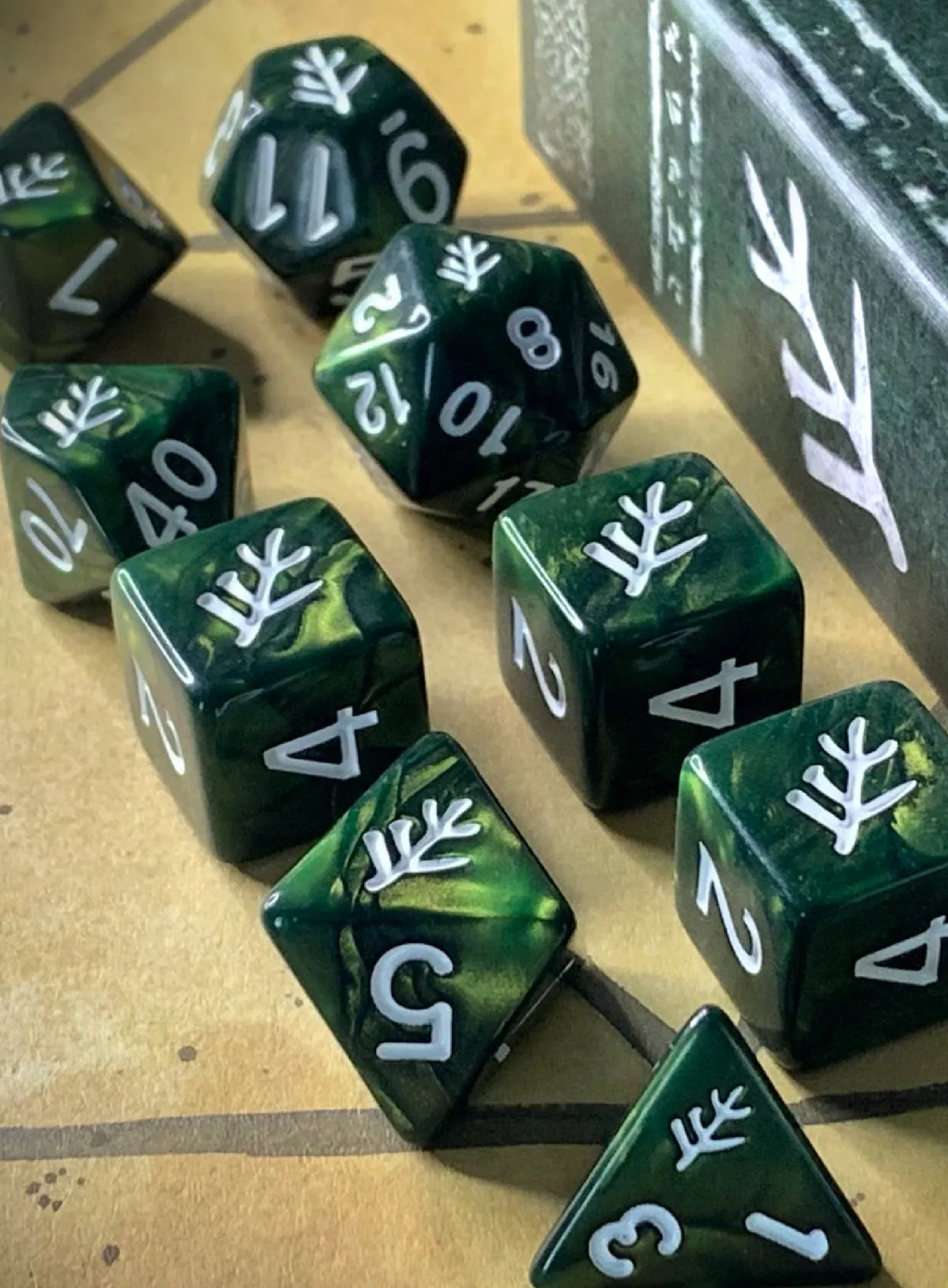
- Elder Sign Dice - Blue Aether Polyhedral Set: This set features the branch-like Elder Sign sketched by H.P. Lovecraft himself, and the symbol replaces the highest value of each die. A recognizable symbol set for horror and Lovecraft-themed games, but the replaced high face means you should check that the symbol is easy to read at your table.
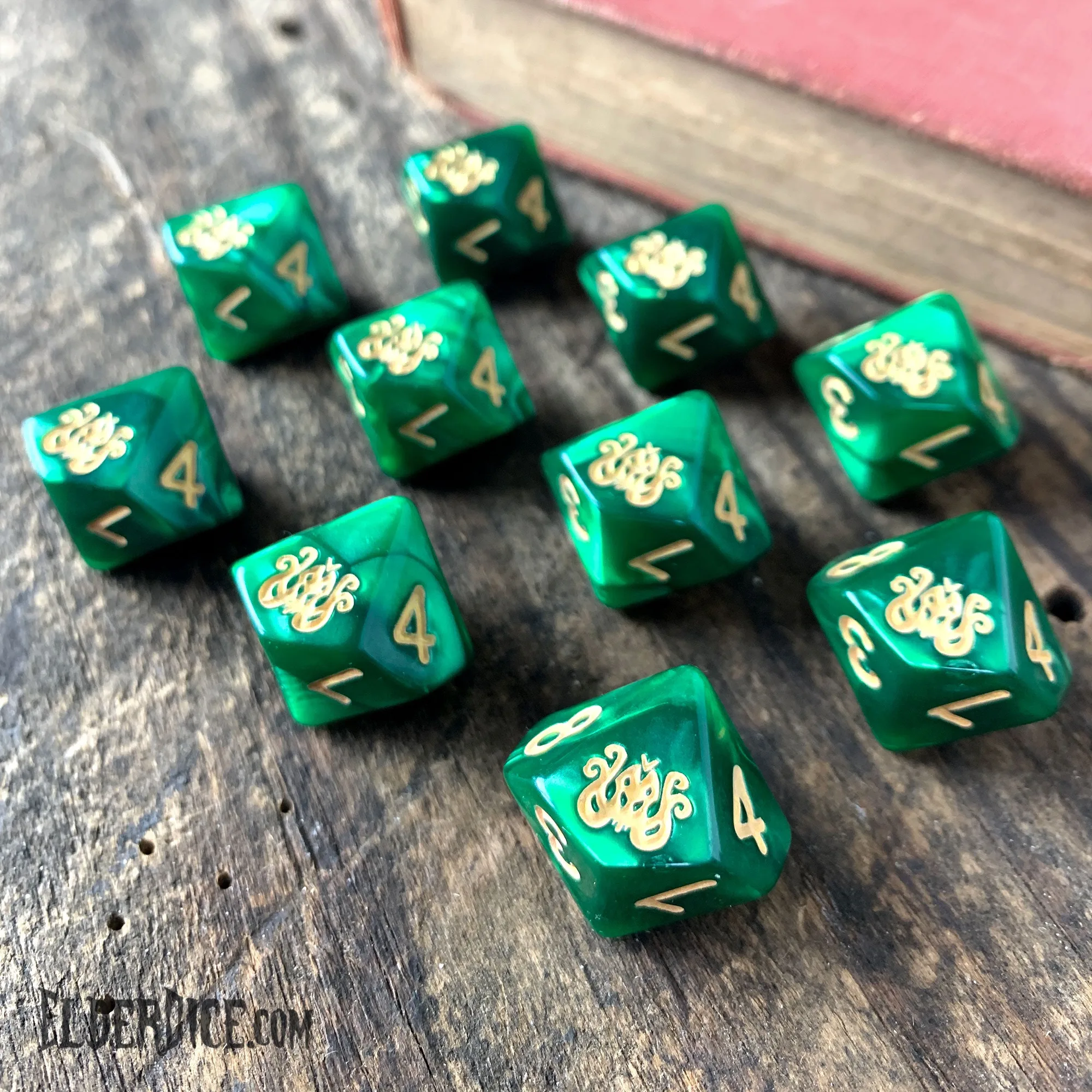
- Eye of Chaos Dice - - Nebula d10 Set: Each tube contains 10 d10s, and the Eye of Chaos symbol replaces the 10 on each die. A practical bulk d10 purchase for systems that roll handfuls of d10s, with the same symbol-replaces-highest trade-off to weigh.
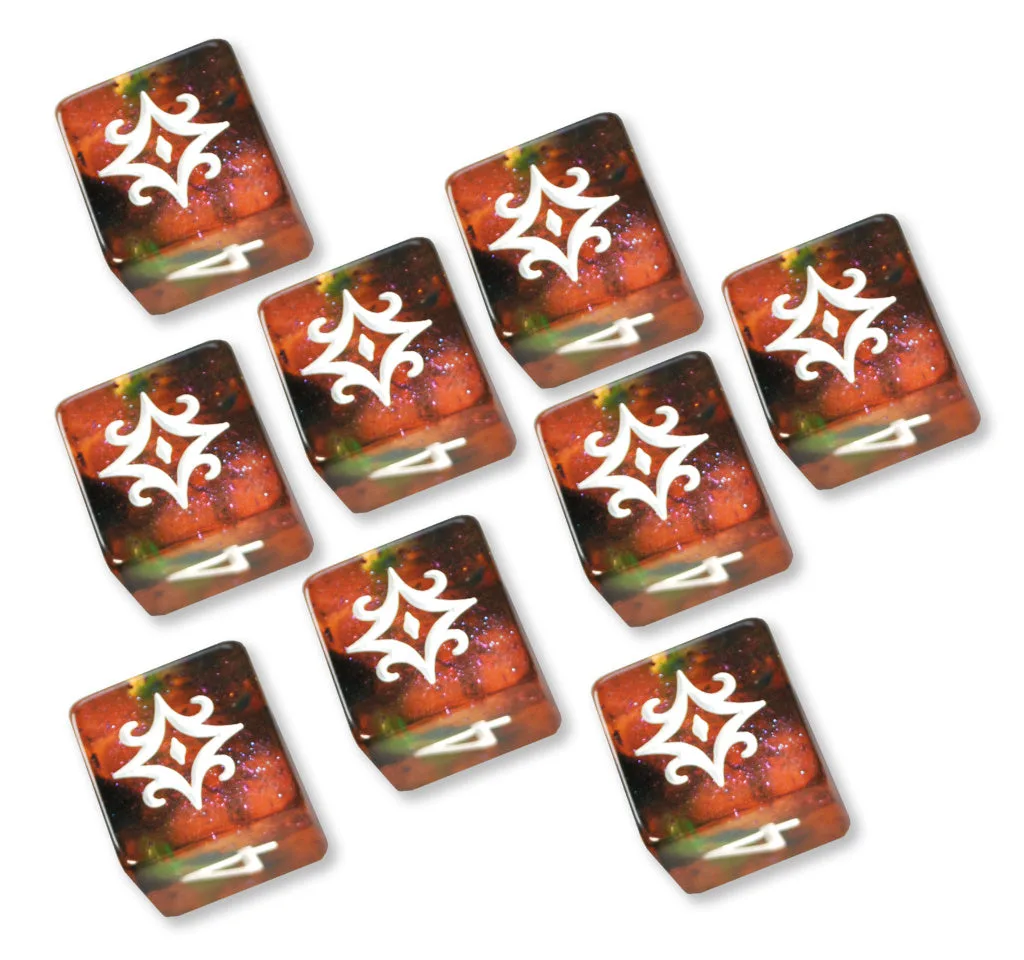
- Healing Heart 10d4 Set + Dice Bag: This set includes 10d4 dice featuring the 8-Bit Healing Heart, and the symbol replaces the 4 on the dice. It also includes a Healing Heart velvet dice bag. A focused buy for healers and potion-heavy characters, with storage included so the set stays together.
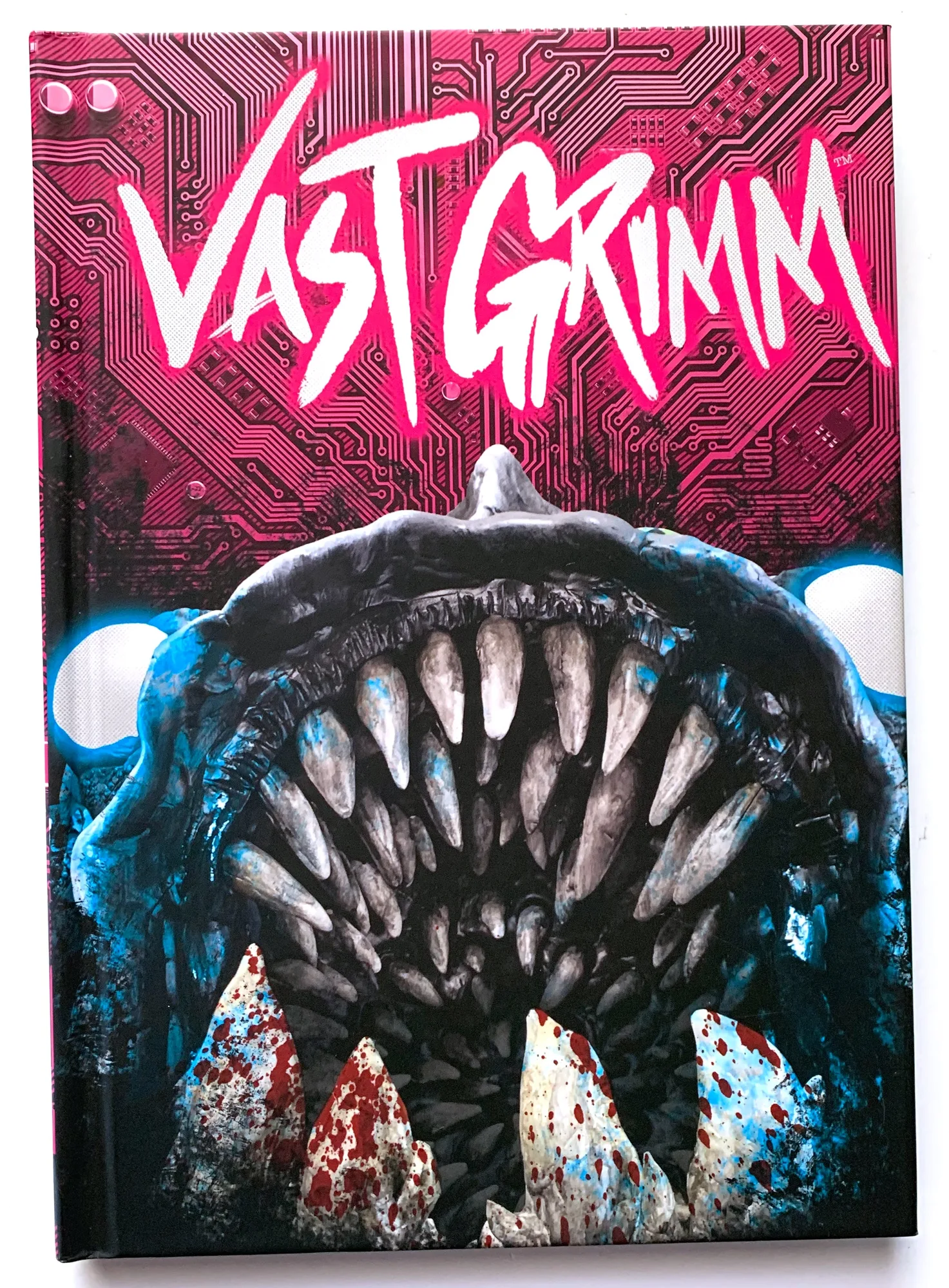
- Vast Grimm Core Book: This book includes the core rules, classes, monsters, lore, and a starting adventure, with a 120-page count and a digital PDF included with purchase. Useful context if you are buying dice for a specific system, since the rules tell you which dice you actually need in quantity.
Is this dice buying approach right for you?
Best for
- New RPG players buying a first polyhedral set
- Players in d10-heavy or d4-heavy systems who need bulk dice
- Collectors who want themed symbol dice and organized storage
Not for
- Shoppers who only want the cheapest dice and do not care about readability
- Players who need precise, standardized casino-style dice for gambling
- Buyers looking for a single display piece rather than playable dice
Buy dice for how you roll, not for how they photograph. Pick one readable workhorse set first, add bulk dice in the type your system uses most, and buy symbol sets or storage only when they solve a real problem. That order keeps your dice shopping guide simple and your table ready.