Quick answer
Choose a dice game when your group wants fast, physical, real-time tension and doesn't mind a little chaos. Choose a card game when you want quieter, more cerebral play built on reading opponents and managing risk. For a mixed group, start with a short dice game as a warm-up, then move to a trick-taking card game for the main event.
How dice and card games create different kinds of tension
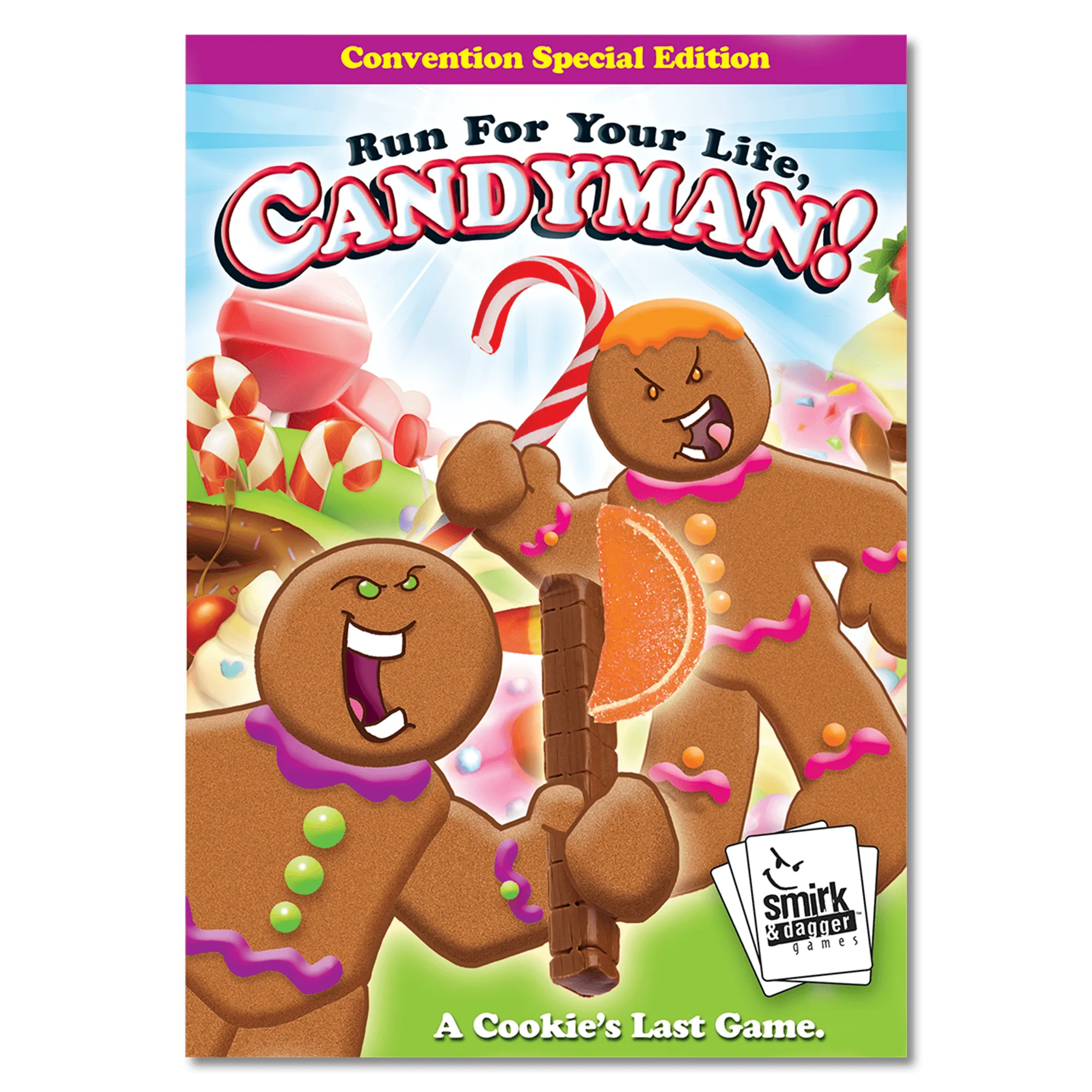
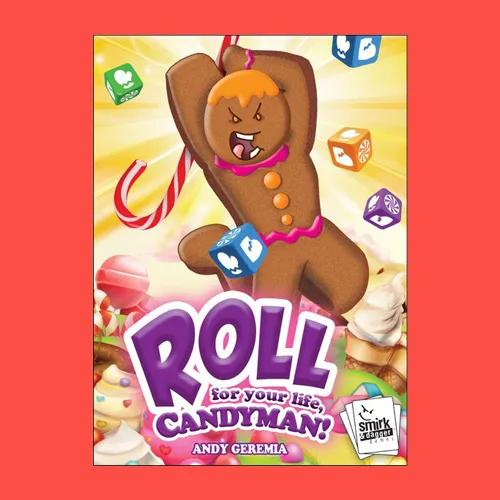
Dice games put the pressure in your hands. In ROLL for your Life, Candyman!, 2 to 4 players roll furiously in real time, and the first to match all four dice grabs the plastic candy cane to stop the action and claim a Cookie Part. That's a very different feeling from a turn-based card game, where you can plan, bluff, and wait for the right moment.
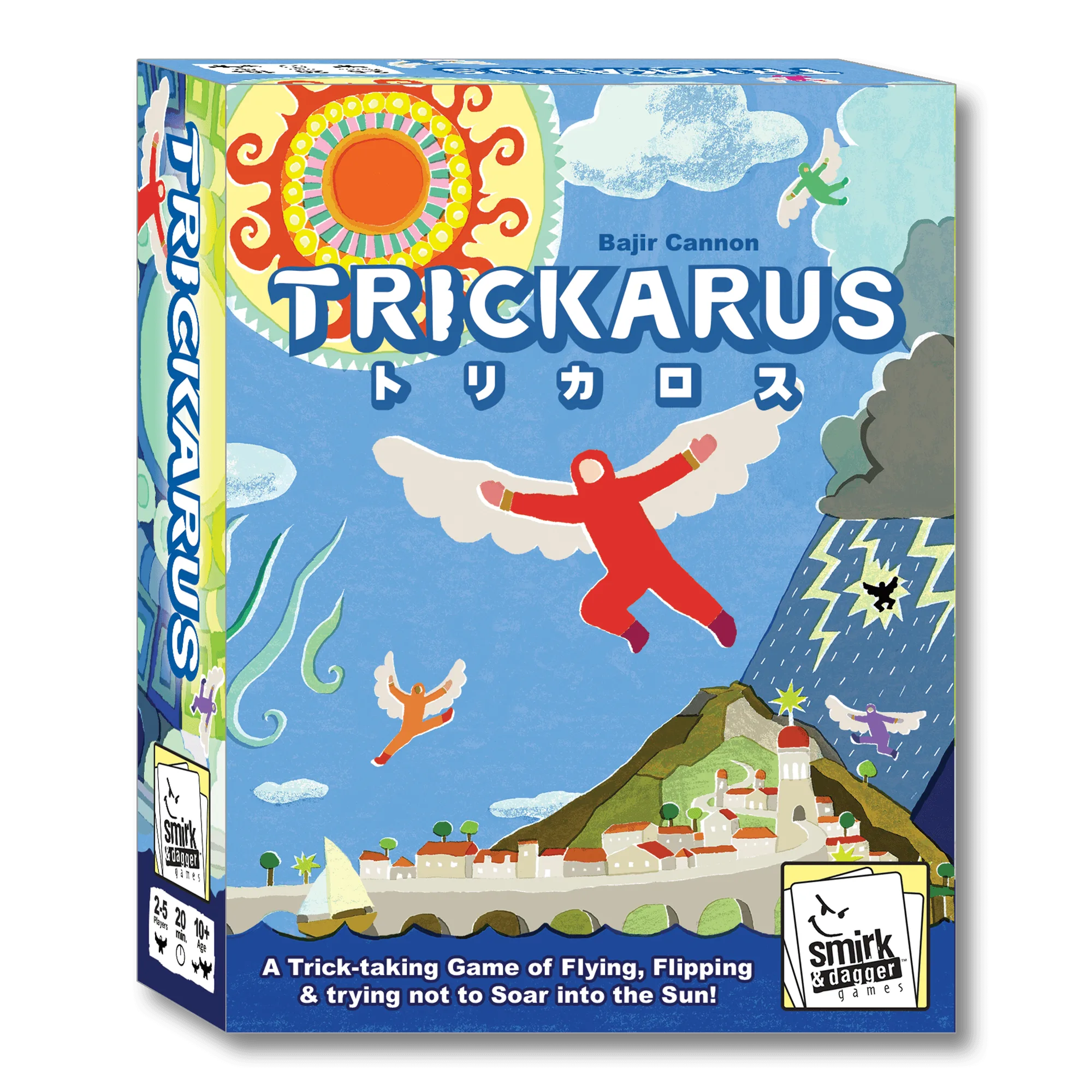
Card games often put the pressure in your head. Trickarus is a must-follow trick-taking game where winning tricks sends you higher into the sky, but flying too close to the sun can bring disaster. You're not racing a timer; you're managing a growing risk that you might win too much. If your group likes table talk and slow-burn decisions, that's the card game advantage. If they like shouting and fast hands, that's the dice game advantage.
What to check before you buy: player count, space, and setup
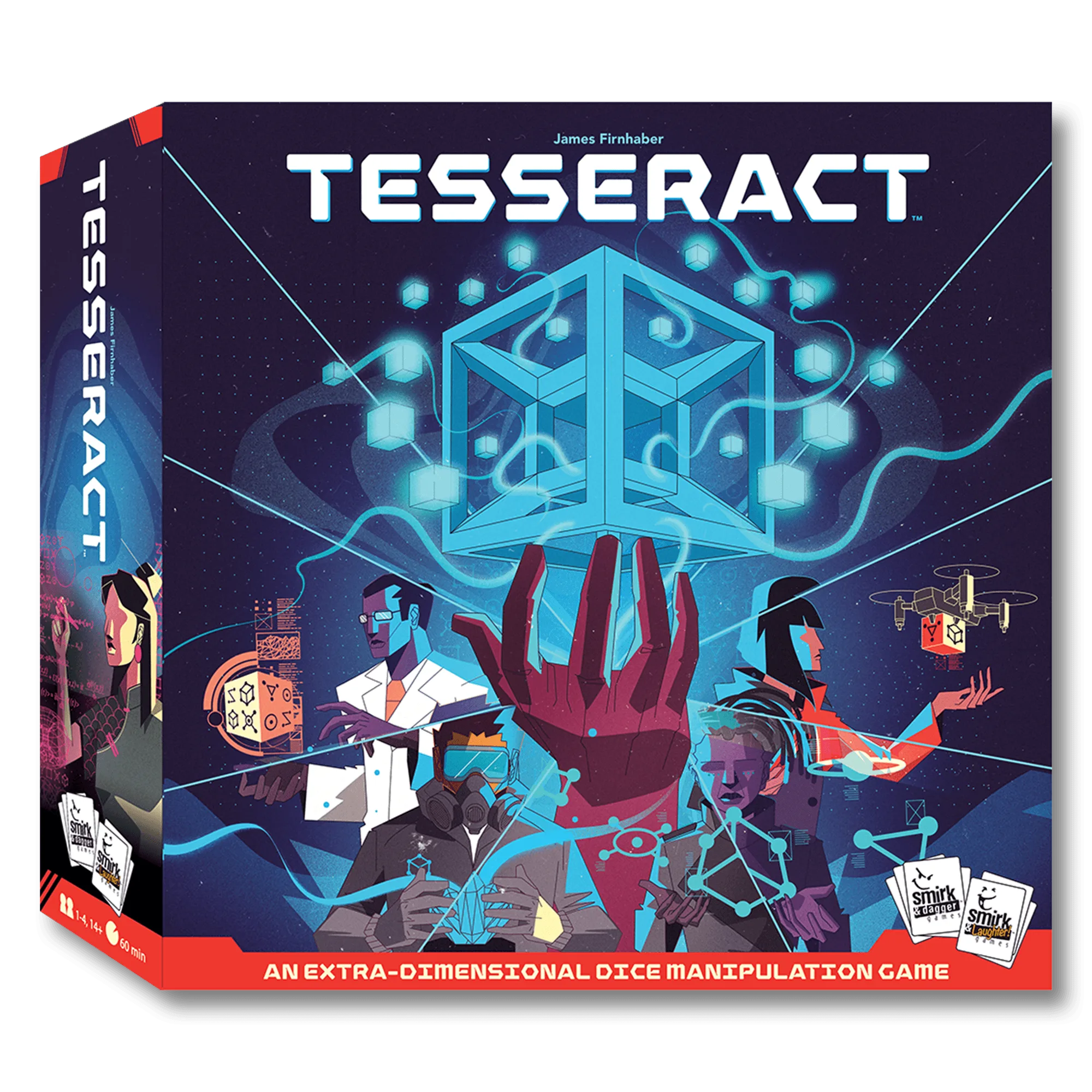
Player count matters more than theme. ROLL for your Life, Candyman! is built for 2 to 4 players, so it's a tight fit for a small table. Run for your Life, Candyman! DELUXE supports 2 to 6 players, which makes it easier to include the whole group without splitting up. TESSERACT is a cooperative puzzle strategy game with a cube of 64 dice on a rotating platform, so it needs more table space and a group that enjoys solving a shared problem rather than attacking each other.
Space and setup also separate the two formats. A real-time dice game like ROLL for your Life, Candyman! needs a clear central area for the candy cane and dice, but it plays fast. A card game like Trickarus needs less table space, but you'll want room for tricks and a discard area. TESSERACT asks for the most room because of the rotating platform and 64 dice, so measure your table before committing.
Cost and replay value: what you get for the price
At catalog prices, the entry points differ. ROLL for your Life, Candyman! is listed at USD 13.99 (compared to USD 19.99), and Trickarus is USD 10.34 (compared to USD 14.99). Both are low-risk buys if you're unsure which format your group prefers. Run for your Life, Candyman! DELUXE is USD 31.94 (compared to USD 44.99) and supports up to 6 players, so it's the better value if you regularly host a larger crowd. TESSERACT is USD 39.59 (compared to USD 54.99) and is the most expensive because of its 64-dice cube and rotating platform.
Replay value depends on how much variety your group needs. A real-time dice game stays fresh as long as players enjoy the physical race. A trick-taking card game like Trickarus stays fresh as long as players enjoy the shifting risk of winning too much. A cooperative puzzle game like TESSERACT stays fresh if your group likes solving the same challenge at higher difficulty. None of these are campaign games, so don't expect a long-running story.
How to run a mixed game night without slowing down
If your group is split between dice and card fans, sequence the night instead of forcing one format. Open with ROLL for your Life, Candyman! as a 10-minute icebreaker, because the real-time rolling gets everyone laughing and moving. Then switch to Trickarus for the main event, where the trick-taking tension rewards the players who prefer planning. If you have a larger group, use Run for your Life, Candyman! DELUXE as the opener because it supports 2 to 6 players, then break into smaller tables for card games.
Keep the transitions short. Real-time dice games end abruptly, so have the card game already shuffled and the table cleared. For TESSERACT, save it for a dedicated night when your group wants a cooperative puzzle and has the table space for the rotating platform. Don't try to run it as a filler between other games.
Trade-offs at a glance
- Real-time dice vs. turn-based cards: ROLL for your Life, Candyman! uses simultaneous rolling and a candy-cane grab to stop the action, so no one waits for a turn. Trickarus uses must-follow trick-taking, so players take turns and can plan. Pick real-time dice for energy; pick trick-taking cards for planning.
- Small-group skirmish vs. big-table brawl: ROLL for your Life, Candyman! is 2 to 4 players, while Run for your Life, Candyman! DELUXE supports 2 to 6. Trickarus is a card game that scales by dealing in more players, but the trick-taking tension stays personal. Count your usual player count before choosing.
- Low-cost entry vs. premium centerpiece: Trickarus is USD 10.34 and ROLL for your Life, Candyman! is USD 13.99, so either is an easy try. TESSERACT is USD 39.59 and needs a rotating platform and 64 dice, making it a planned purchase rather than an impulse buy. Start cheap to test your group's taste, then invest in a centerpiece.
Product facts
- ROLL for your Life, Candyman!: a speed dice game of cookie combat: 2 to 4 players roll furiously in real time; the first to match all four dice grabs the plastic candy cane to stop the action and claim a Cookie Part. This is the purest dice-game advantage: fast, physical, and loud. It works best as a warm-up or for small groups that like chaos.
- Trickarus: A must-follow trick-taking game where winning tricks sends you higher into the sky, but flying too close to the sun can bring disaster. This is the card-game advantage: reading opponents and managing risk. It suits groups that prefer table talk over real-time pressure.
- TESSERACT: a cooperative, puzzle strategy game: A cooperative puzzle strategy game with a cube of 64 dice on a rotating platform; players use three actions to contain an extra-dimensional avatar. This is the dice game for planners, not racers. It needs table space and a group that enjoys solving a shared puzzle.
- Run for your Life, Candyman! DELUXE: a cult classic of cookie combat: A 30-minute board game parody for 2 to 6 deeply disturbed people, focused on ripping off your opponent's sugar-frosted limbs. The higher player count makes it the best dice-game pick for larger groups that don't want to split into smaller tables.
Which should you choose?
Best for
- Groups of 2 to 4 who want a fast, loud warm-up with real-time rolling
- Hosts with 2 to 6 players who want a 30-minute party-style dice game
- Players who enjoy cooperative puzzle-solving and have a large table for TESSERACT
- Card players who like trick-taking risk and reading opponents in Trickarus
Not for
- Groups that dislike simultaneous chaos and prefer strict turn order
- Players who want a long campaign or story-driven game
- Small tables with no room for a rotating platform and 64 dice
- Anyone who wants zero luck and pure strategy