Quick answer
Choose a die cutting machine when you need repeatable die-cut shapes or embossing, a guillotine for fast, straight trims through stacks of card, and a craft knife for freehand curves and one-off cuts. Most papercrafters end up owning at least two of the three because each tool solves a different cutting problem, and the trade-off is always precision versus speed versus cost.
Every papercraft project starts with a cut, but the tool you reach for changes what you can make. A die cutting machine, a guillotine, and a craft knife overlap in the middle, yet each one is genuinely better at a specific job.
This comparison looks at how the three tools actually behave on card, paper, and mixed materials, where each one struggles, and which combination makes sense for card making, scrapbooking, and box building. The goal is not to crown a winner but to help you buy only what your projects need.
How each cutting tool works
A die cutting machine presses a metal die through your material using a stack of plates, so the shape is decided by the die rather than your hand. That is why it produces identical cuts every pass, and why detailed designs need the right plate combination to cut cleanly rather than tear.
A guillotine uses a hinged blade and a straight edge, so you line up the paper and bring the arm down for a long, straight trim. A craft knife is the opposite: you guide the blade by hand, which is slower and less uniform but the only practical way to cut a curve, an interior window, or a shape no die covers.
- Die cutting machine: shape comes from the die, so results repeat exactly.
- Guillotine: straight lines only, but very fast on stacks of card.
- Craft knife: total freedom of shape, but your steadiness sets the quality.
Precision and repeatability
For repeatable shapes, the die cutting machine wins clearly. Because the die controls the outline, every pass gives you the same result, which matters when you are cutting twenty identical toppers for a batch of cards. The trade-off is that you can only cut shapes you own a die for, and very intricate designs may need an extra plate to apply enough pressure.
A guillotine is precise in a different way: it is excellent at square corners and consistent strips, but only along straight lines. A craft knife is the least repeatable of the three because the cut depends on your hand, yet it is the only option when the shape is irregular or when you need to cut inside a panel without slicing through the outer edge.
- Cut a test pass on scrap before committing a full sheet to a new die.
- Replace guillotine blades once they start dragging instead of slicing.
- Use a fresh knife blade for curves; a dull tip tears rather than cuts.
Speed, effort, and material limits
A guillotine is the fastest tool for straight trims, especially when you are cutting several sheets to the same size, and it needs almost no setup. A die cutting machine takes longer to set up because you build a plate sandwich, but once it is loaded you can run multiple shapes in quick succession without extra measuring.
A craft knife sits in the middle: fast for a single cut, slow for twenty. Material matters too. Heavyweight card, foam, and fabric suit a die cutting machine or a sturdy guillotine, while a knife handles delicate trimming and awkward shapes that would distort under a press. If your material is thicker than the tool was designed for, forcing it damages the cut and the tool.
- Batch identical straight cuts on a guillotine, not one at a time.
- Keep a dedicated cutting mat under knife work to protect the blade and table.
- Check your machine's plate combination before cutting thicker material.
Cost and what you actually need to buy
The real cost difference is not the tool itself but the accessories and dies that follow it. A die cutting machine needs plates, and those plates wear out or get lost, so replacements become a recurring purchase. Dies add up too, because each shape is a separate buy. A guillotine and a craft knife have far lower running costs: blades and mats are cheap and last a long time.
That makes the decision partly about volume. If you cut the same shapes again and again, the die cutting machine earns its cost quickly. If your projects are mostly straight trims and the occasional custom shape, a guillotine plus a knife covers almost everything for much less.
- Budget for plates and dies, not just the machine.
- Store plates flat and dust-free so they stay true.
- Buy spare blades before you need them; a dull blade costs more in ruined card.
Trade-offs at a glance
- Die cutting machine: Gives repeatable, identical shapes and can emboss, but only cuts shapes you own a die for and depends on plates that wear out. Best when you batch the same design many times.
- Guillotine: Fastest for straight trims and stacks of card with almost no setup, but it cannot cut curves or interior shapes. Best for trimming card blanks and paper pads to size.
- Craft knife: Handles any shape, including curves and windows, with low running costs, but speed and consistency depend entirely on your hand. Best for one-off custom cuts and delicate trimming.
Tools that support each cutting method
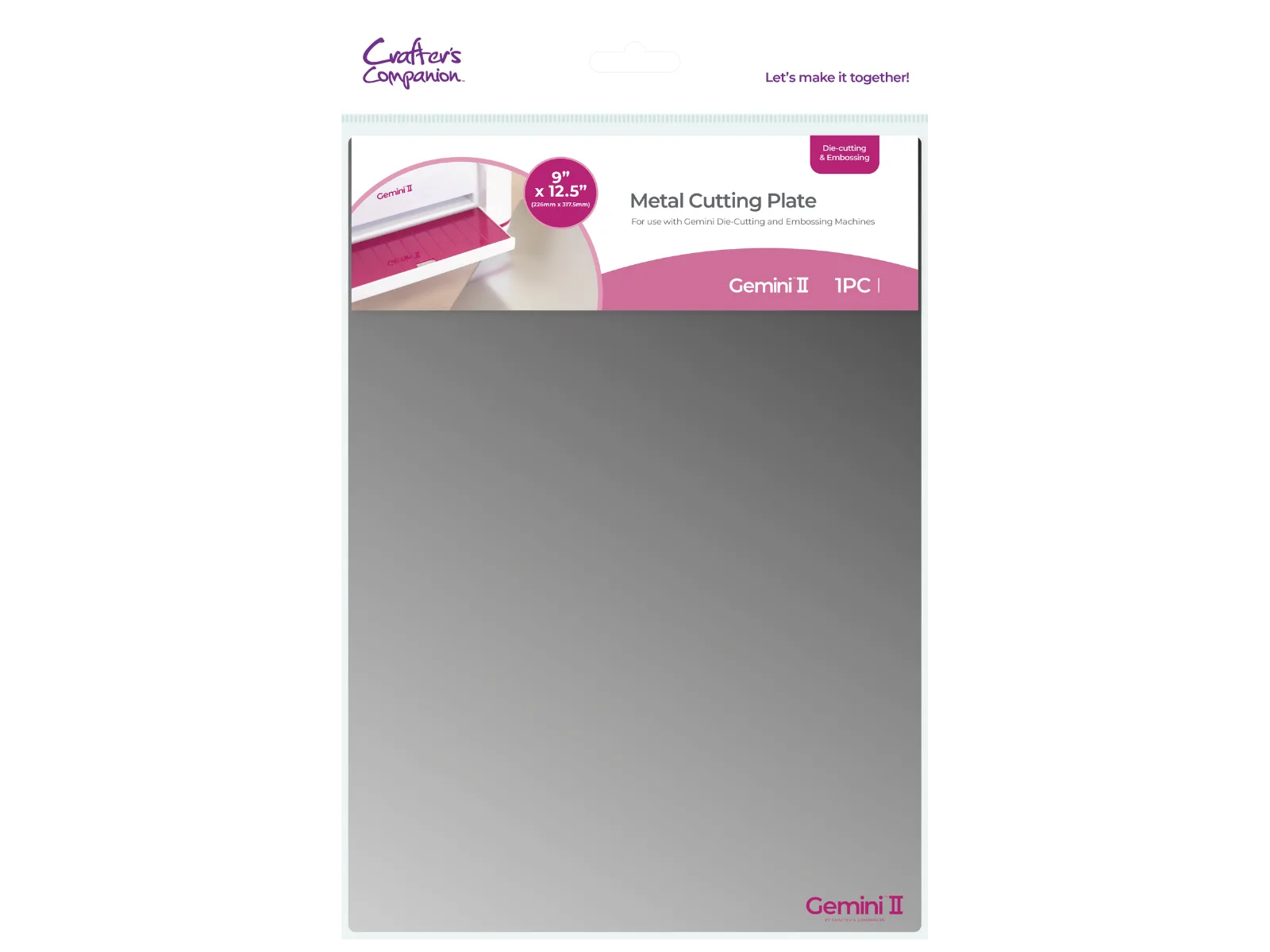
- Gemini II Accessories - Metal Cutting Plate: Adds an extra layer to your existing die-cutting combination to apply higher pressure for smaller, more detailed designs. If your intricate dies are not cutting cleanly in one pass, this plate is the fix, and it is a good example of the accessory costs that come with a die cutting machine.
- Gemini Pro Accessories - 12"x18" Plate Storage Bag: Holds 12" x 18" plates for the Gemini Pro and keeps them safe and dust free. Plates are the part of a die cutting setup most likely to warp or get damaged, so storage is a practical purchase rather than an optional extra.
- Crafter's Companion A4 Smooth White Card Pack (250gsm) - 100 Sheets: A heavyweight 250gsm white card described as suitable for die-cutting, embossing, box making, stamping, and colouring, with 100 sheets included. This is the kind of card that behaves predictably across all three tools, so it makes a fair test material when you are comparing cuts.
- Crafter's Companion - Mixing Palette: Designed for blending colours, with swirling compartments, and suitable for watercolour paints, shimmer sprays, and water-reactive inkpads. A reminder that cutting is only one step: the tools you use after cutting, like this palette for colour blending, shape which cutting method fits your workflow.
Which cutting tool should you choose?
Choose this if
- You make batches of identical cards and want repeatable die-cut shapes or embossing.
- You mostly trim card blanks, paper pads, and straight strips and want speed with minimal setup.
- You cut custom shapes, curves, or interior windows that no die covers.
- You are building a starter kit and want the lowest running cost first.
Skip this if
- You only ever cut straight lines, in which case a guillotine is faster and cheaper than a die cutting machine.
- You need repeatable, identical shapes, which a craft knife cannot guarantee.
- You want to cut curves or freehand shapes, which a guillotine cannot do.
- You are not prepared to buy and store plates and dies alongside the machine.
Start with the tool that matches the cuts you make most often, then add the others as your projects demand. A guillotine plus a craft knife covers most straight and custom cuts for very little, while a die cutting machine earns its place once repeatable shapes and embossing become part of your regular card making.