Quick Answer
You can display a 1000-piece wooden puzzle without glue by using puzzle-specific temporary adhesive sheets, magnetic frames, or a simple backing board with clips—methods that keep your puzzle intact and allow you to take it apart later if you wish.
Why Skip Glue for Wooden Puzzles?
Wooden puzzles are often more expensive and more durable than cardboard ones, so many people like to reassemble them or pass them on. Glue makes that impossible. Using a reversible method lets you enjoy your finished puzzle on the wall today and take it apart next month without damage.
Another reason: wooden puzzle pieces fit tightly and can be lifted as a whole if you slide a thin board underneath. This makes glue-free mounting easier than you might think, especially with 1000-piece puzzles that are large enough to handle carefully.
Trade-Offs of Glue-Free Display
The main trade-off is that without glue, your puzzle is not permanently bonded to a backing. If you use clips or magnets, the puzzle can shift or sag over time, especially on a vertical wall. You need to choose a method that supports the full weight of the puzzle evenly.
Also, temporary adhesive sheets (like those used for mounting posters) can leave a slight residue on wooden pieces. Test on a spare piece first, or use a low-tack option. Magnetic frames work well but may not fit all puzzle thicknesses, so measure your puzzle before buying.
Step-by-Step: Glue-Free Display in 5 Steps
- Prepare a rigid backing board: Cut a piece of foam board, cardboard, or thin plywood slightly larger than your puzzle. Slide it carefully under the finished puzzle by lifting one edge and easing the board beneath. Ensure the board is clean and dry. Check that the board is flat; any warp will make the puzzle buckle.
- Secure the puzzle to the board with temporary adhesive: Use low-tack adhesive sheets or spray (designed for posters) on the board, then press the puzzle down gently. Alternatively, use double-sided tape on the back of a few key pieces, but avoid the edges to prevent curling. Test the adhesive on a spare piece first to ensure it doesn't leave residue.
- Frame without glass or use a magnetic frame: Place the board with the puzzle into a frame that has no glass (or use a magnetic frame kit). If using a standard frame, remove the glass and use the backing board as the mount. For magnetic frames, insert the puzzle between two magnetic sheets that hold it in place. Measure your puzzle thickness before buying a magnetic frame; wooden puzzles are thicker than cardboard ones.
- Hang securely on the wall: Use picture-hanging hardware rated for the total weight of the puzzle plus the board. Attach the hardware to the backing board, not just the puzzle. For large 1000-piece puzzles, use two hooks for stability. Check that the wall anchors are rated for at least 5 kg (11 lbs) to avoid accidents.
- Enjoy and later disassemble safely: When you want to take the puzzle apart, remove it from the wall, gently peel off the adhesive sheets, and slide the puzzle off the board. Store pieces in a zip-lock bag or original box. If adhesive residue remains, rub it with a soft cloth and a tiny bit of baby oil, then wipe clean.
Puzzles That Work Well with Glue-Free Display
-
Open and Close Doors 1000 Wooden Puzzle: The Open and Close Doors 1000 Wooden Puzzle features a detailed scene with multiple doors, each opening to a new horizon. Its intricate design rewards close viewing, so a glue-free display method that lets you take it apart and rebuild it later is perfect for enjoying the details now and again later.

Open and Close Doors 1000 Wooden Puzzle
-
Museum Shelf 1000 Wooden Puzzle: The Museum Shelf 1000 is a representation of art and history, crafted into a premium wooden assemblage. Because it's a premium wooden puzzle, you'll likely want to preserve it in perfect condition—glue-free mounting keeps the pieces pristine for future reassembly.
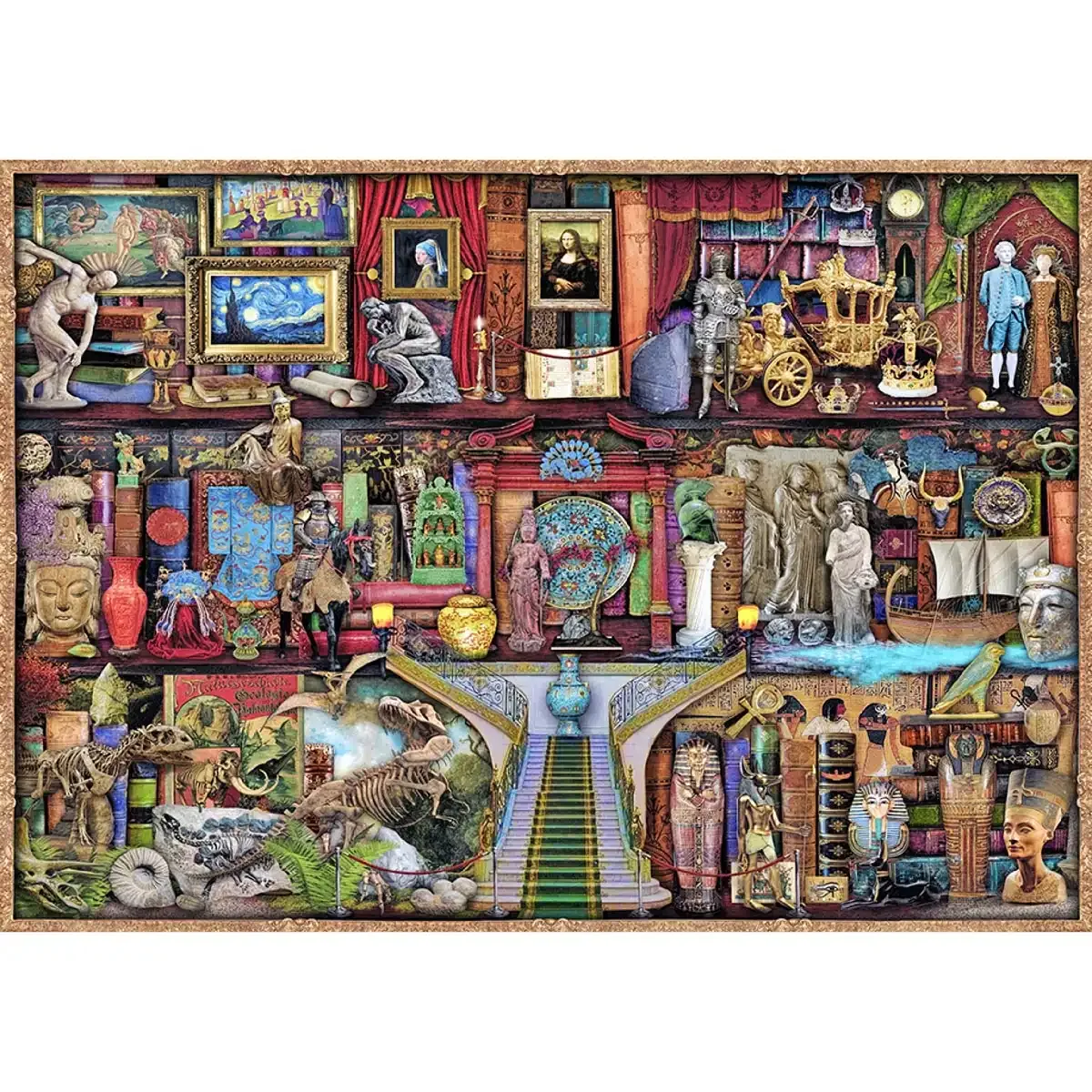
Museum Shelf 1000 Wooden Puzzle