Quick answer
Put a heavy GK statue on glass only after you confirm the shelf's weight rating, spread the load with a rigid base plate, and keep the statue off the glass edge. If the glass is tempered, at least 8 mm thick, and rated above the statue's total weight with a safety margin, it can work. If any of those are unknown, move the statue to a solid wood, metal, or stone surface instead.
Start with the glass, not the statue
Glass shelves fail for three reasons: too thin, not tempered, or loaded at a single point. Tempered glass is roughly four times stronger than annealed glass of the same thickness, and 8–10 mm tempered panels are the practical minimum for collectible display. Thinner glass, or glass of unknown origin, is a gamble you don't need to take.
Check the shelf's rated capacity if the manufacturer lists one. If it doesn't, measure the thickness and span. A long unsupported span bows more under load, so a 90 cm shelf with no center bracket is far riskier than a 45 cm shelf with one. When in doubt, treat the glass as decorative and move heavy pieces to a solid surface.
Weigh the statue with its packaging and base
Resin statues are heavier than they look, and the shipping box, foam, and base add up. Weigh the statue on a kitchen scale, then add the base and any diorama pieces. Compare that total against the shelf rating, and leave at least a 2× safety margin — a 4 kg statue on a shelf rated for 8 kg is reasonable; a 4 kg statue on a 5 kg shelf is not.
If the statue ships in multiple pieces, weigh the heaviest single piece, because that's the load the glass actually sees at one point. The full assembled weight matters less than the concentrated weight of the largest component.
Add a rigid base plate to spread the load
A statue's base often has small feet or a narrow contact patch, which concentrates force on the glass. A 6–10 mm acrylic, MDF, or hardwood plate slightly larger than the statue's footprint spreads that force across a wider area and dramatically reduces the chance of a stress crack.
Cut the plate so it overhangs the statue base by at least 2–3 cm on each side. Round the corners so they don't chip the glass, and add small rubber feet under the plate to keep it from sliding. This is the single most effective upgrade for glass-shelf display.
Keep weight off the edges and center the mass
Glass is strongest in the middle of a panel and weakest near the edges and corners. Place the statue so its center of mass sits over the middle of the shelf, not near the front lip or a side edge. If the shelf is supported only at the ends, the middle is the safest zone.
Avoid stacking heavy statues on the same shelf. Two 4 kg pieces on one glass panel is not the same as one 8 kg piece — the load is distributed, but the panel still carries the full weight, and any point load from a base foot can still crack it.
Secure the statue so it can't tip
A heavy statue that tips can take the shelf with it. Use museum putty or a low-profile acrylic bracket under the base plate to stop sliding, and keep the statue back from the front edge. For tall pieces, a discreet wall anchor or a shelf lip is worth the effort.
If the statue has a removable base or cape, attach those pieces before final placement so you're not handling the statue on the glass. Every adjustment on the glass is a chance to drop or scrape it.
When glass isn't the right surface
If your shelf is thin, untempered, or already shows chips or scratches, don't risk a resin statue on it. Move the piece to a solid wood, metal, or stone shelf, or use a glass cabinet with a reinforced bottom panel. A display case with a rated load and a solid base is the safest home for a heavy GK statue.
If you're buying a statue specifically for a glass shelf, check the product's dimensions and weight before ordering. Some statues are simply too large or too heavy for typical glass shelving, and no amount of padding changes that.
Step-by-step: safe glass-shelf display
- Confirm the glass rating: Measure thickness and span, and check for a manufacturer weight rating. Tempered glass at 8–10 mm is the practical minimum for heavy statues. If the rating is unknown or the glass is thin, stop here and choose a solid shelf.
- Weigh the heaviest piece: Use a kitchen scale on the largest single component, then add the base and any diorama parts. Compare to the shelf rating with a 2× safety margin. A 4 kg statue on an 8 kg shelf is fine; on a 5 kg shelf, it isn't.
- Cut and fit a base plate: Use 6–10 mm acrylic, MDF, or hardwood, at least 2–3 cm larger than the statue base on each side. Round the corners and add rubber feet. This spreads the point load and is the biggest single risk reduction.
- Center the mass on the shelf: Place the plate and statue over the middle of the panel, away from edges and the front lip. Never stack two heavy statues on one glass shelf. Glass is strongest in the middle and weakest at the edges.
- Lock it against tipping: Use museum putty or a low-profile bracket under the base plate, and keep tall pieces back from the front edge. Attach removable parts before final placement. A tipped statue can crack the shelf it lands on.
- Re-check after 24 hours: Look for new chips, hairline cracks, or bowing in the glass. If you see any, move the statue to a solid surface immediately. Glass damage often shows up after the load has settled.
Product facts to check before you display
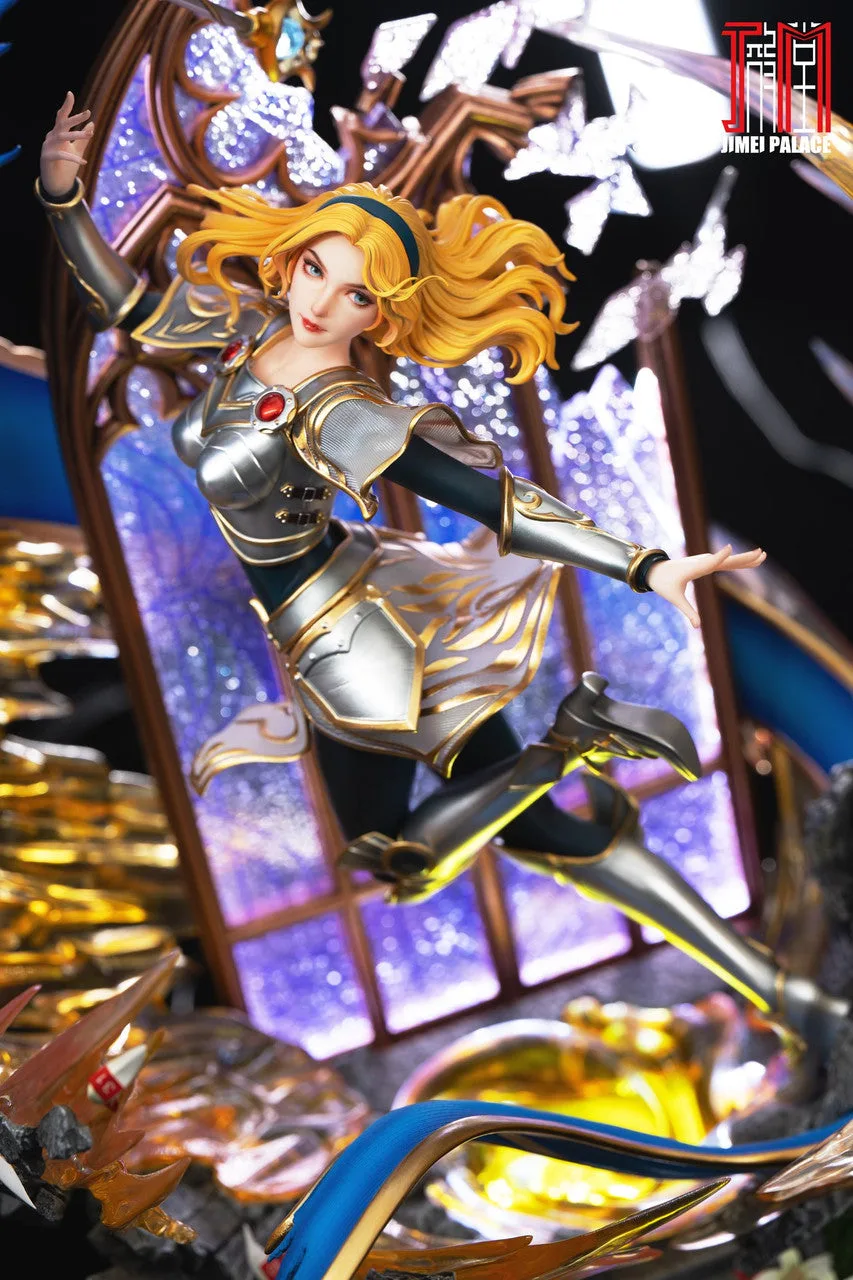
- [Warehouse in Stock] Jimei Palace studio - Statue - League of Legends Worlds 2024 - 1/6 Licensed The Lady of Luminosity Lux: Jimei Palace studio - League of Legends Worlds 2024 - 1/6 Licensed The Lady of Luminosity Lux measures W30 x D27 x H42 cm and is made of resin and PU. At 42 cm tall and roughly 30 cm wide, this piece needs a shelf with enough depth and a base plate that covers its full footprint. The resin and PU construction means it's dense, so confirm your glass rating before placing it.
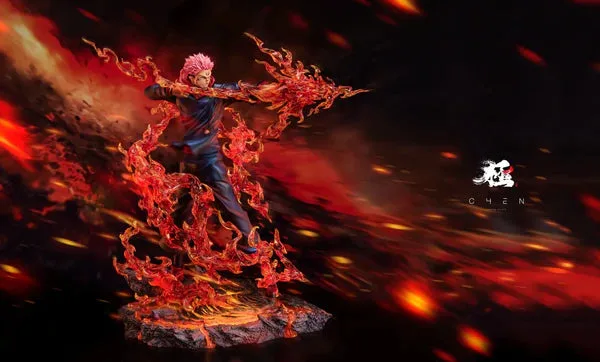
- [Warehouse in Stock] DESIGN Studio (Ji Zhi Fan) - Statue - Jujutsu Kaisen - Series 1st King of the Curse Ryomen Sukuna: DESIGN Studio (Ji Zhi Fan) - Jujutsu Kaisen - Series 1st King of the Curse Ryomen Sukuna measures 40 H x 20 D x 37 W cm. The 37 cm width and 40 cm height make it a good candidate for a centered placement on a wide glass shelf, but the 20 cm depth means it can sit closer to the front edge if you're not careful. Center it and use a base plate.
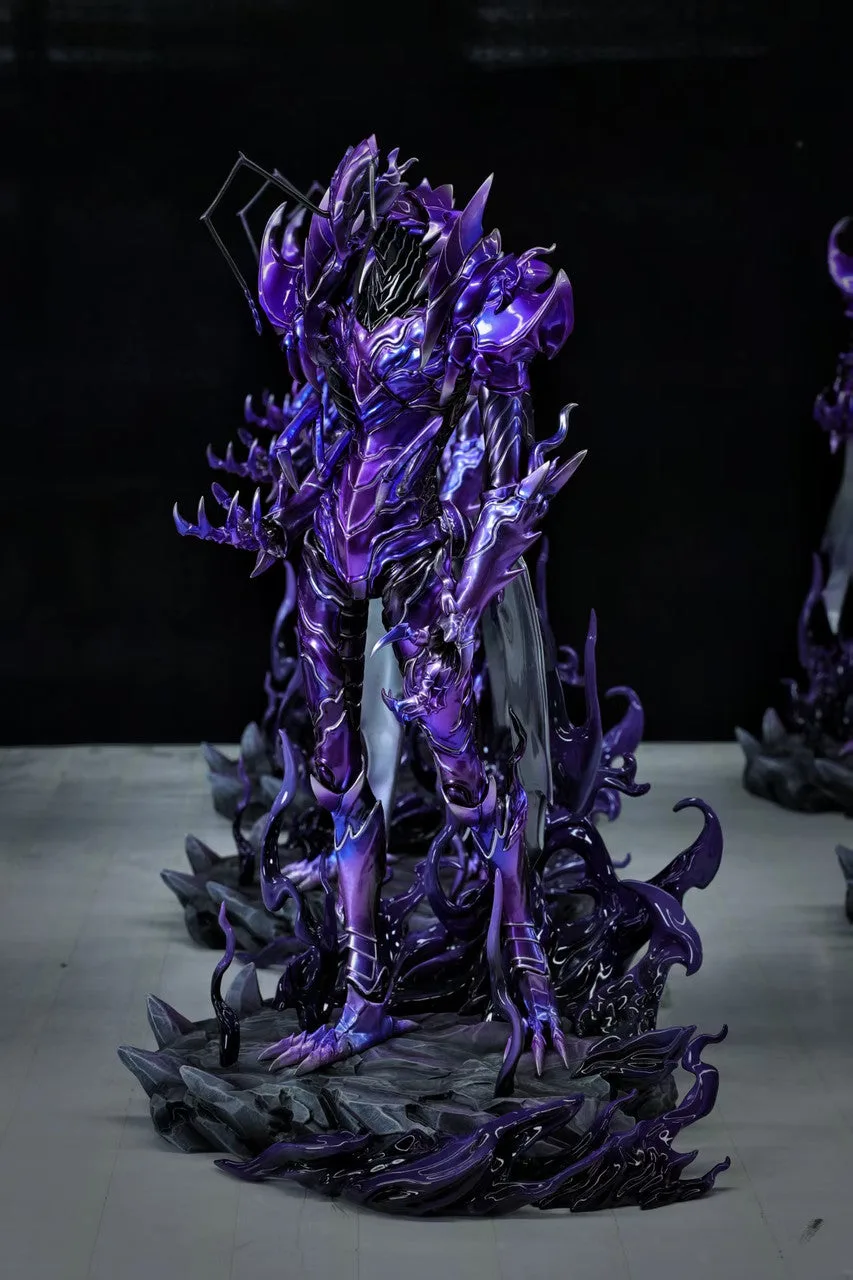
- [Last One] MG Studio - Statue - Solo Leveing - Shadow Beru: MG Studio - Solo Leveling - Shadow Beru is a 1/6 GK statue with dimensions (H) 38 cm x ... The 1/6 scale and 38 cm height put it in the same weight class as other resin statues, so the same glass-shelf rules apply. Check the full dimensions on the product page before deciding on a shelf.