Quick answer
Choose a matte or distressed wood frame, pair the print with natural textures, and hang it at eye level in a spot where the car's bold typography becomes a focal point.
Why a vintage car print works in a rustic room
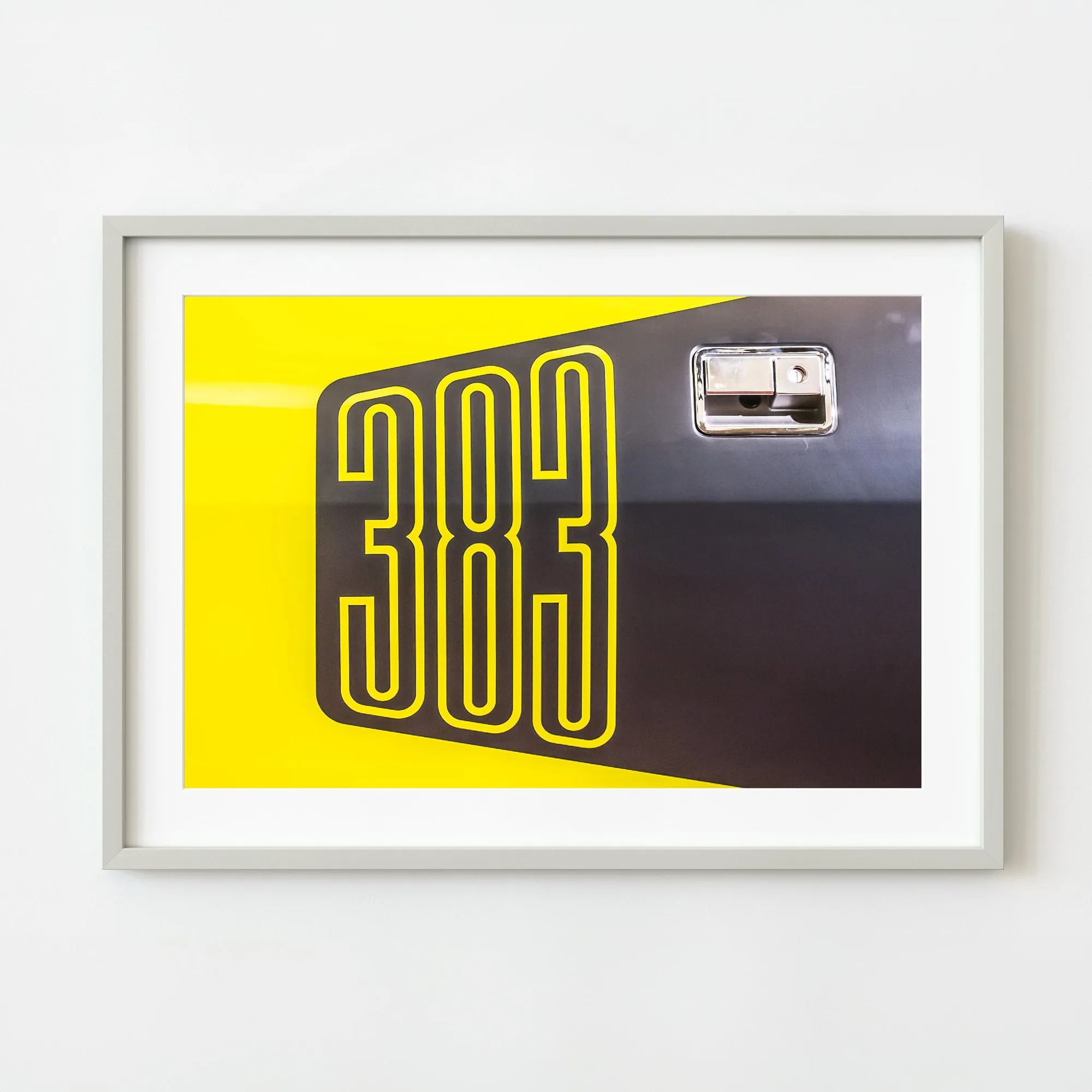
Rustic rooms lean on raw materials like wood, stone, and metal. A vintage car print, especially one with a bold engine badge like the 1971 Plymouth Cuda 383, brings a similar no-fuss, industrial attitude. The typography and mechanical detail echo the honest craftsmanship of rustic decor without feeling out of place.
The key is to avoid glossy, modern frames. A print that already feels gritty and authentic needs a frame that doesn't fight that character.
Trade-off: limited edition vs. everyday decor
A limited edition print of 10 requires care. Direct sunlight, high humidity, and temperature swings can damage the paper and ink. A rustic room with large windows or a fireplace needs extra planning to protect the print while still showing it off.
If the room has a lot of salvaged or dark wood, the print's lighter background will pop. But if the walls are already dark, consider a lighter mat to separate the print from the wall.
How to display your vintage car print
- Choose the right frame: Pick a matte black, dark brown, or distressed wood frame. Avoid high-gloss or metallic finishes that compete with the print's raw feel. A simple, wide frame gives the print breathing room on a rustic wall. Common mistake: using a shiny modern frame that makes the print look like a poster instead of art.
- Add a mat for separation: Use a white or cream mat to create a border between the print and the frame. This protects the paper from touching the glass and helps the print stand out against dark wood paneling or brick. Checkpoint: ensure the mat is acid-free to prevent yellowing over time.
- Hang at eye level: Center the print at 57-60 inches from the floor to the middle of the artwork. In a rustic room, this keeps the car detail at a natural viewing height, whether above a sideboard or in a hallway. Common mistake: hanging too high above furniture, which makes the print feel disconnected from the room.
- Pair with natural textures: Surround the print with elements like a reclaimed wood shelf, a metal lamp, or a wool throw. These textures reinforce the rustic feel and let the car print act as an accent rather than an odd one out. Checkpoint: avoid placing the print next to overly polished or plastic items that break the rustic mood.
- Protect from light and heat: Hang the print away from direct sunlight and heat sources like radiators or fireplaces. Use UV-protective glass in the frame to reduce fading, especially for a limited edition piece. Common mistake: assuming a rustic room's dim lighting means no UV risk; even indirect light can cause damage over years.
Product spotlight
-
1971 Plymouth Cuda 383 Engine Door | Limited Edition of 10: The 1971 Plymouth Cuda 383 Engine Door print captures a tight detail of the car's side panel with the massive '383' decal, described as a 'war cry from the muscle car era.' The bold typography and mechanical focus make it a natural fit for rustic rooms where strong, honest design is valued over delicate ornament.
1971 Plymouth Cuda 383 Engine Door | Limited Edition of 10