Quick Answer
Disposable microphone covers, also called audio condoms, are thin non-lubricated sheaths that slip over microphones or wireless bodypack transmitters to block sweat, saliva, and debris without affecting sound quality.
Why Use a Microphone Cover Instead of a Regular Condom
Regular lubricated condoms leave a sticky residue on equipment and can attract dust or cause slipping. Disposable microphone covers are intentionally non-lubricated and sized to fit audio gear snugly, so they stay in place and don't interfere with handling or sound.
The lack of lubrication also means they won't damage sensitive microphone grilles or bodypack ports. This makes them a purpose-built solution rather than a makeshift one.
Common Applications for Microphone Covers
These covers are used in live sound, podcasting, broadcast, and fitness instruction where multiple people share the same microphone or bodypack. They protect against hygiene concerns like cold sores, flu, and skin oils, and they extend the life of expensive wireless transmitters by blocking sweat corrosion.
They are also popular in medical and educational settings where quick sanitation between users is essential. Because they are disposable, they eliminate the need for cleaning wipes or sprays between each use.
Frequently Asked Questions
What exactly is a disposable microphone cover?
It is a thin, non-lubricated sheath (often called a microphone condom) designed to fit over a microphone head or wireless bodypack transmitter. It creates a physical barrier against moisture, saliva, and dirt without muffling audio.
How do I put a microphone cover on?
Stretch the open end over the microphone grille or bodypack and pull it down until snug. Ensure no loose material covers the capsule or antenna port. The cover should feel tight but not stretched to tearing. If the cover is loose, it may slip off during use. Check fit before the event.
Can I reuse a disposable microphone cover?
No. These covers are designed for single use. Reusing them transfers contaminants and reduces hygiene benefits. Dispose of after each session. Keep a fresh cover for each new user to maintain protection.
Do microphone covers affect sound quality?
When fitted correctly, the thin material does not alter frequency response or volume. Some high-end studio mics may have slight high-end roll-off, but for live sound and speech, the difference is negligible. Test a cover on your specific mic model before a critical recording if you are concerned about audio fidelity.
Are these covers the same as regular condoms?
They are similar in material but are non-lubricated and sized differently. Regular condoms are lubricated and too narrow for most microphones, making them impractical and messy. Use purpose-made microphone covers for best results.
Product Facts
-
Disposable Microphone Covers - **Please read below before ordering: These covers are currently out of stock and won't be back for at least 10 days, but back-orders are accepted and will ship when inventory arrives. If you need covers immediately, plan ahead or check back; ordering now secures your place in the shipment queue.
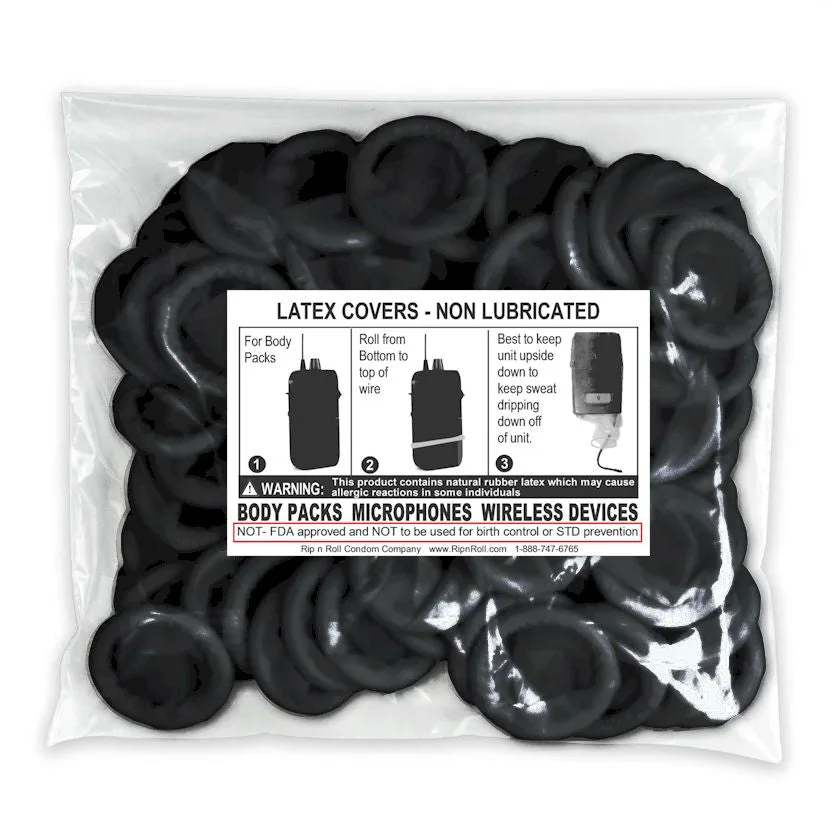
Disposable Microphone Covers - **Please read below before ordering
-
Disposable Microphone Covers - **Please read below before ordering: They are sold in bulk as dry, non-lubricated disposable microphone covers for wireless bodypacks and handheld mics. Buying in bulk reduces per-unit cost and ensures you have enough for multi-speaker events or daily rotation in shared spaces.