Quick answer
Assemble your DIY Japanese Kumiki Trivet by following the precise joinery instructions, then care for it with gentle cleaning and occasional oiling to preserve the wood.
Why assembly order matters
The kumiki trivet uses interlocking pieces without glue or hardware. Starting with the central star pattern is key, as it locks the entire structure. A common mistake is trying to force pieces out of sequence, which can stress the joints.
Step-by-step assembly and care
- 1. Prepare your workspace: Lay out all kumiki pieces on a flat, clean surface. Identify the four wood types: maple, mobingi, walnut, and purpleheart. Check that no pieces are damaged. Keep the pieces organized by wood type to simplify assembly.
- 2. Assemble the central star: Start by connecting the central pieces to form a star shape. Follow the included diagram or pattern. Fit each joint gently; do not force. If a piece doesn't slide in easily, check the alignment. Forcing joints can crack the wood. If stuck, re-check orientation.
- 3. Add outer layers: Once the star is secure, attach the outer hexagon and triangle pieces. Work outward, ensuring each new piece locks into the previous ones. Common mistake: skipping a piece and having to backtrack. Verify each layer is fully seated before moving to the next.
- 4. Clean your trivet: Wipe the assembled trivet with a dry, soft cloth to remove dust. For deeper cleaning, use a slightly damp cloth and dry immediately. Avoid soaking or using harsh chemicals. Moisture can warp the wood. Always dry promptly.
- 5. Oil the wood periodically: Every few months, apply a thin layer of food-safe mineral oil or beeswax to protect the wood. Rub it in with a soft cloth and let it absorb for 15 minutes before buffing. Oiling prevents drying and cracking, especially in dry climates.
- 6. Store properly: When not in use, store your kumiki trivet flat in a dry place away from direct sunlight. Avoid stacking heavy objects on top to prevent warping. Proper storage extends the life of the wood and joints.
Product facts
-
DIY Japanese Kumiki Trivet: Four contrasting wood pieces—maple, mobingi, walnut, and purpleheart—snap together to form stars, hexagons, triangles, and beyond. The distinct wood types not only create visual appeal but also help you identify which piece goes where during assembly, reducing guesswork.
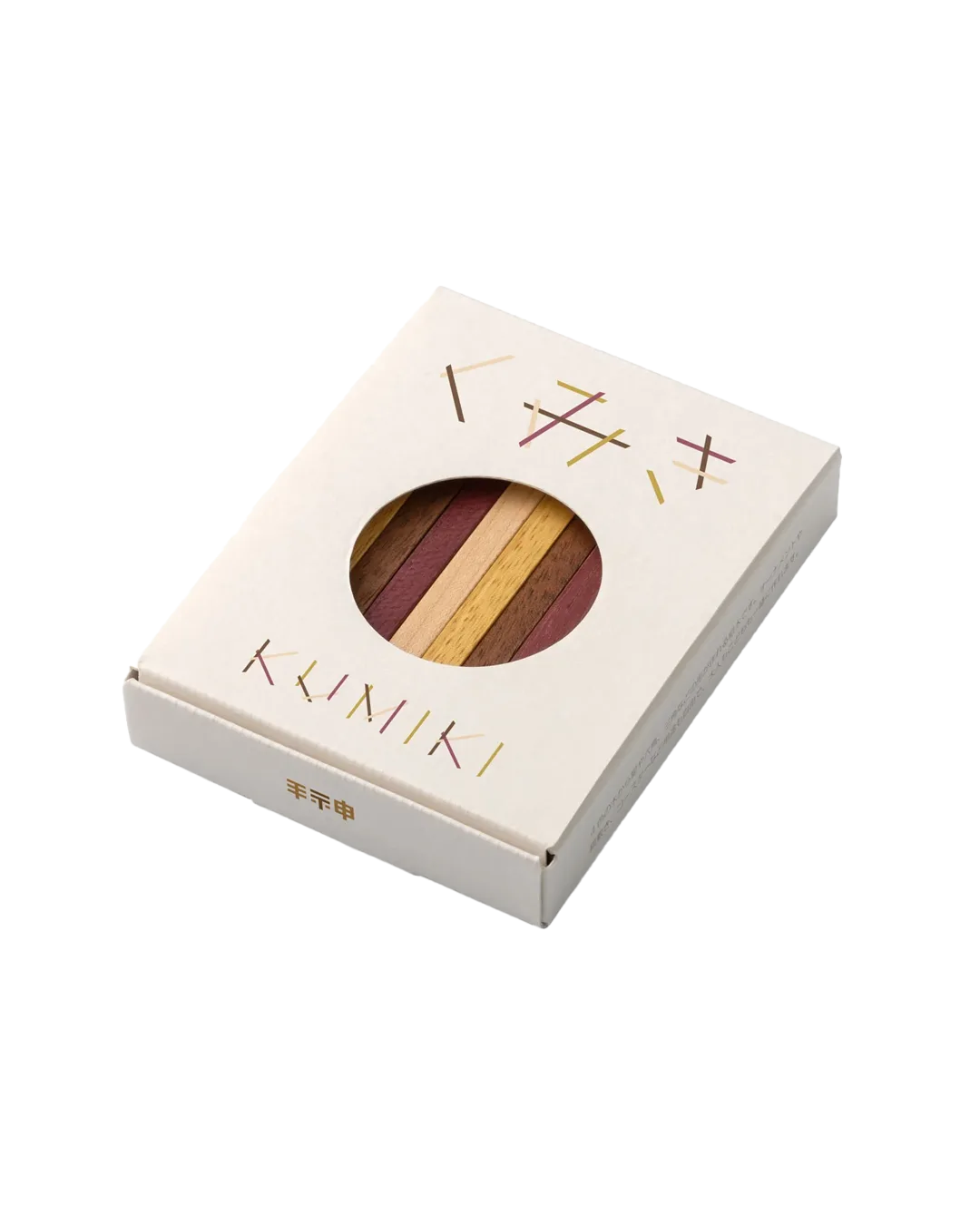
DIY Japanese Kumiki Trivet