Quick Answer
For most children, DIY STEM kits become truly engaging around age 5, but the right fit depends on fine motor skills, reading ability, and attention span. Look for kits labeled for your child's age, but also consider their individual readiness.
Why Age Labels Are Just a Starting Point
Age labels on STEM kits are helpful guidelines, but every child develops differently. A 5-year-old with advanced fine motor skills might enjoy a kit labeled for 6 or 7, while a 7-year-old might still need adult help with reading or complex steps. The best approach is to match the kit to your child's actual abilities, not just their age.
Consider your child's experience with similar activities. If they've already done simple crafts or building toys, they may be ready for more complex kits. Conversely, if they get frustrated easily, start with something simpler to build confidence.
Safety and Supervision: A Key Trade-off
DIY STEM kits often include small parts, chemicals, or tools that require adult supervision. The trade-off is between giving kids independence and ensuring safety. For younger children (ages 5-7), plan to be involved in the activity. For older kids, you can step back but still check in periodically.
Always read the safety warnings on the box. Some kits are not suitable for children under a certain age due to choking hazards or other risks. If a kit says 'for ages 8 and up,' it's usually for a reason—not just a marketing suggestion.
Age-by-Age Decision Rules
- Ages 3-4: Choose kits with large pieces, no small parts, and simple cause-and-effect experiments. Focus on sensory play and basic colors/numbers. Expect to do most of the work while your child observes and helps with simple tasks. If a kit says '5+' and your child is 3-4, it's likely not suitable due to choking hazards or complexity.
- Ages 5-6: Look for kits labeled '5+' or '6+' that involve simple steps, basic tools like safety scissors, and clear picture instructions. Expect to read instructions aloud and help with tricky steps. Kits that combine science with art or stories, like the Femitu DIY STEM Kits, work well. Check that the kit includes all necessary materials—avoid kits that require extra supplies you don't have on hand.
- Ages 7-9: Choose kits with more complex builds, simple circuits, or chemistry sets with safe chemicals. Kids at this age can read instructions themselves but may still need help with fine motor tasks like soldering or tying knots. Encourage them to experiment and modify the project. This is a good age to introduce kits that require batteries or simple motors, but always supervise electrical components.
- Ages 10-12: Opt for advanced kits like robotics, coding, or more serious chemistry sets. These often require patience and problem-solving. Kids can work independently but should still be supervised for safety. Consider kits that allow for open-ended projects. If your child shows strong interest, look for kits that offer expansion packs or additional challenges.
Product Spotlight
-
Femitu DIY STEM Kits Educational Learning Science Kits, Science Experiments for 5+ Years Old Kids Toys Gift: The Femitu DIY STEM Kits include hands-on science experiments and are designed for kids aged 5 and up. Each kit explores different world cultures through mysteries and art projects, and includes a curated book to complement the monthly theme. This kit is a great fit for 5-year-olds because it combines science with storytelling and art, keeping young attention spans engaged while developing problem-solving and persistence.
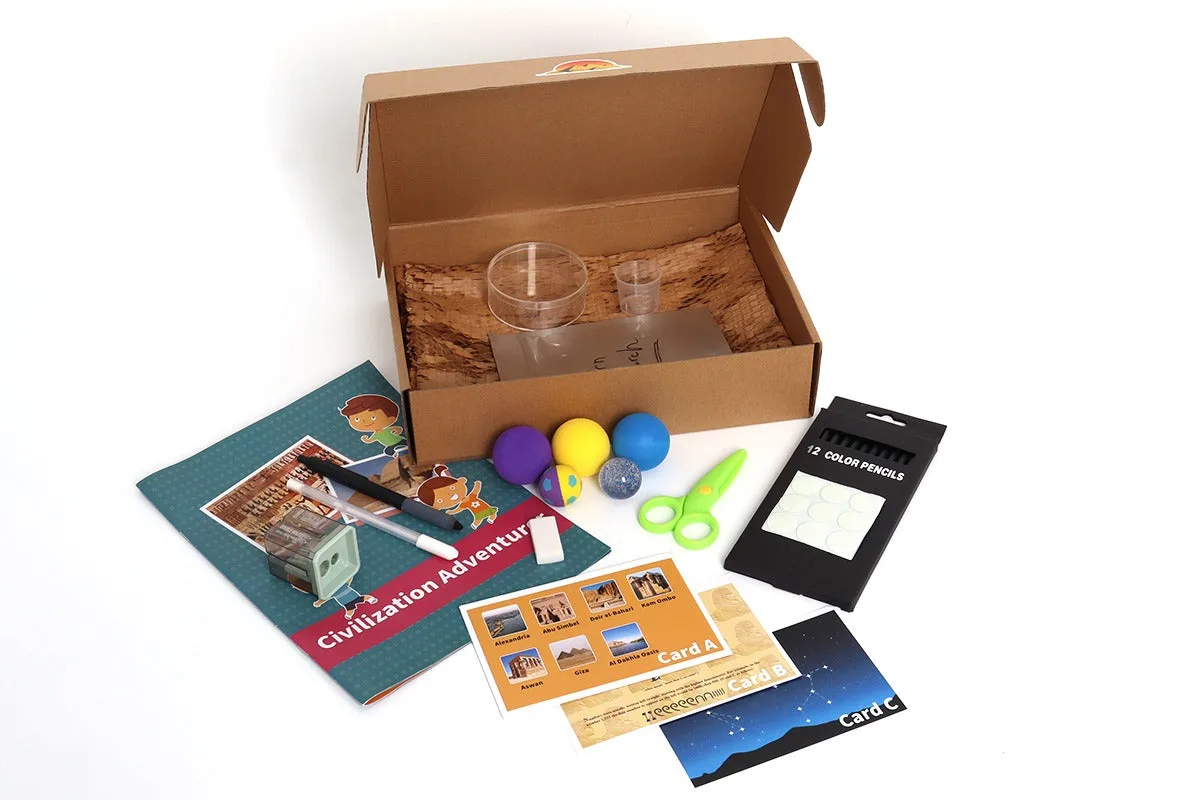
Femitu DIY STEM Kits Educational Learning Science Kits, Science Experiments for 5+ Years Old Kids Toys Gift
Who Should Buy What
Best For
- Parents of 5-6 year olds who want a hands-on, screen-free activity that combines science with art and storytelling.
- Gift-givers looking for an educational present that encourages problem-solving and creativity for kids ages 5 and up.
Not For
- Parents of children under 5 who need a kit with no small parts and minimal adult involvement.
- Older kids (10+) who are ready for advanced robotics or coding kits—they may outgrow introductory science kits quickly.