Quick answer
If you want a lightweight, wearable camera with a wide field of view and long battery life, the DJI Osmo Nano 128GB is a strong contender. GoPro offers a broader ecosystem and proven durability, so your choice depends on whether you prioritize portability and runtime or robust build and accessory support.
Sensor and image quality
The DJI Osmo Nano features an all-new 1/1.3-inch sensor that captures 4K video at 60 fps with 10-bit color and D-Log M color performance. That means richer, more gradable footage straight out of the camera. GoPro’s top models use a similar sensor size but often rely on 8-bit color in standard modes, so the Nano gives videographers more flexibility in post-production.
However, GoPro’s HyperSmooth stabilization remains a benchmark for action cameras. The DJI Osmo Nano relies on its magnetic mount and lightweight design to reduce shake, but it doesn’t match the computational stabilization you get from a GoPro in high-motion scenarios like mountain biking or running.
Field of view and waterproofing
The DJI Osmo Nano offers a 143° wide field of view, which is noticeably wider than most GoPro standard lenses. This makes it ideal for capturing immersive landscapes or POV shots where you want more of the scene in frame. The trade-off is that the Nano’s waterproofing is limited to 10 meters (IPX4-rated), while GoPro’s flagship models can go down to 10 meters without a housing and deeper with one.
If you’re a diver or water-sports enthusiast, GoPro’s deeper waterproof rating gives you more confidence. The DJI Osmo Nano is better suited for surface-level splashes and light rain.
Battery and charging
The DJI Osmo Nano supports quick charging and delivers over 3 hours of runtime, which is excellent for a wearable camera. GoPro’s batteries typically last 1.5 to 2 hours in 4K recording, so the Nano gives you more shooting time on a single charge. Its dual-sided magnetic design also makes it easy to snap onto metal surfaces for hands-free mounting.
On the downside, the Nano’s battery is built-in, while GoPro uses removable batteries. If you’re on a multi-day trip without power, being able to swap GoPro batteries is a clear advantage.
Trade-offs at a glance
- Image quality vs stabilization: The DJI Osmo Nano delivers 10-bit color and D-Log M for better grading, but GoPro’s HyperSmooth stabilization handles shake better in active sports. Choose the Nano if you prioritize color depth and post-production; choose GoPro if you need rock-steady footage without a gimbal.
- Field of view vs waterproofing: The Nano’s 143° FOV captures more of the scene, but its 10m waterproof rating (IPX4) is shallower than GoPro’s deeper waterproof capability. Opt for the Nano for wide-angle POV and surface water use; pick a GoPro for diving or heavy water exposure.
- Battery life vs swappable batteries: The Nano offers over 3 hours of runtime and quick charging, but the battery is built-in. GoPro’s removable batteries let you extend shooting time with spares. If you can recharge between sessions, the Nano’s long runtime is a plus. For multi-day off-grid trips, GoPro’s swappable batteries are more practical.
Product facts
-
DJI Osmo Nano (128GB): The DJI Osmo Nano 128GB features an all-new 1/1.3-inch sensor, 4K/60fps, 143° wide FOV, 10-bit color with D-Log M, and a lightweight dual-sided magnetic design. This combination gives you high-quality, color-rich footage with a very wide perspective, all in a compact body that attaches quickly to metal surfaces for hands-free shooting.
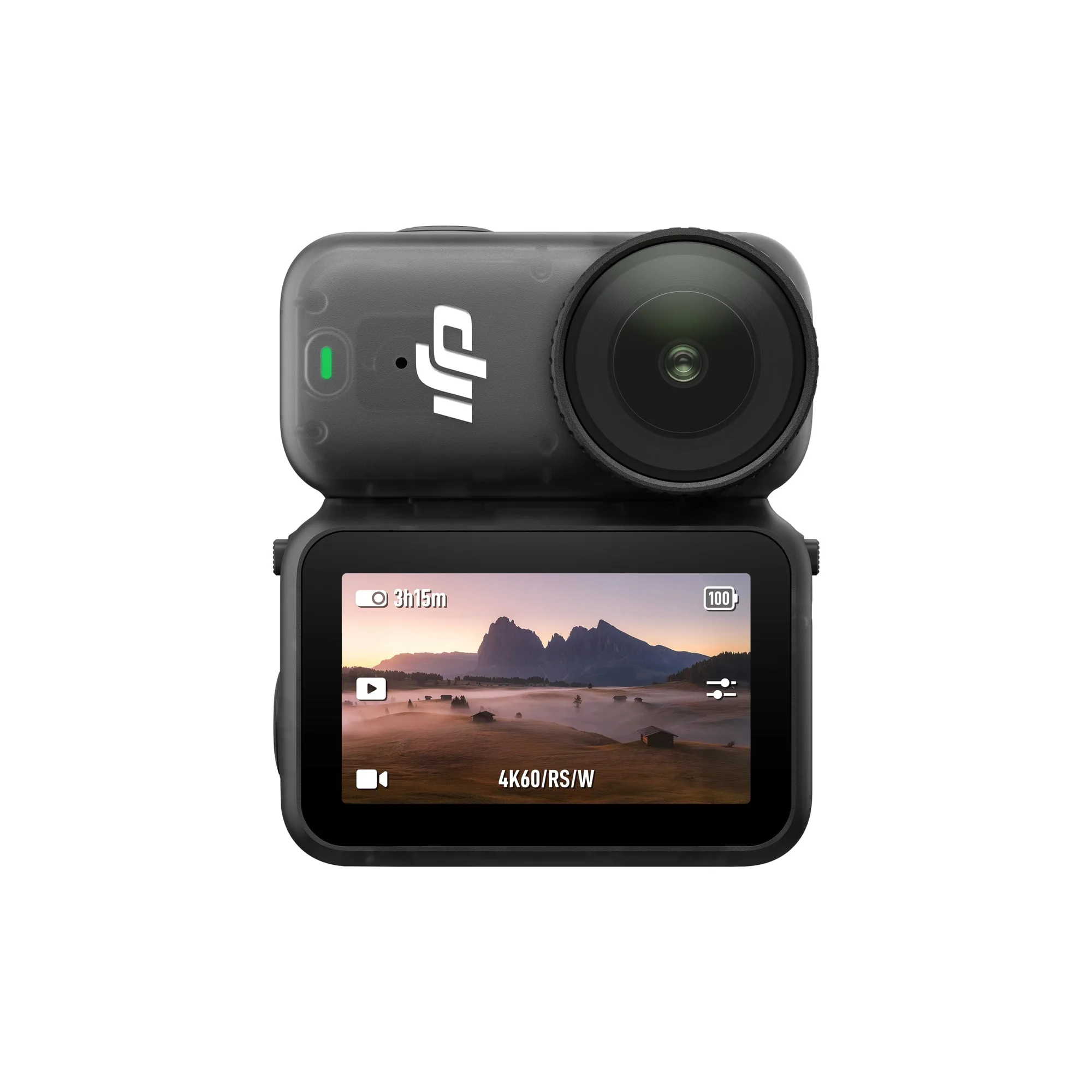
DJI Osmo Nano (128GB)
Which one fits you?
Best for
- Vloggers and content creators who want wide-angle, color-rich footage and long battery life in a lightweight, wearable form
- Adventurers who mostly stay near the surface (hiking, biking, casual swimming) and want quick magnetic mounting
Not for
- Deep-water divers or heavy water-sports users who need deeper waterproofing without a housing
- Users who need rock-steady stabilization for high-impact sports like mountain biking or running