Quick answer
For protecting your D&D sourcebooks from daily wear, spills, and shelf damage, a dedicated D&D book cover like the Premium Book Cover offers superior protection and flexibility compared to a standard binder. Choose a binder only if you need to store loose pages or custom content.
Why a dedicated cover beats a binder for D&D books
Standard binders are designed for paper organization, not for protecting bound books. They typically lack a rigid front and back cover that conforms to a book's shape, leaving the spine and corners exposed to wear and tear.
A dedicated book cover, like the Premium Book Cover for Dungeons & Dragons, is tailored to fit your sourcebook snugly. Its textured leatherette exterior and rigid protective layer shield the front and back covers from scratches, dings, and moisture, while the flexible binding allows the book to open flat for easy reference during play.
If you often carry your books to game sessions or store them on a shelf, the dedicated cover's all-around protection is a clear advantage over a binder, which offers little more than a sleeve.
When a binder might be the better choice
Binders excel at organizing loose materials—character sheets, campaign notes, or printed supplements. If your primary need is to keep papers in order rather than protect a bound book, a binder is a practical and cost-effective solution.
However, using a binder for a hardcover sourcebook often means the book doesn't fit well, and the binder's rings can press into the spine, causing damage over time. For actual book protection, a dedicated cover is the safer bet.
Consider a binder only if you're creating a custom campaign manual with removable pages, not for safeguarding your treasured D&D books.
Trade-offs at a glance
- Protection level: A dedicated D&D book cover provides rigid front and back protection plus a flexible spine, shielding the entire book. A binder only covers the outside and can damage the spine with its rings. If your priority is safeguarding the book itself, choose the dedicated cover.
- Ease of use during play: The Premium Book Cover's flexible binding allows the book to open flat, making it easy to reference during a game. A binder keeps the book closed and requires removing pages or flipping awkwardly. For in-game use, the book cover is more convenient.
- Storage flexibility: Binders are ideal for storing loose papers and custom content, but they don't cradle a bound book. The book cover is designed specifically for D&D sourcebooks, offering a snug fit. If you need to organize loose sheets, a binder complements but doesn't replace a book cover.
Product spotlight
-
Premium Book Cover for Dungeons & Dragons (Multiple Options): The Premium Book Cover for Dungeons & Dragons features a textured leatherette cover with a rigid layer of protection for both front and back, while remaining flexible at the binding. This design shields your sourcebook from impacts and scratches while letting the book lie flat, so you can reference rules without stressing the spine.
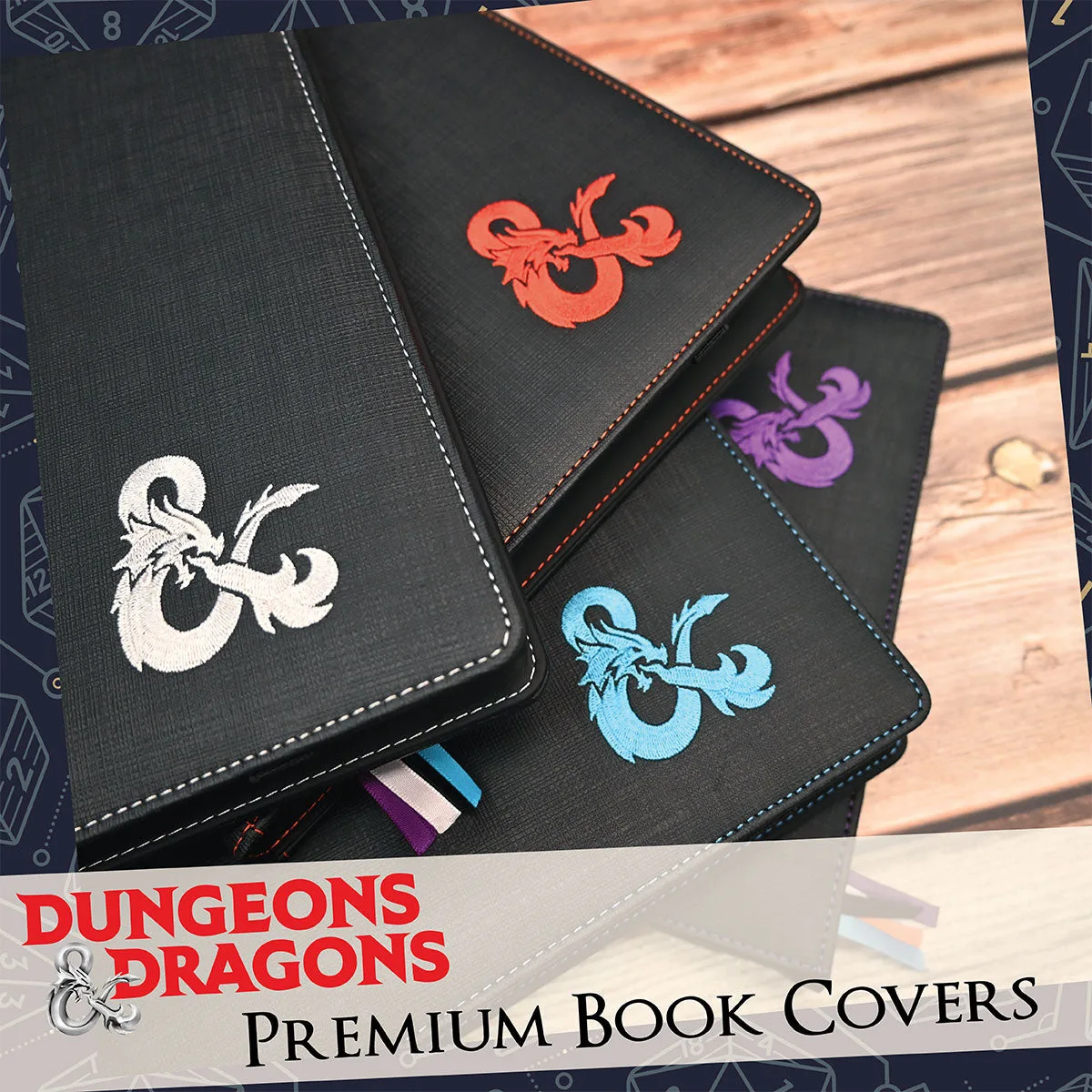
Premium Book Cover for Dungeons & Dragons (Multiple Options)
Which should you choose?
Best for
- Gamers who want maximum protection for their D&D sourcebooks during transport and storage
- Players who reference their books frequently and need them to lie flat during sessions
Not for
- Those who primarily need to organize loose character sheets or campaign notes—a binder is more practical for that