Quick answer
No, you don't need both a bouncer and an activity center. A bouncer works from birth for short, supervised soothing, while an activity center is for older babies who can hold their head up and are ready to pivot, bounce, or play. Most families start with a bouncer and add an activity center around 4–6 months, depending on your baby's milestones.
What's the real difference between a bouncer and an activity center?
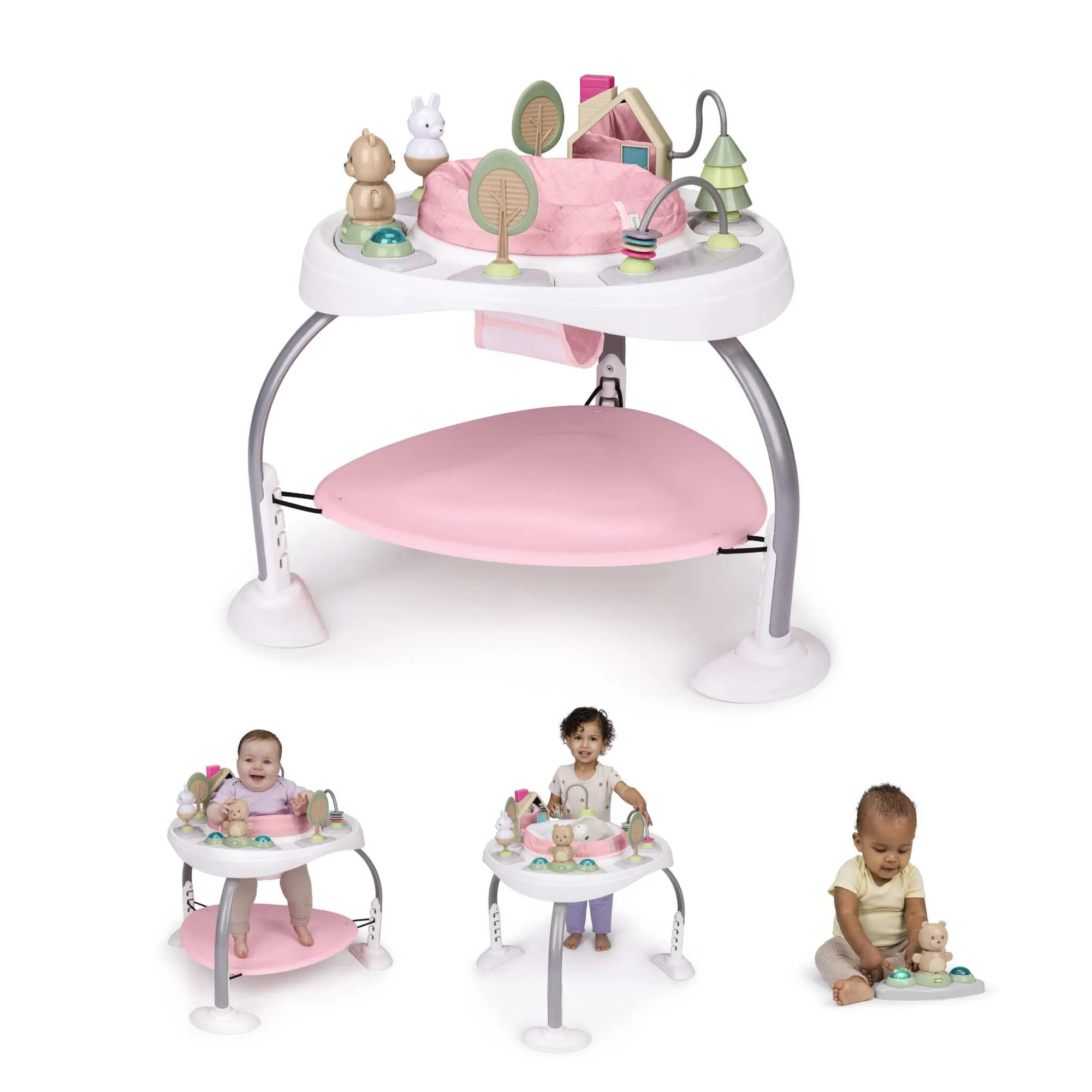
A bouncer is a low, portable seat that lets you put your newborn down safely while you shower, cook, or tend to another child. It's for soothing and containing, not for active play. An activity center is a stationary play station with a seat that rotates, a tray of toys, and often a bouncing base. It's designed for babies who can sit with support and hold their head up steadily. The two overlap only in that both give you a hands-free moment, but they serve different developmental stages and different rooms of the house.
At what age can my baby use an activity center?
Most activity centers are labeled for babies who can hold their head up unassisted, typically around 4 months, and who are not yet walking or climbing out. Always check the specific product's age and weight limits. If your baby can't yet hold their head steady, an activity center isn't safe because the seat supports them in an upright position they can't maintain on their own. When in doubt, wait for the milestone, not the birthday.
When should I use a baby bouncer?
Use a bouncer from day one for short, supervised periods—think 15–20 minutes while you fold laundry or eat. It's not a sleep space, and you shouldn't leave a baby unattended in one. Once your baby starts trying to sit up or roll over, usually around 5–6 months, it's time to retire the bouncer and move to a play mat or activity center. If your baby fusses the moment you put them down, try a bouncer with a toy bar or gentle vibration to buy you a few extra minutes.
Do I need both if I have a small apartment?
No. In a small space, pick the one that matches your baby's current stage. A bouncer folds flat or is lightweight enough to tuck beside a couch. An activity center is bulkier and stays put, so it usually lives in the main living area. If you're short on room, start with a bouncer and wait to add an activity center until your baby is close to the age limit. Some parents skip the bouncer entirely and use a play gym on the floor for the first few months.
What about swaddles and other gear—do they replace either one?
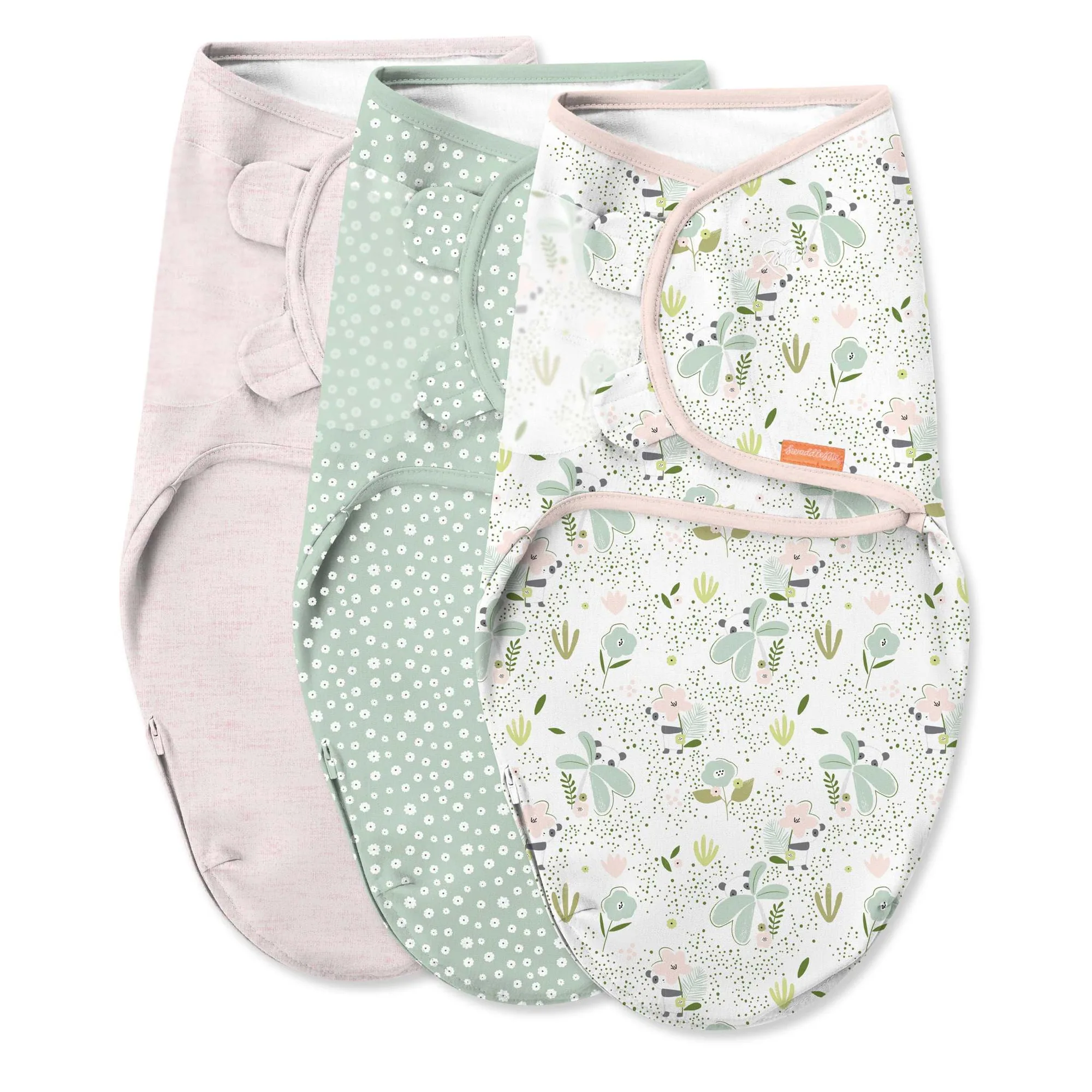
No, but they solve a different problem. Swaddles help with sleep and calming, not with awake-time containment. For example, the SwaddleMe by Ingenuity Original Swaddle in size SM is designed for babies 0–3 months, 7–14 pounds, and up to 26 inches long, using adjustable wings and hook-and-loop closures for a snug fit. That's for naps and nighttime, not for play. A bouncer or activity center is for supervised awake time. If you're building a gear list, treat swaddles, bouncers, and activity centers as separate categories with separate jobs.
How do I choose between a bouncer and an activity center first?
Match the gear to your baby's current milestone. If your baby is under 4 months and can't hold their head up, a bouncer is the practical first buy. If your baby is already sitting with support and grabbing at toys, an activity center will get more daily use. If you can only buy one and your baby is 5 months or older, go with the activity center—it will last longer before they outgrow it. If you're buying for a newborn, start with the bouncer and revisit the activity center in a few months.
Quick answers to common buying questions
Can I use an activity center before 4 months?
Only if your baby can hold their head up unassisted and meets the product's minimum age and weight. Otherwise, wait. Head control is the gate, not the calendar.
Is a bouncer safe for sleep?
No. Bouncers are for supervised awake time only. Use a firm, flat sleep surface for naps and nights. Never leave a baby asleep in a bouncer.
How long can my baby stay in an activity center?
Keep sessions short—10–20 minutes at a time—and always supervise. Prolonged use can strain hips and delay floor play. Short, supervised sessions work best.
What if my baby hates the bouncer?
Try a different time of day, add a toy bar, or use a floor play gym instead. Some babies prefer movement, others prefer flat surfaces. You don't have to force it.
Do I need a stroller rain cover if I already have a bouncer?
They're unrelated. A rain cover like the Ingenuity Universal Stroller Rain Cover is for weather protection on the go, not for indoor play. Buy gear by problem, not by category.
Gear facts that affect your decision
- SwaddleMe by Ingenuity Velboa Original Swaddle, Size SM, 0-3 months, 1PK (Hugs & Kisses): SwaddleMe by Ingenuity Velboa Original Swaddle, Size SM, 0-3 months, 1PK (Hugs & Kisses) is designed for babies 0–3 months, 7–14 pounds, and up to 26 inches long, with adjustable wings and hook-and-loop closures. This is a sleep and soothing tool, not a substitute for a bouncer or activity center. It fits a narrow newborn window, so if you're deciding between gear types, don't count a swaddle as your awake-time containment.
- SwaddleMe by Ingenuity Original Swaddle, Size SM, 0-3 months, 3pk (Wild One): SwaddleMe by Ingenuity Original Swaddle, Size SM, 0-3 months, 3pk (Wild One) follows the same size and weight range as the single pack: 0–3 months, 7–14 pounds, up to 26 inches. A 3-pack makes sense if you plan to swaddle daily and want backups for laundry day. It still doesn't replace a bouncer or activity center for play.