Quick answer
Building toys give children a hands-on way to explore size, shape, symmetry, and spatial relationships, which are the foundations of early math thinking. But the toy itself doesn't install math skills. What matters is how kids play: sorting pieces, copying and extending patterns, counting as they stack, and solving real building problems with an adult nearby.
Search for educational building toys and you'll see bold claims: builds math skills, boosts STEM thinking, prepares kids for school. Those claims aren't wrong, exactly, but they skip the part that actually matters. A bin of blocks sitting on a shelf teaches nothing. A bin of blocks in a child's hands, with someone asking good questions nearby, can do quite a lot.
This article separates the reasonable claims from the overstated ones. Each section states a common belief, gives a clear verdict, and explains it using what we know about how children learn through play, plus concrete examples from real building and puzzle toys.
Verdict: True, with a catch
The claim that block play benefits early math learning holds up, but only when the play involves math-adjacent thinking. Stacking a tower and knocking it down is fun and valuable for motor development, but the math comes from comparing heights, noticing that a short block plus a tall block equals the same height as two medium blocks, or discovering that a triangle won't balance on its point.
In practice, that means the adult's role is to notice and name what's happening, not to run a lesson. "Your tower is taller than mine now" or "you used four small blocks where one big one would fit" turns ordinary play into math through play. Without that, kids still build, they just don't get the same mathematical mileage.
- Keep blocks sorted by shape or size so children naturally compare attributes.
- Ask comparison questions (taller, shorter, heavier, same) instead of quizzing.
- Let kids build wrong and fix it; the correction is where the thinking happens.
Verdict: Mostly false
No building toy, no matter how it's marketed, teaches math on its own. A toy is a tool, and tools need a user. A child who only free-stacks without any adult interaction or peer collaboration is still building spatial awareness, but the jump to counting, patterning, and geometry usually needs a nudge.
This is where the toy's design matters. Open-ended sets like wooden blocks or magnetic blocks invite many outcomes, which is good for repeated play. Kits with a fixed endpoint, like a model that assembles one way, teach following instructions and fine motor control more than open math reasoning. Both have value, but they build different things.
- Open-ended sets support more repeated math talk over time.
- Single-outcome kits are better for sequencing, patience, and instruction-following.
- Rotate rather than replace; novelty drives new kinds of building.
Verdict: True, and it starts younger than most parents think
Spatial reasoning, the ability to picture and manipulate shapes and positions in your head, is one of the strongest early predictors of later math performance. Building toys are one of the most direct ways to practice it. When a child figures out that a long block needs a support in the middle, or that two triangles make a square, they're doing spatial math.
You don't need a formal curriculum for this. A wagon to load and unload, a puzzle to assemble, or a figure to balance all give the same kind of practice. The key is that the child is the one solving the spatial problem, not the adult.
- Choose toys that require balancing, fitting, or rotating pieces.
- Let children load, sort, and reorganize; those are early math actions.
- Resist fixing the build for them; ask what they notice instead.
Verdict: True, but the effect is indirect
STEM building toys often carry claims about math and science learning. The honest version: they build the habits that make later STEM learning easier, like persistence, trial and error, and comfort with spatial problems. They don't replace instruction, and they don't shortcut the need to count, compare, and pattern.
That's still a strong reason to own them. A child who has spent years solving physical problems is more willing to sit with a hard math problem later. The benefit is in the disposition and the spatial vocabulary, not in a hidden arithmetic lesson.
- Look for toys that allow more than one correct solution.
- Pair building with simple measurement talk (longer, shorter, how many).
- Don't expect a toy to substitute for counting practice.
Verdict: False, and this myth causes real harm
The idea that only certain toys are educational, and the rest are just for fun, creates unnecessary pressure and spending. A plain wooden wagon, a set of animal figures, or a simple puzzle can all support math through play if the child is sorting, counting, comparing, or arranging them.
What actually matters is variety and repetition. A few well-chosen open-ended toys used often beat a shelf full of single-purpose kits used once. If you're choosing, prioritize toys that can be used in many ways over toys that promise a specific academic outcome.
- Fewer, more open-ended toys usually outperform a large collection of kits.
- Any toy can support math talk if it invites sorting, counting, or comparing.
- Judge a toy by how many different ways your child uses it.
Myth-by-myth verdicts
- Building toys build math skills on their own: The toy is the tool, not the teacher. Math talk, comparison, and problem-solving during play are what turn building into math learning. Verdict: True only with adult or peer interaction.
- Only STEM-labeled toys are educational: Any toy that invites sorting, counting, comparing, or arranging can support early math. Labels are marketing, not a guarantee of learning. Verdict: False. Open-ended toys often do more.
- Spatial reasoning is a side benefit of block play: Spatial reasoning is one of the strongest early predictors of later math performance, and building toys are one of the most direct ways to practice it. Verdict: True. It's a core benefit, not a bonus.
- Expensive kits teach more than simple blocks: Single-outcome kits teach following instructions well, but open-ended sets usually generate more repeated math talk because they can be rebuilt in many ways. Verdict: False. Design matters more than price.
Real building and puzzle toys that support this kind of play
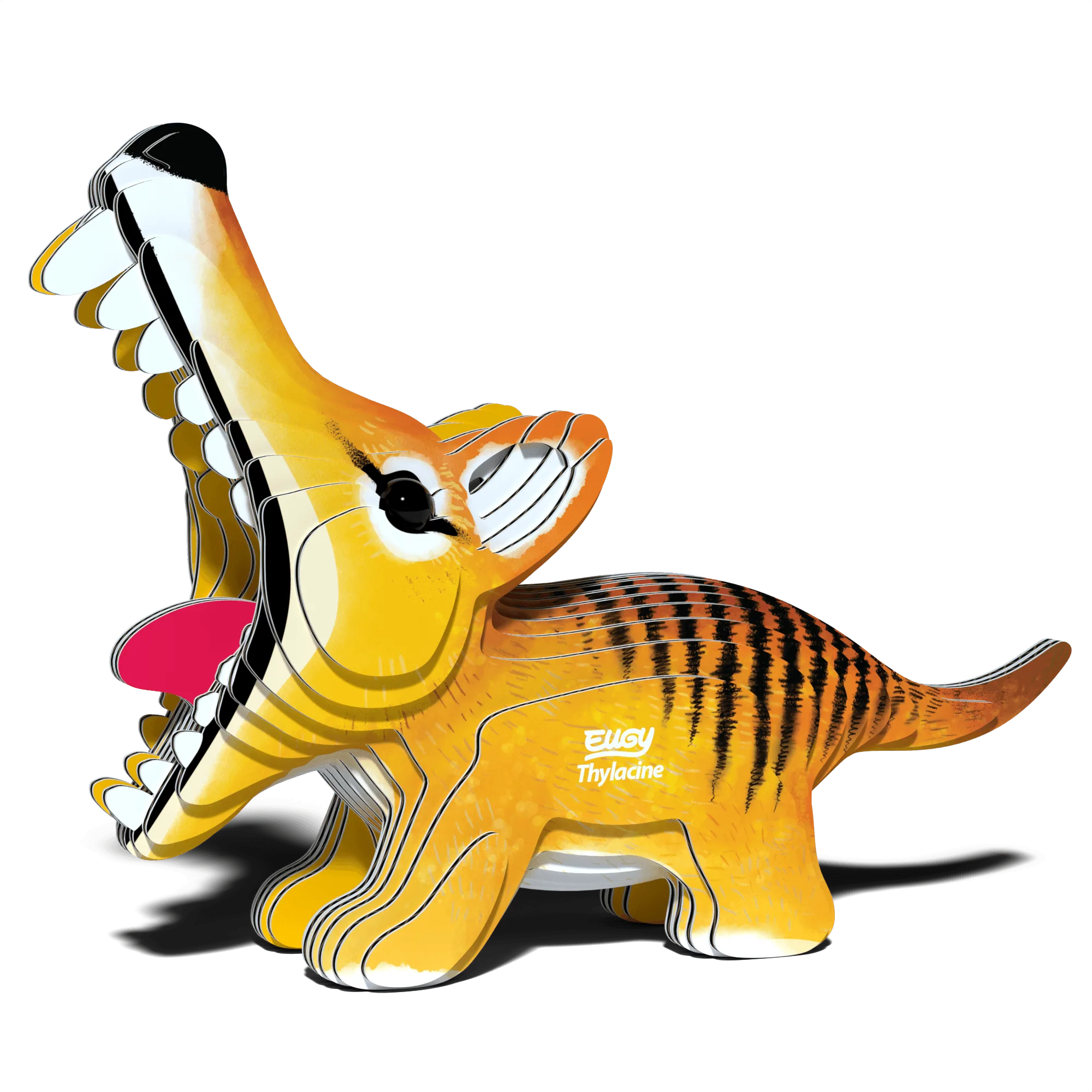
- EUGY Tasmanian Tiger 3D Puzzle: EUGY 3D puzzles are eco-friendly and can be assembled in 10 to 20 minutes, with over 90 designs to collect. The brand positions them for STEM concepts and craftable fun. A short assembly window makes this a good fit for a child who needs a finished result to stay motivated. The many-design format also supports repeated sequencing and spatial practice over time.
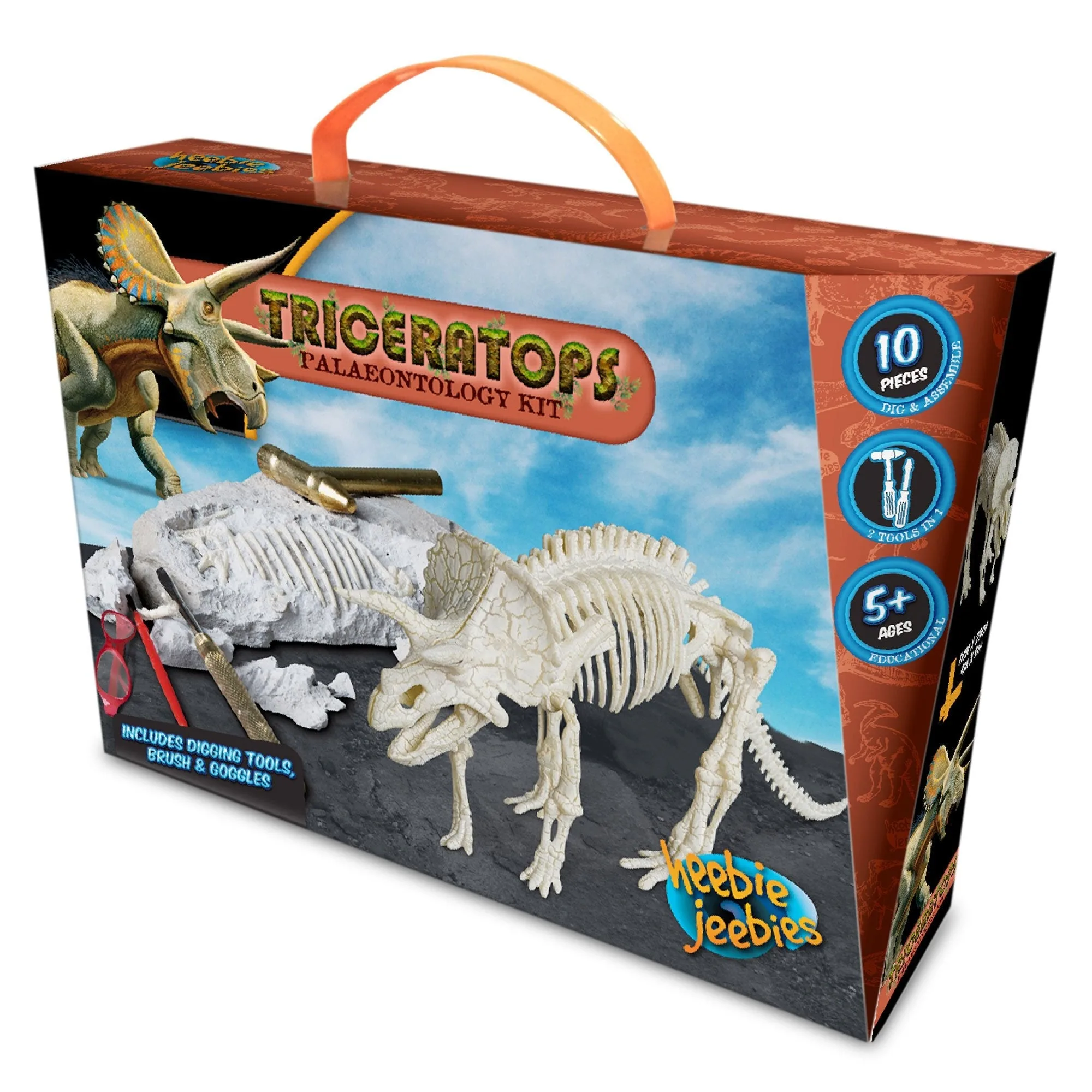
- Triceratops Paleontology Kit: This kit contains a 10-piece Triceratops skeleton, tools, glasses, and instructions, and the assembled skeleton stands 8.8 inches tall. It's recommended for the youngest paleontologists and builds patience, construction, and fine motor skills. Excavating and assembling a known skeleton gives children a concrete sequence to follow and a spatial puzzle to solve, which is exactly the kind of hands-on problem-solving that supports later math thinking.
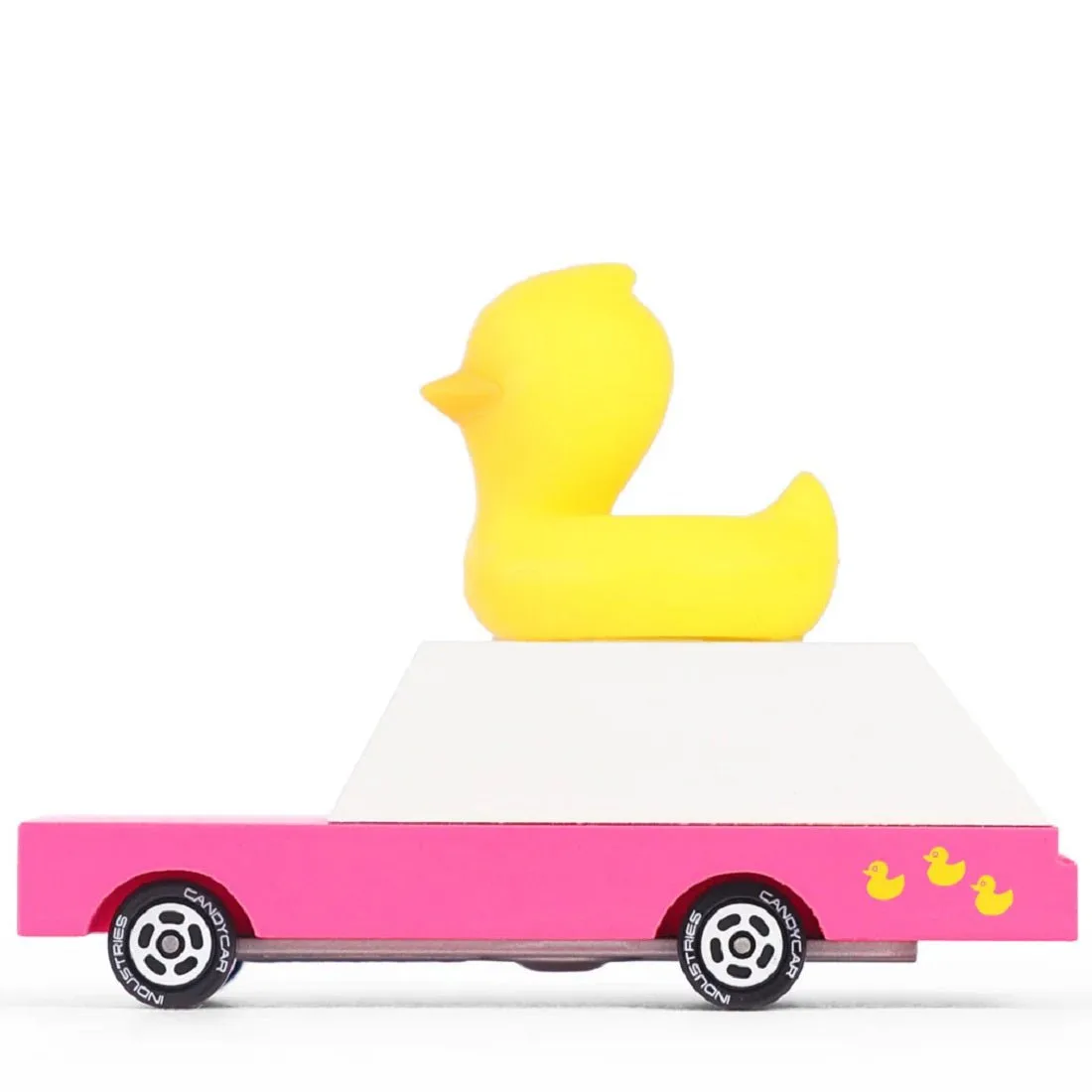
- Duckie Wagon: The Duckie Wagon by CandyLab is a wooden ride toy with smooth-rolling wheels, designed for little ones to tote their favorite toys. Loading and unloading a wagon is an early sorting and counting activity. It also gives toddlers a way to move and organize objects, which is math-adjacent play without any worksheet.
Building toys are a strong vehicle for early math thinking, but they don't drive themselves. Choose open-ended sets, stay nearby, and talk about what your child is doing. That combination, not the label on the box, is what turns play into math.