Quick Answer
No, most dogs do not need grain-free food. Grains like brown rice and oatmeal are digestible sources of carbohydrates and fiber for healthy dogs, and they are not inherently bad. Grain-free is a useful choice mainly for dogs with a confirmed grain allergy or intolerance, which is far less common than many owners assume. If your dog does well on a grain-inclusive recipe, there is no nutritional reason to switch.
Why the Grain-Free Myth Persists
The idea that grains are fillers or allergens has spread faster than the evidence behind it. In practice, true grain allergies in dogs are uncommon, and many suspected reactions trace back to a specific protein rather than to rice, oats, or barley. Marketing language like 'ancestral' or 'wild' can make grain-free sound more natural, but wolves in the wild do not eat kibble of any kind, so that comparison does not settle the question.
What matters more is the whole recipe: the protein source, whether the formula is complete and balanced, and how your individual dog digests it. A grain-free bag with low-quality ingredients is not better than a grain-inclusive bag made with traceable, thoughtfully sourced components.
What Whole Grains Actually Do for Dogs
Grains such as brown rice, oatmeal, and barley supply carbohydrates for energy plus fiber that supports regular digestion. They also help hold a kibble or pâté together and can make a recipe more affordable without cutting protein. For most healthy adult dogs, these are benefits, not compromises.
The practical test is your dog's response: consistent stool quality, healthy coat, steady energy, and no itching or ear issues after meals. If those boxes are checked on a grain-inclusive diet, switching to grain-free solves a problem you do not have.
- Choose grain-inclusive when your dog digests grains well and you want fiber plus value.
- Consider grain-free only if your vet has linked symptoms to a grain source.
- Judge the full recipe, not the presence or absence of one ingredient.
When Grain-Free Is the Right Call
Some dogs genuinely do better without grains, particularly those with a diagnosed allergy or a sensitive stomach that improves on a limited-ingredient plan. In those cases, grain-free can be part of a thoughtful elimination diet guided by your veterinarian.
If you are unsure, do not guess. A vet can help you identify the actual trigger, which may be chicken, beef, or another protein rather than grain at all. Removing grains blindly can leave you feeding a more expensive food without fixing the symptom.
How to Read a Grain-Inclusive Label
Look for a named grain rather than a vague 'cereal' or 'grain products' entry. 'Brown rice' or 'oatmeal' tells you what is actually in the bag. Also check that the recipe states it is complete and balanced, which means it meets nutritional requirements for your dog's life stage.
Traceability is another useful signal. A brand that names where its salmon, chicken, or produce comes from is usually more transparent about the rest of the formula too. That transparency matters more than whether the word 'grain-free' appears on the front.
Grain-Free Claims: The Verdicts
- Claim: Grains are just filler.: Whole grains like brown rice and oatmeal provide carbohydrates for energy and fiber for digestion in complete and balanced recipes. Verdict: Myth. Named grains do real nutritional work.
- Claim: Grain-free is always healthier.: Health depends on the full recipe and your dog's individual response, not on the absence of grain. Many dogs thrive on grain-inclusive food. Verdict: Myth. Grain-free is a fit, not an upgrade.
- Claim: Grain allergies are common in dogs.: True grain allergies are uncommon, and suspected reactions often trace to a protein source instead. Confirmation requires veterinary guidance. Verdict: Mostly myth. Test before you eliminate.
- Claim: Grain-free is the only choice for sensitive stomachs.: Gentle digestion can come from grain-inclusive recipes too, including ones with pumpkin, oatmeal, and omega fatty acids for gut support. Verdict: Myth. Sensitivity does not equal grain intolerance.
Grain-Inclusive Options Worth Knowing
- Goodbowl™ Wild-Caught Salmon & Brown Rice Dog Kibble: Oven-baked in small batches with Ocean Wise recommended wild-caught salmon and wholesome grains like brown rice, and always free of corn, wheat, and soy. Shows that a grain-inclusive kibble can still lead with a quality protein and skip the grains owners most often want to avoid.
- Wild-Caught Whitefish & Pollock Digestive Health Pâté for Dogs: A vet-formulated pâté with wild Alaskan pollock and whitefish plus stomach-soothing pumpkin, oatmeal, and wholesome grains, enriched with vitamin E, zinc, and omega fatty acids. Useful for dogs with sensitive stomachs who need gentle digestion support rather than a grain-free swap.
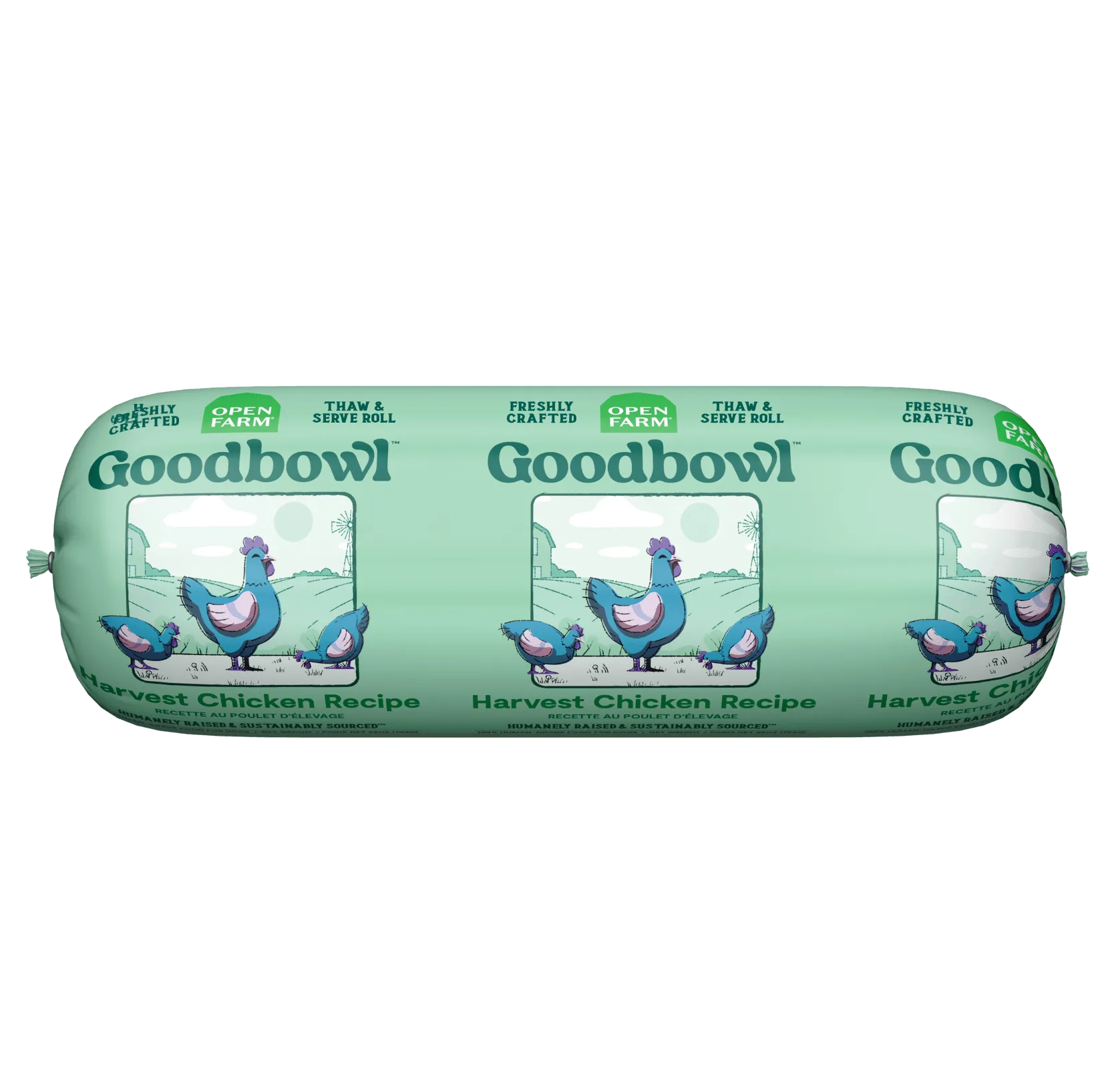
- Goodbowl Harvest Chicken Freshly Crafted Roll for Dogs: A fresh slice-and-serve roll made with humanely raised chicken, non-GMO veggies and grains, and human-grade ingredients, shipped frozen. An option for owners who want a minimally processed, grain-inclusive format instead of dry kibble.