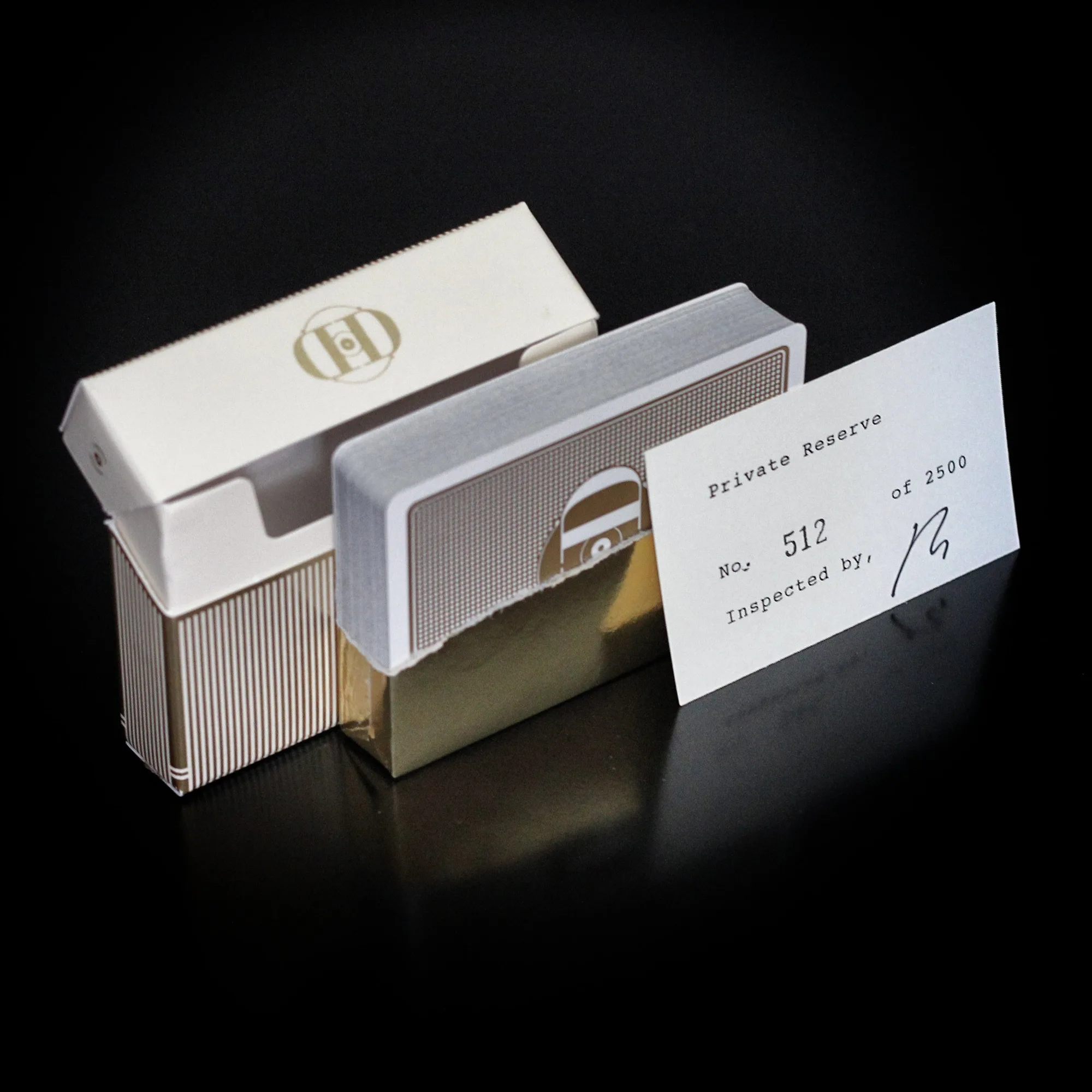
Quick answer
Gilding changes the edges, not the paper or finish, so a gilded deck can still fan and spread well if the stock and finish suit your hands. The tradeoff is that metallic edges are more visible when they wear, and gilded decks are often bought as collectibles rather than daily practice decks. If you want a deck to handle, choose gilding for the look you enjoy, not as a performance upgrade.
What gilding actually changes
Gilding is a metallic treatment applied to the cut edges of a deck. It does not replace the stock, the finish, or the cut, so the way a deck fans, spreads, and springs is still determined by those core construction choices. A gilded deck with a snappy stock and a smooth finish will feel like that stock and finish, just with colored edges. A gilded deck built on stiff or slick stock will still feel stiff or slick.
This matters because many buyers assume gilding is a handling feature. It is closer to a finish on furniture: it changes how the deck looks from the side and in a spread, and it can change the first few shuffles while the edges settle. It does not add snap, reduce clumping, or make a deck more or less suitable for sleights on its own.
Do gilded cards fan well?
They can, but the gilding is not the reason. A clean fan depends on the stock, the finish, the cut, and how broken in the deck is. If a gilded deck fans poorly, the cause is almost always one of those factors, not the metallic edge. If it fans well, the same is true.
One practical difference is feel at the edges. Some gilded decks feel slightly rougher or more textured along the sides when new, especially in a spread where your thumb rides the edge. That sensation usually fades as the deck breaks in. It is a tactile detail, not a sign that the deck is defective or that it will fail to fan.
The wear question collectors and performers ask
Metallic edges show handling more than plain white edges. Nicks, scuffs, and fading are easier to see against a bright gilded edge, and once the gilding wears through, it cannot be restored. That is the main reason gilded decks often end up in a collection rather than in a daily rotation.
For performers, this is a real tradeoff. A gilded deck can look striking in a spread or a fan, but if you practice heavily, the edges will show it. If you want one deck for both practice and performance, a standard non-gilded deck is usually the more practical choice. If you want a gilded deck for a specific routine or for display, the wear concern is manageable because you control how often it is used.
How to judge a gilded deck before buying
Look past the gilding and read the deck description the same way you would for any other deck. Check the stock, finish, and cut if they are listed. If they are not listed, treat that as a limitation: you cannot predict handling from gilding alone, and you should not assume a gilded deck will feel a certain way just because of its edges.
Also consider why the deck was made. Some gilded decks are anniversary or commemorative releases where the gilding is part of the presentation. Others are standard decks with a gilded variant. The first type is usually bought to keep or to display; the second is more likely to be handled. Neither is wrong, but the intended use should shape your expectations.
Verdicts on common gilded deck claims
- Gilding improves handling: Gilding is applied to the edges and does not change the stock, finish, or cut that determine how a deck fans and spreads. Verdict: false. Judge handling by the deck's construction, not its edges.
- Gilded cards cannot fan: A gilded deck can fan well if its stock and finish suit your hands; the metallic edge is not a barrier to a clean fan. Verdict: false. Fan quality depends on the deck, not the gilding.
- Gilded decks are only for collectors: Gilded edges show wear more visibly and cannot be restored, so heavy practice shortens their looks. Light use for a specific routine or display is a reasonable middle ground. Verdict: partly true. Buy gilding for the look, and keep a standard deck for daily practice.
Gilded and collector decks worth knowing
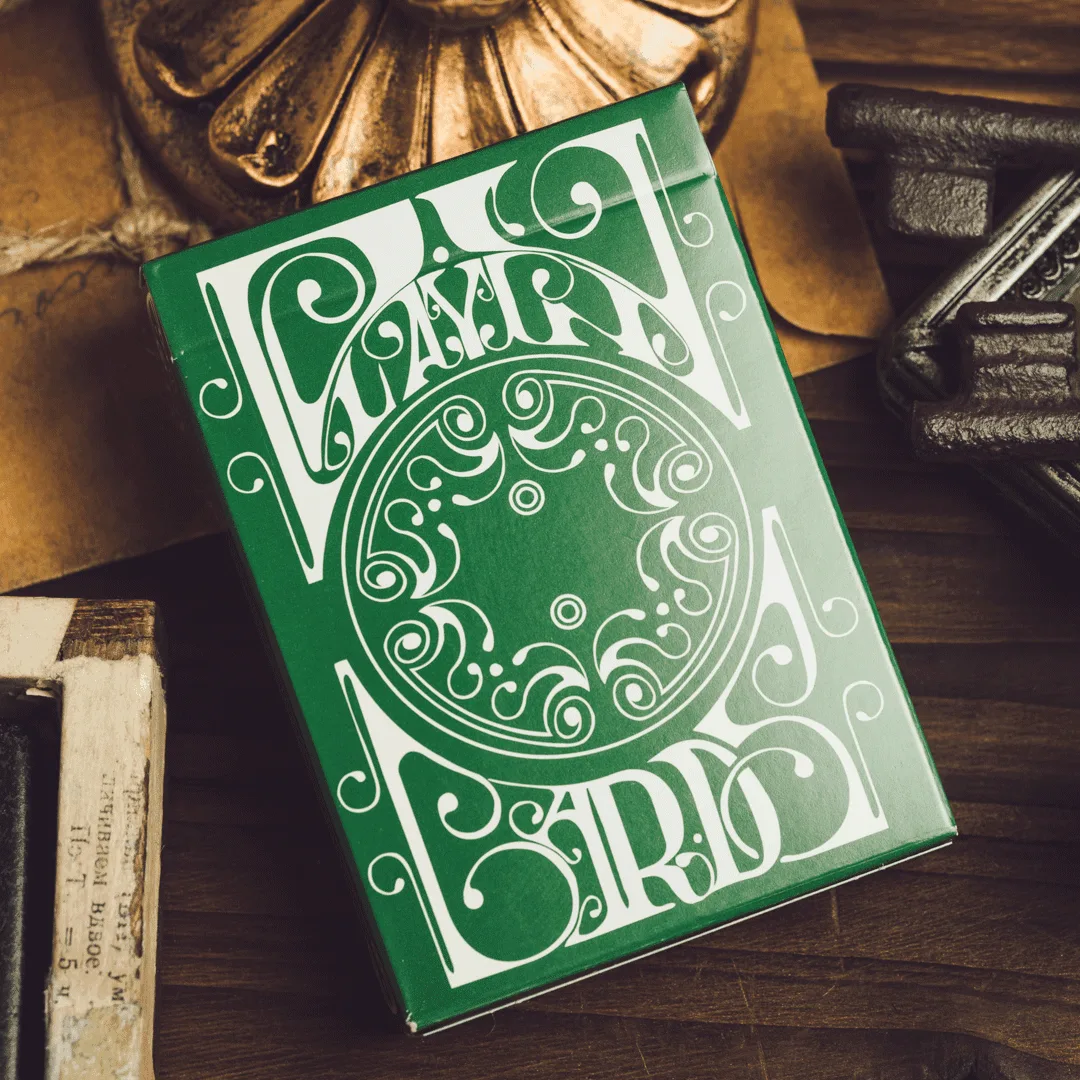
- Smoke & Mirrors Anniversary Edition: Rouge: Smoke & Mirrors Anniversary Edition: Rouge is a fifteen-anniversary edition in red, inspired by 19th-century typography and released as the fourth colorway in the original series of five. This is a commemorative release, so it fits a collection or display role more naturally than a heavy practice rotation, which is the same logic that applies to many gilded decks.
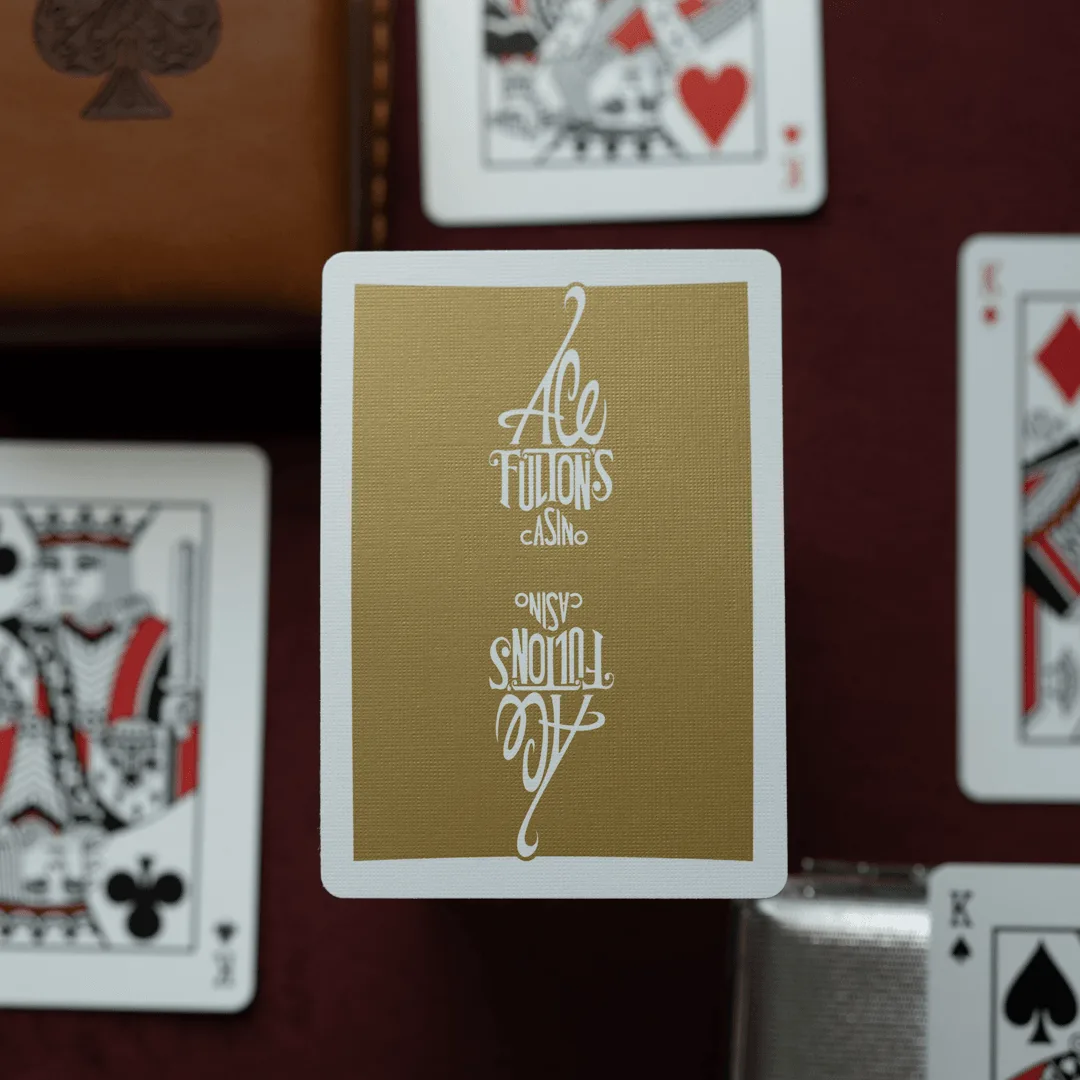
- Ace Fulton's Playing Cards: Ace Fulton's Playing Cards has seen over a dozen colorways since its 2011 release, including Pink, Blue, Green, and Gold, and this supply comes from a private reserve. A long-running line with many colorways gives you a clear way to compare how the same deck design can be collected across editions, which is useful when deciding whether a special edition is worth it to you.
- Smoke & Mirrors, v8: Smoke & Mirrors, v8 was released exclusively in China and was never sold or made available due to a minor imperfection from the printing process; it is now offered as a set. This is a concrete example of a deck whose value comes from its release story and scarcity rather than from handling, which is the same distinction to keep in mind when evaluating a gilded deck.