Quick answer
Yes, gilded playing cards handle differently from standard decks. The metallic foil on the edges adds slight thickness and changes friction, so shuffling feels a bit stiffer and fanning can be less smooth until the deck breaks in. For casual games, the difference is minor and manageable; for heavy shuffling or cardistry, a standard deck may feel more natural.
How foil edges change the feel of a deck
Gilding applies a thin metallic layer to the card edges. That layer adds a tiny amount of width to each card, so the deck sits slightly thicker in your hand. More noticeably, the foil creates a different surface texture: edges that are normally paper-rough become smoother and slightly slick. When you riffle or bridge, the cards don't slide past each other the same way—they tend to catch a little, then release. This isn't a defect; it's a direct result of the foil. Over time, handling will wear the foil slightly at the edges, and the deck will feel more like a standard one, but the gilded look will diminish with heavy use.
Do gilded cards shuffle well out of the box?
They shuffle, but expect a break-in period. New gilded decks often feel stiff because the foil adds a touch of rigidity and the cards haven't yet taken on the slight flex that comes from repeated shuffling. A riffle shuffle may require a bit more pressure, and the cards may not cascade as evenly as a broken-in standard deck. Overhand shuffles tend to work more smoothly because they rely less on edge glide. If you mainly play poker or rummy, you'll adapt within a few games. If you're used to a soft, broken-in deck, give gilded cards a few sessions before judging them.
Fanning and spreading: what to expect
Fanning a gilded deck is where the difference is most obvious. The foil edges reduce the friction that normally helps cards stay evenly spaced in a fan. Instead, cards may clump slightly or fan unevenly, especially if your hands are dry. You can improve the fan by applying light pressure and using a smooth, consistent motion. Some players find that a tiny amount of card powder or fanning powder helps, but use it sparingly—too much can make the deck slippery and hard to control. For gameplay that involves frequent spreading, like solitaire or certain poker variants, you'll likely notice the foil edge more than you would with a standard deck.
Gilded vs standard cards: performance trade-offs
Standard cards are designed for optimal slip and durability during shuffling. Gilded cards prioritize visual impact; the foil is a decorative finish that changes handling. That doesn't mean gilded decks are bad for play—they're perfectly usable for casual games and often become smoother with use. But if your priority is tournament-level shuffling, cardistry, or long sessions where feel matters most, a standard deck will generally outperform a gilded one. Think of gilded cards as a special-occasion deck: beautiful to look at, slightly different to handle, and best reserved for games where the aesthetic adds to the experience.
How to adjust your grip and shuffle for gilded decks
Start with a lighter touch. Because the edges are slicker, you don't need to press as hard during a riffle. Let the cards fall rather than forcing them. For overhand shuffles, keep the deck slightly loose in your hand so the cards can slide. If you fan, try holding the deck a bit lower and using your thumb to push the top card across in a smooth arc. Avoid bending the cards sharply; the foil can crack or flake if the card is creased. Finally, keep your hands clean and dry—moisture can make the foil edges tacky and cause clumping.
Gilded handling FAQ
Do gilded cards shuffle like normal cards?
They shuffle, but with more resistance at first. The foil edges create friction that can make riffle shuffles feel stiff until the deck breaks in. Overhand shuffles tend to be easier. Give new gilded decks a few games to soften up before deciding they're too stiff.
Are gilded cards harder to fan?
Yes, fanning is less smooth because the foil reduces the friction that helps cards spread evenly. You may need to adjust pressure and use a consistent motion. Practice fanning with a light touch; avoid forcing the cards.
Will gilding wear off with play?
Heavy shuffling and handling will gradually wear the foil at the edges, especially where cards rub together. The deck will start to feel more like a standard deck over time. If you want to preserve the gilded look, limit shuffling or use a different deck for heavy play.
Are gilded cards good for poker night?
They're usable for casual games, but the slight stiffness and slick edges can slow down dealing and shuffling. For fast-paced or serious poker, a standard deck is usually more practical. Choose gilded decks for atmosphere, standard decks for speed.
Do I need to break in a gilded deck?
Yes, most gilded decks benefit from a break-in period. After a few sessions, the cards flex more and the edges smooth out, improving shuffle feel. Play a few casual games first to let the deck adjust to your hands.
Gilded decks in the Fulton's lineup
- LANCE MOUNTAIN DOUGHBOY LIMITED EDITION GILDED PLAYING CARDS: Lance Mountain Doughboy Limited Edition Gilded Playing Cards are limited to only 50 of each color, with a colored seal and curated by Lance Mountain. Extreme scarcity means you may want to preserve the deck rather than shuffle it heavily, since replacement is nearly impossible. The gilded edges add a distinct feel that's best appreciated in occasional play.
- JEREMY KLEIN DREAM GIRL PLAYING CARDS SILVER FOIL LIMITED EDITION: Jeremy Klein Dream Girl Playing Cards Silver Foil Limited Edition is limited to 300 units and features silver foil on the cards and an embossed metallic silver tuck box. The all-over silver foil gives this deck a slicker feel than standard cards, so expect a break-in period before shuffling feels natural. The limited run also makes it a candidate for display as much as play.
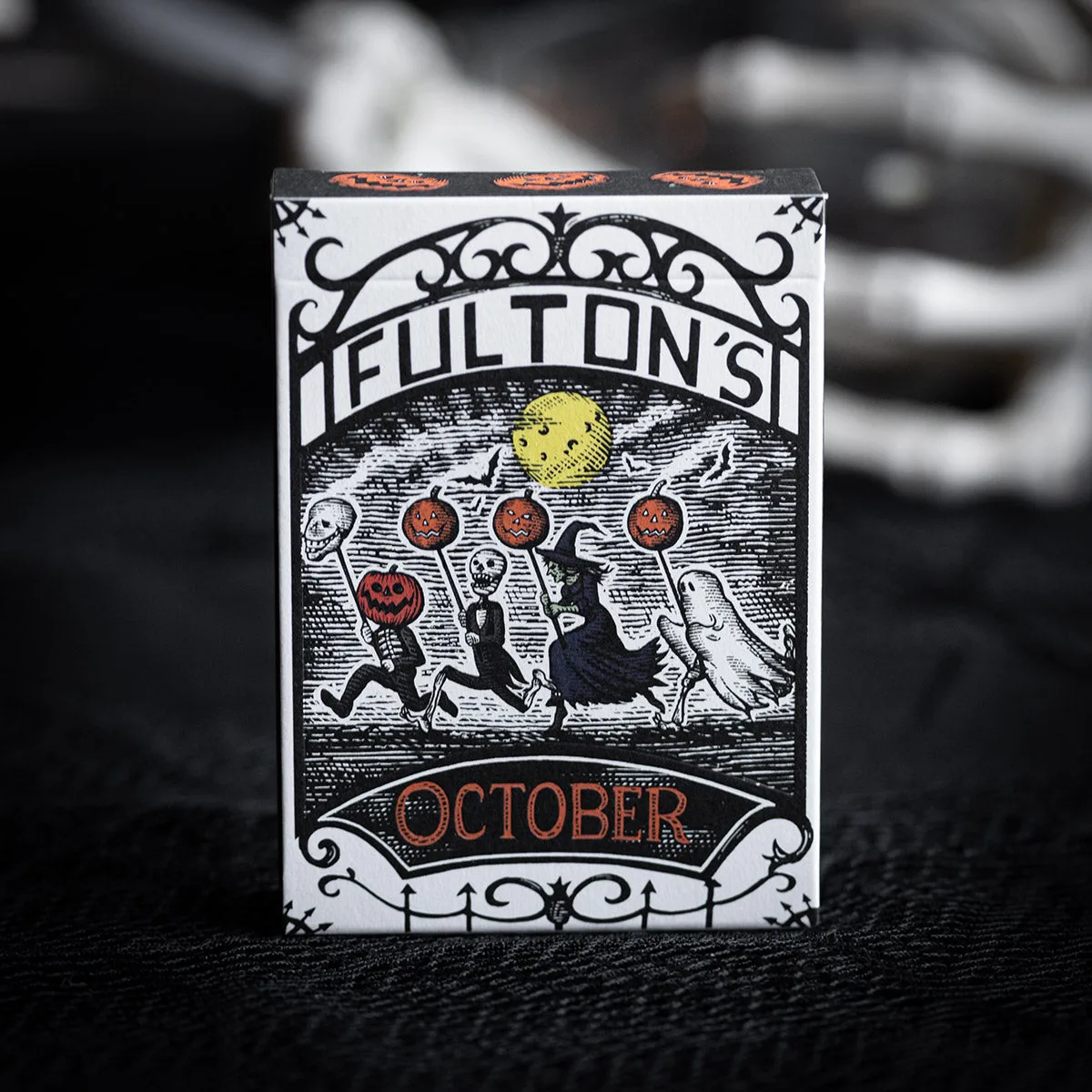
- FULTONS OCTOBER TOMBSTONE GREY PLAYING CARDS: FULTONS OCTOBER TOMBSTONE GREY PLAYING CARDS is a standard (non-gilded) deck printed as the Steven Noble version from 2013. If you want the familiar handling of a standard deck with a Halloween theme, this is the alternative. It shuffles and fans like a typical paper deck, with no foil edge to adjust to.