Quick answer
Choose a mini brush for small dogs, short coats, and detail work on faces, paws, and hocks. Choose a standard brush for medium and large dogs, long or double coats, and any coat that needs wide, overlapping strokes. Many owners end up with both, using a standard brush for the body and a mini brush for the finish.
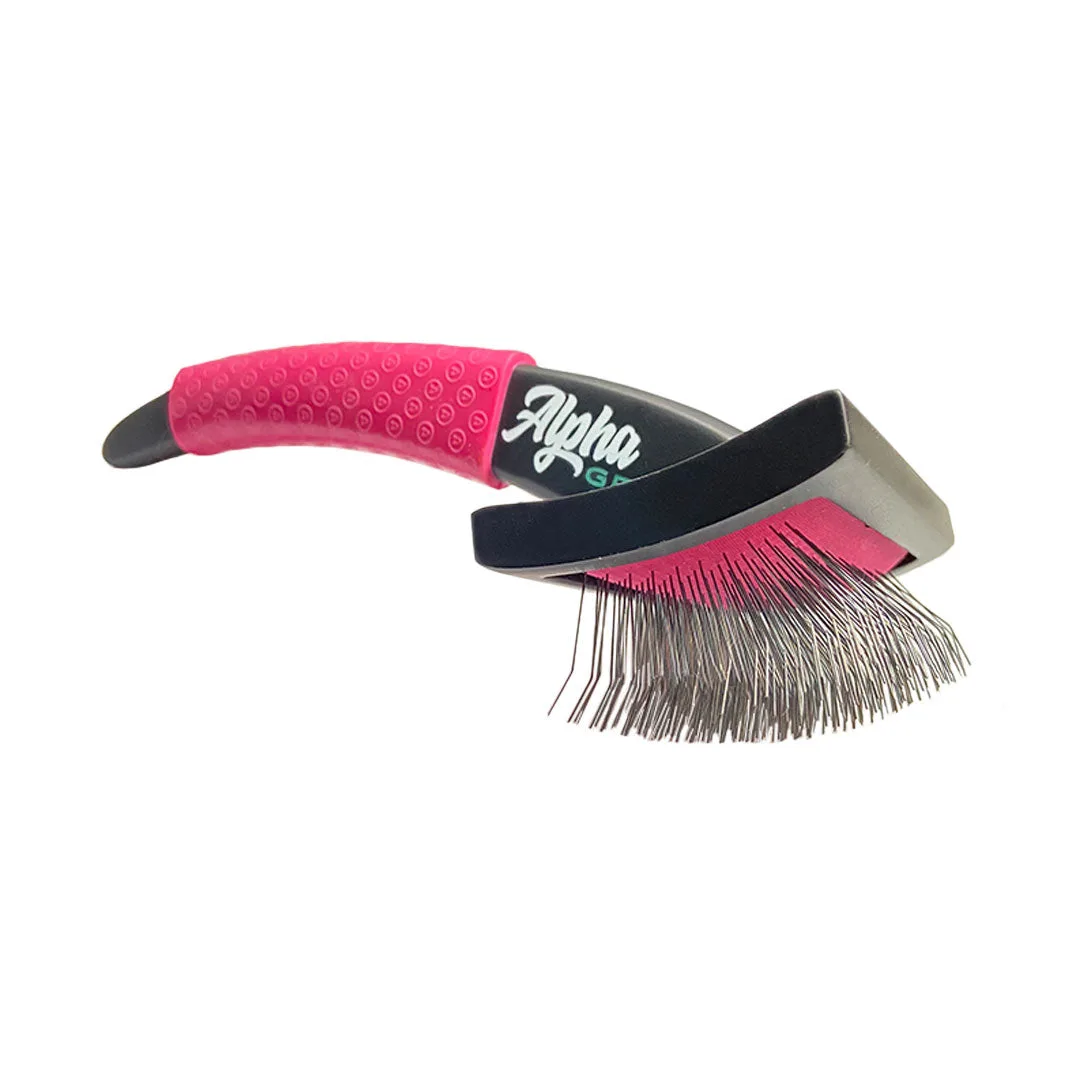
mini brush
What actually changes when the brush gets smaller
A mini brush is not simply a shrunken version of a full-size brush. The smaller head reduces the number of pins or bristles in contact with the coat, which lowers drag and makes each stroke easier to control around bony areas, ears, and the muzzle. That control is the real benefit, not speed.
The trade-off is coverage. On a large dog, a mini brush forces many short, overlapping strokes, so a full groom takes noticeably longer. On a short, dense coat, a standard brush can skip over the surface and leave loose hair behind, while a mini brush works the coat in smaller, more deliberate sections.
Match the brush to coat length, not just body size
Coat length often matters more than the dog's weight. Short, smooth coats on Beagles, Boxers, or most terriers benefit from a compact head that follows the body's contours and lifts loose hair without scraping skin. Medium and long coats, plus double coats on Shepherds or Huskies, need the wider reach of a standard brush to get through the undercoat in a reasonable number of strokes.
If you groom at a table, the brush is only part of the setup. A stable surface changes how much pressure you can apply safely, and Alpha Mat uses four strong magnets so clippers or shears stand upright and stay within easy reach during a session, which keeps your hands free while you switch between a mini brush and a standard one.
Where a mini brush earns its place
Detail zones are the mini brush's home turf: the face, the paws, the inside of the back legs, and the tail. These areas have thin skin and tight curves, and a compact head lets you work with short, controlled strokes instead of dragging a wide brush across a sensitive spot.
Mini brushes also suit puppies being introduced to grooming, because the smaller tool feels less overwhelming. Keep sessions short and pair brushing with a secure restraint so the dog cannot spin or back out mid-stroke.
Where a standard brush still wins
For body coverage, a standard brush covers more coat per stroke, which matters on large dogs and heavy shedders. It also gives you more surface area to work through mats in stages rather than picking at them with a small head.
Standard brushes are the better default if you only want to buy one tool and your dog is medium-sized or larger with a coat that needs regular, full-body brushing.
Hold the dog steady before you judge the brush
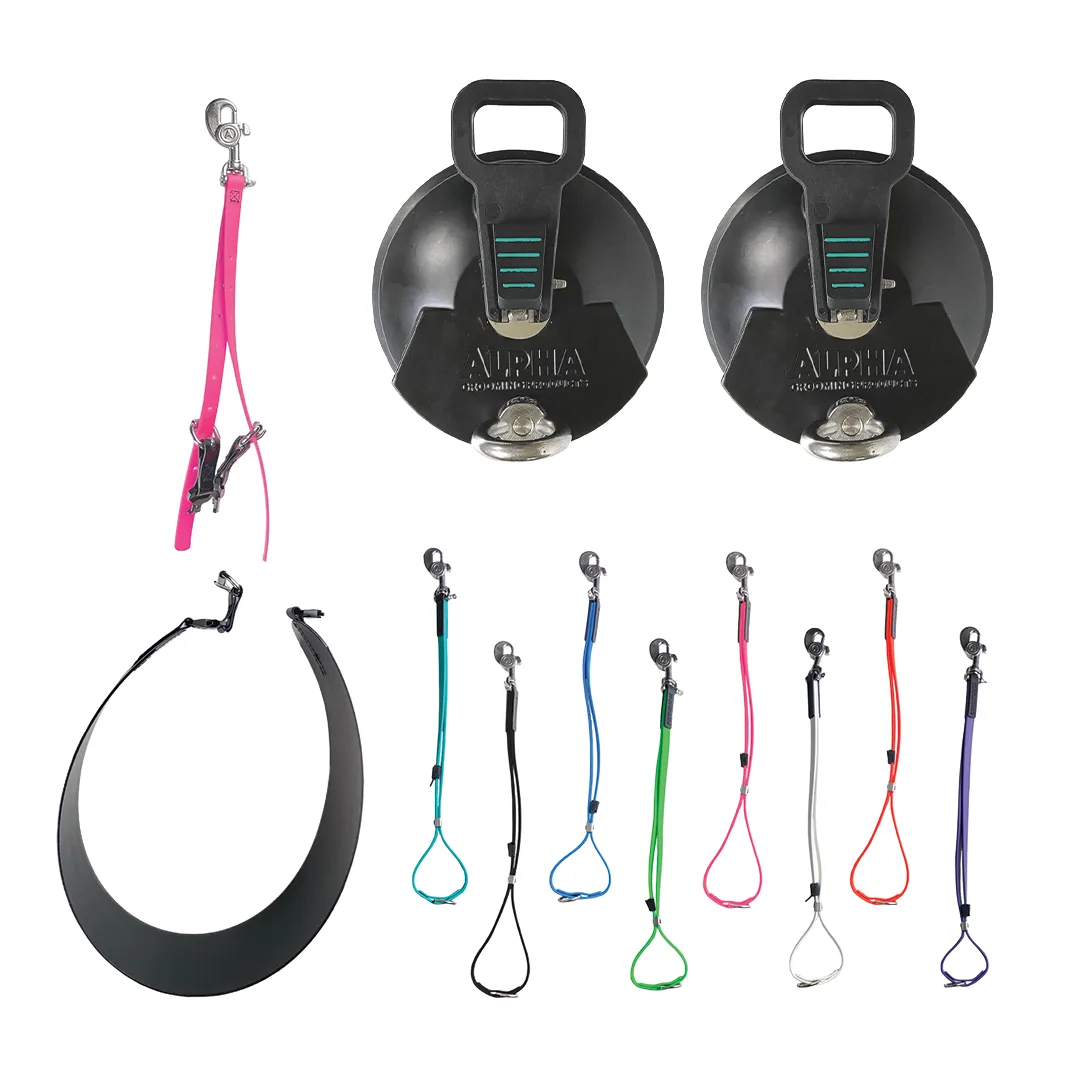
Brush choice gets blamed for problems that are really restraint problems. If the dog shifts, you shorten strokes, miss sections, and the brush feels ineffective. A properly fitted grooming loop keeps the dog standing safely so your brush strokes stay consistent.
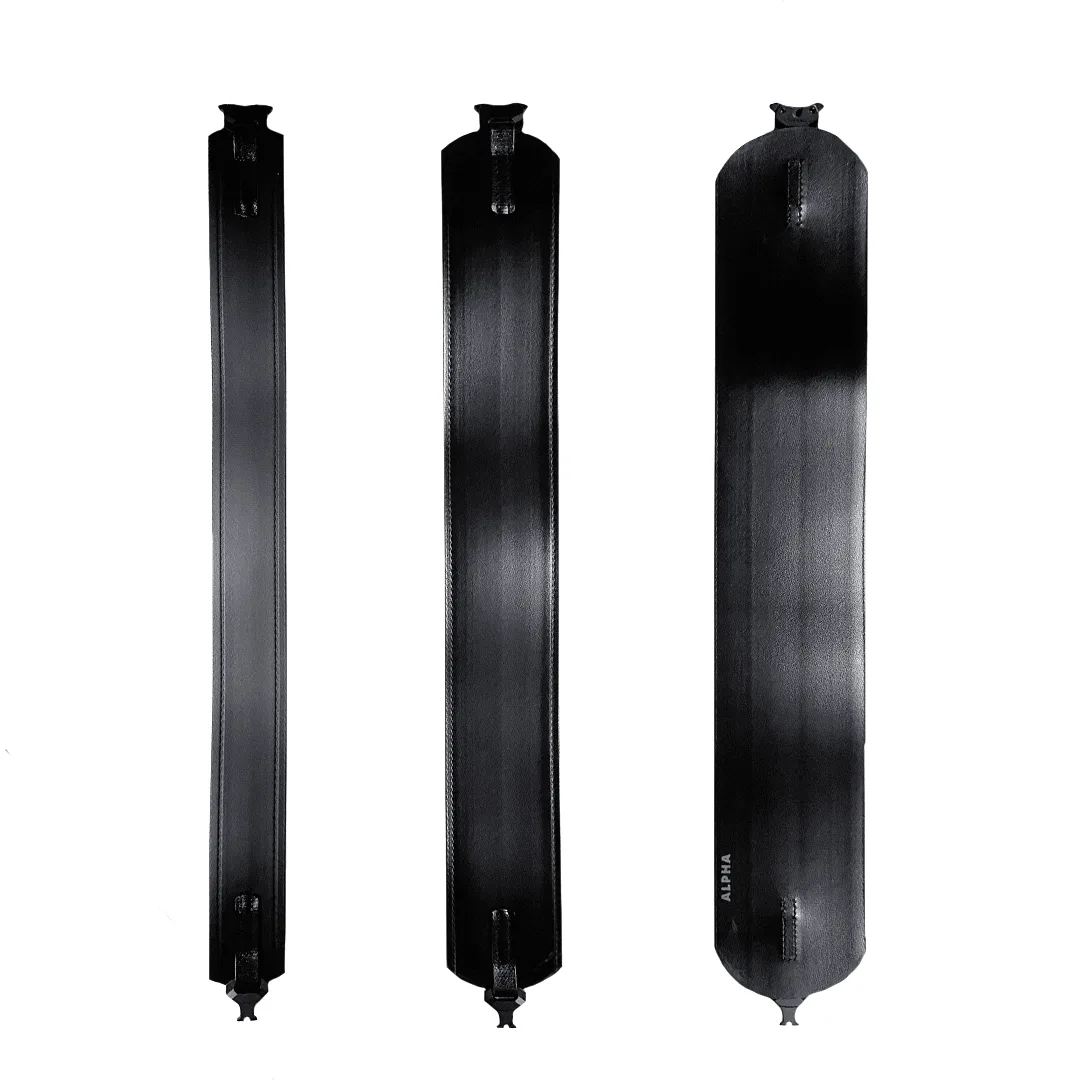
Alpha Classic Grooming Loop uses Biothane construction with a scissor snap clip and a 21-inch length, and it is the descendant of the first Biothane loop the brand released in 2013. For dogs that need belly support rather than a neck loop, the AXL Belly Band Lower is the lower portion of the original Biothane Belly Band System and comes in 2-inch, 3-inch, and 4-inch widths; note that you need the Belly Band Upper if you do not already own one.
A simple way to test which brush your dog prefers
Brush one side of the body with the mini brush and the other with the standard brush, using the same number of strokes per side. Compare how much loose hair comes up, how long each side took, and how the dog reacted. Most owners find the answer is coat-dependent rather than breed-dependent.
If the dog tenses, pulls away, or the brush snags, stop and check the coat for mats before continuing. A smaller head is not a fix for a matted coat; it just changes where the snag happens.
Mini brush vs. standard brush: the trade-offs
- Control vs. coverage: A mini brush gives finer control around the face, paws, and thin-skinned areas, while a standard brush covers more coat per stroke on the body. Pick control for detail work, coverage for full-body sessions.
- Short coat vs. long or double coat: Compact heads follow the contours of short, smooth coats; wide heads move through long and double coats faster. Coat length is the deciding factor more often than the dog's weight.
- One brush vs. two: Buying only a mini brush means slower full-body grooming on large dogs; buying only a standard brush means less precision on faces and paws. If you can only own one, match it to the largest area of coat you brush weekly.
- Tool choice vs. restraint: A slipping dog makes any brush feel wrong, so a stable loop or belly band matters as much as head size. Fix restraint first, then judge the brush.
Grooming tools that support either brush choice
- Alpha Mat: Heavy-duty anti-skid mat, approximately 12 by 18 inches, with four strong magnets that let you stand clippers up for easy grab and stow. A non-slip surface and upright tool storage keep both hands free, so switching between a mini brush and a standard brush does not turn into a scramble.
- Alpha Classic Grooming Loop: Biothane grooming loop, 21 inches long, with a scissor snap clip and 500 lb break strength. Consistent restraint keeps the dog in one position, which is what makes short mini-brush strokes on the face and paws practical.
- AXL Belly Band Lower: Lower portion of the original Biothane Belly Band System, available in 2-inch, 3-inch, and 4-inch widths; requires the Belly Band Upper if you do not already have one. Belly support suits dogs that dislike a neck loop, letting you brush the chest and underside without the dog sitting down.
Which should you buy?
Best for
- Small dogs and puppies where a full-size head feels bulky
- Short, smooth coats that need contour-following strokes
- Detail work on faces, paws, and inside the back legs
- Owners who already have a standard brush and want a finishing tool
Not for
- Large dogs with heavy double coats that need wide, fast coverage
- Owners who want a single brush for a full-body groom on a big dog
- Matted coats that need staged, wide-area work rather than small strokes