Quick Answer
Iron-on labels can stay on quilts with proper application and care, but they are less durable than sewn-in labels. For best results, use a medium heat, no steam, and consider stitching the edges.
Why Iron-On Labels Need Extra Care on Quilts
Quilts go through frequent washing and handling, which can loosen adhesive over time. The fabric texture and batting layers also affect how well the label bonds. That's why many quilters prefer woven sew-in labels for heirloom pieces.
Frequently Asked Questions About Iron-On Labels on Quilts
Will an iron-on label survive the washing machine?
Iron-on labels are not as wash-proof as sew-in labels. The adhesive can weaken after several cycles, especially with hot water or high heat drying. Stitching the edges significantly improves wash durability. For quilts you wash frequently, add a few stitches around the edge.
How do I apply an iron-on label to a quilt?
Place the label on the fabric, cover with a scrap cotton cloth, and press with a medium-heat iron (no steam) for 10-15 seconds. Let it cool completely before moving the quilt. Always test on a scrap piece of the same quilt fabric first.
When should I choose a woven sew-in label instead?
Choose woven sew-in labels for quilts that will be washed often, used by children, or passed down as heirlooms. They last longer and don't rely on adhesive that can degrade. Sew-in labels are the safer choice for long-term durability.
Label Options That Work on Quilts
-
Pride Rainbow Iron-on Label Multipack: This multipack includes four colorful designs and can be applied with medium heat and no steam. For maximum longevity, the manufacturer suggests stitching the edges. Stitching the edges turns an iron-on label into a hybrid that stays put through repeated washes, making it practical for quilts you use and launder often.
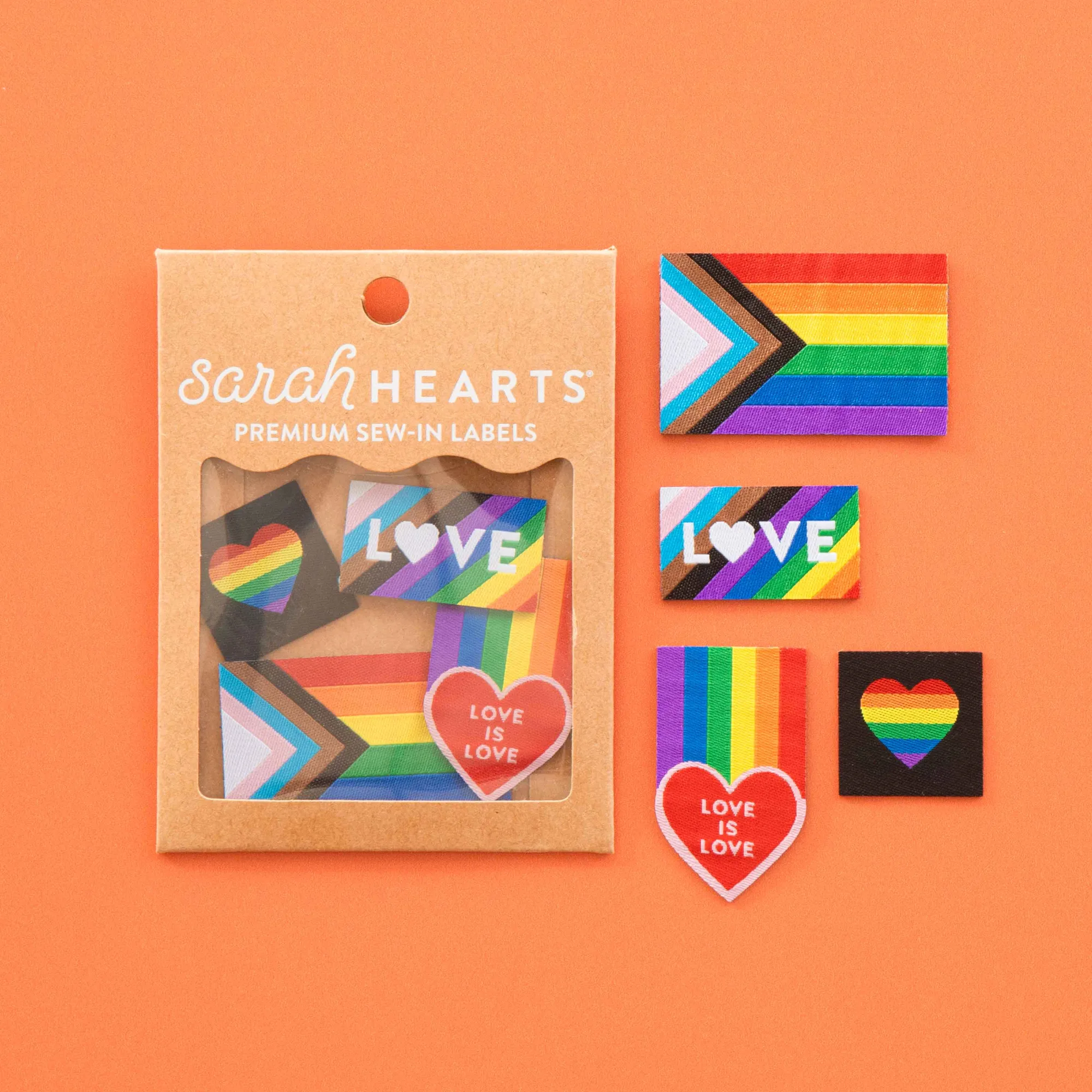
Pride Rainbow Iron-on Label Multipack