Quick Answer
Most children benefit from fluoride toothpaste once they can spit reliably, usually around age 3, because fluoride is the most proven way to prevent cavities. Children under 3 or those who still swallow toothpaste are often better served by a fluoride-free option until their spit reflex matures. The right choice depends less on age alone and more on your child's cavity risk, brushing habits, and whether they can spit without swallowing.
Why Fluoride Matters for Growing Teeth
Fluoride works two ways: it strengthens enamel before cavities start and helps repair early damage on the surface of teeth. For children, whose enamel is still maturing and whose diets often include sticky snacks and juice, that protection adds up. The trade-off is that swallowing too much fluoride over time can cause faint white spots on permanent teeth, which is why the amount used and the child's ability to spit matter so much.
If your child has never had a cavity, brushes twice daily without a fight, and eats a low-sugar diet, a fluoride-free kids toothpaste can be a reasonable choice, especially if they still swallow. If cavities run in the family, your child wears braces, or brushing is inconsistent, fluoride gives you a safety net that fluoride-free formulas do not.
Fluoride vs. Fluoride-Free: What Actually Changes
The main difference is the active ingredient. Fluoride toothpastes carry an anticavity claim and help repair and strengthen enamel. Fluoride-free versions skip that ingredient, so they clean and freshen but do not offer the same cavity protection. Neither type is inherently gentler on taste, though flavor and texture vary by product.
For children who cannot spit, a fluoride-free formula removes the swallowing concern entirely. For children who can spit, fluoride adds protection you would otherwise have to get from professional treatments or dietary changes. Some families use both: fluoride-free for the youngest brushers and fluoride once spitting is reliable.
How Much Toothpaste by Age
The amount matters as much as the type. For children under 3, use a smear about the size of a grain of rice. For children 3 to 6, use a pea-sized amount. These amounts keep fluoride exposure low while still giving some benefit if the child swallows a little. Always check with your dentist or pediatrician if you are unsure about your child's specific needs.
Supervise brushing until your child can reliably spit into the sink, usually around age 6 to 8. Until then, keep the tube out of reach and dispense it yourself so the amount stays consistent.
Flavor and Texture: The Practical Side of Choosing
A toothpaste your child refuses is a toothpaste that does not work. Mild mint and fruit flavors tend to go over better than strong cinnamon or intense mint. If your child gags easily or has sensory sensitivities, a smoother texture and milder taste can make twice-daily brushing realistic rather than a battle.
This is also where fluoride-free options shine for picky brushers: parents can focus on building the habit first, then switch to fluoride once brushing is consistent. The goal is a child who brushes willingly, not a perfect tube on the shelf.
Decision Rules for Choosing Your Child's Toothpaste
- Child under 3 or still swallowing toothpaste: Choose a fluoride-free kids toothpaste and use a rice-grain-sized smear. This removes the swallowing concern while you build the brushing habit. Revisit fluoride once spitting is reliable, usually around age 3 or later.
- Child age 3+ who can spit: Choose a fluoride toothpaste with an anticavity claim and use a pea-sized amount. Supervise until spitting is consistent. Fluoride is the stronger cavity-prevention choice at this stage.
- High cavity risk (family history, braces, frequent snacks): Lean toward fluoride even if your child is on the younger side, and confirm the right amount with your dentist. Ask your dentist whether additional fluoride treatments make sense.
- Picky brusher who refuses mint: Pick a fruit flavor or mild mint first. A toothpaste your child accepts twice a day beats a stronger formula they refuse. Once the habit sticks, you can switch formulas without a fight.
Products That Fit Different Family Needs
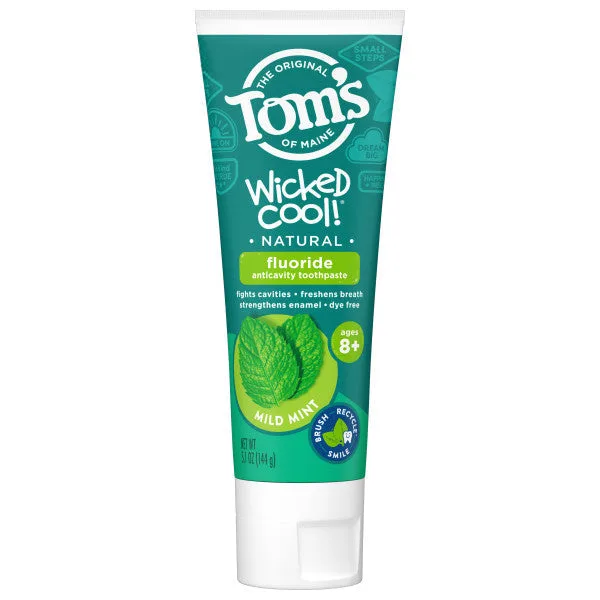
- Wicked Cool! Natural Toothpaste in Mild Mint: Wicked Cool! Natural Toothpaste in Mild Mint is a gentle, effective toothpaste designed for kids, with a mild mint flavor and a vegan, cruelty-free formula that helps repair and strengthen enamel. A good bridge for kids who can spit and want a mild taste with enamel support, without an intense mint burn.
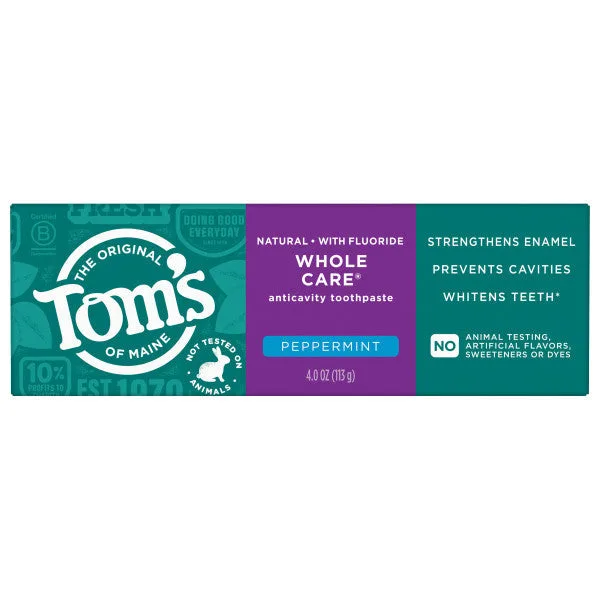
- Whole Care Peppermint Anticavity Toothpaste: Whole Care Peppermint Anticavity Toothpaste provides anticavity protection and helps strengthen enamel, formulated for multi-benefit oral care. A practical choice for families who want one anticavity toothpaste that older kids and adults can share, simplifying the bathroom shelf.
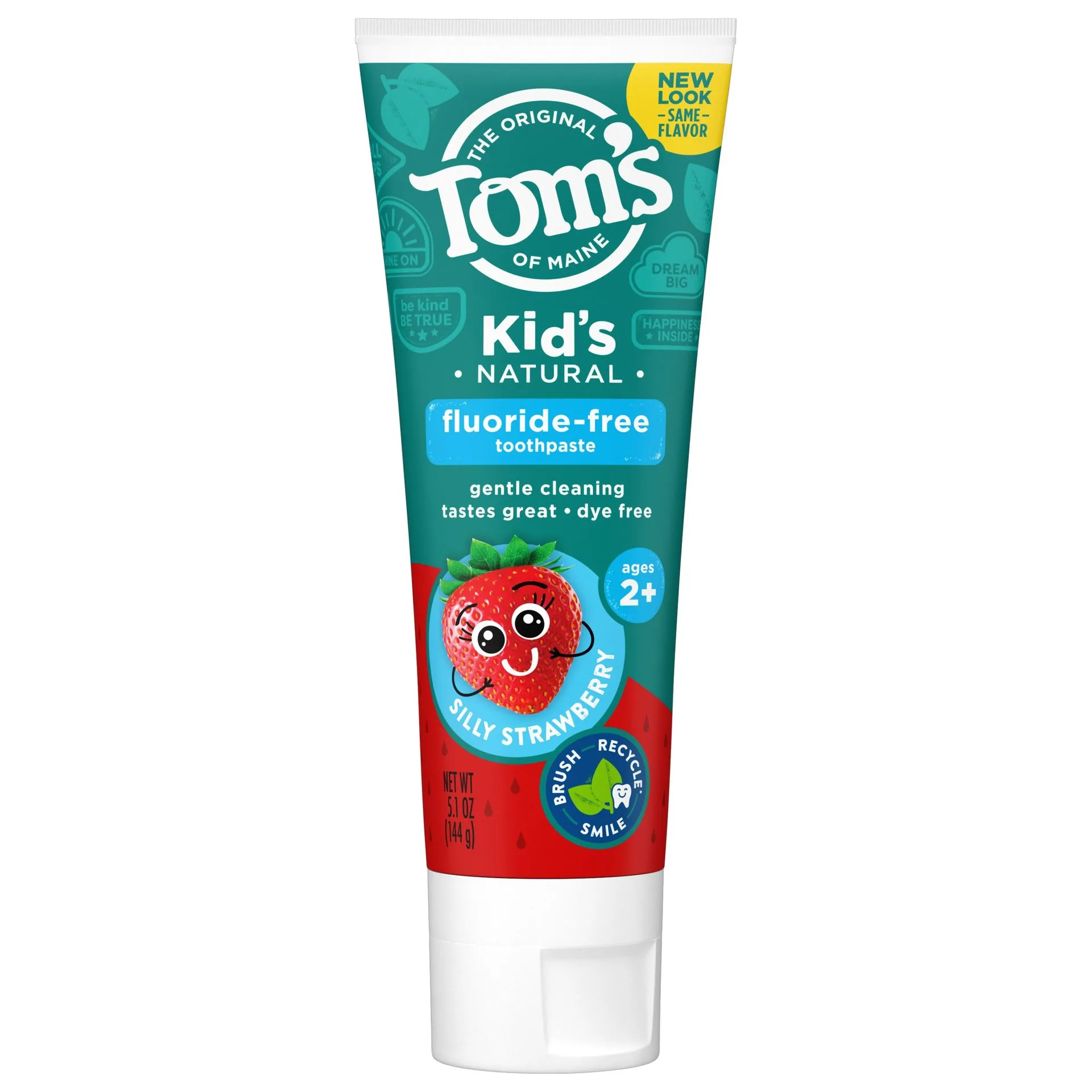
- Silly Strawberry Kids Fluoride-Free Natural Toothpaste – Tom's of Maine: Silly Strawberry Kids Fluoride-Free Natural Toothpaste has a fluoride-free formula and a playful strawberry flavor that kids enjoy. Best for toddlers and young children who still swallow toothpaste or who resist mint, so brushing stays positive while the spit reflex develops.
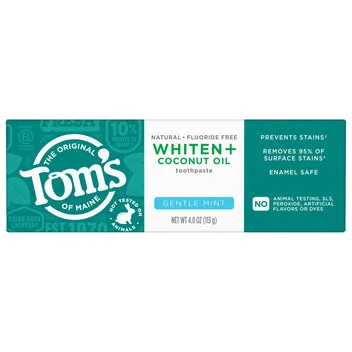
- Whiten Plus Coconut Oil Fluoride Free Gentle Mint Natural Toothpaste: Whiten Plus Coconut Oil Fluoride Free Gentle Mint Natural Toothpaste is fluoride free, enamel safe, and helps whiten without causing sensitivity, removing up to 95% of surface stains. A fluoride-free option for older kids or teens who want whitening without sensitivity and prefer a gentle mint taste.
Who This Guidance Fits
Best for
- Parents deciding between fluoride and fluoride-free toothpaste for a child under 8
- Families with a toddler who still swallows toothpaste and needs a gentle starting option
- Parents of kids with braces, cavity history, or inconsistent brushing who want stronger protection
Not for
- Parents looking for a single toothpaste that suits every age without adjusting amount or type
- Children with a diagnosed dental condition who need a dentist-directed fluoride plan rather than a store-bought choice