Quick Answer
No, kids do not need SPF 50 to be protected. SPF 30 blocks the large majority of UVB rays, and SPF 50 adds only a small amount more. What actually protects your child is broad spectrum coverage, enough sunscreen applied, and reapplying every two hours or after 80 minutes in the water. Choose the SPF your child will let you apply generously and reapply often.
What the SPF Number Actually Tells You
SPF measures how well a sunscreen shields skin from UVB rays, the ones that cause sunburn. The jump from SPF 30 to SPF 50 sounds huge, but the real-world difference is small. Both let a little UVB through, and neither blocks 100 percent. The bigger gap is between wearing sunscreen and not wearing it at all.
SPF says nothing about UVA rays, which also damage skin. That is why you should look for broad spectrum protection on the label. A broad spectrum SPF 30 does more for your child than a narrow-coverage SPF 50.
The Real-World Math Behind SPF 30 vs SPF 50 for Kids
Higher SPF numbers follow diminishing returns. Going from SPF 30 to SPF 50 adds only a small amount of extra UVB filtering, not double the protection. In everyday use, that difference is easy to erase with one thin application or one missed reapplication.
This is why pediatric dermatologists often point parents toward SPF 30 as a solid baseline for kids, especially when it is broad spectrum and water resistant. If your child will be out for a long stretch, in strong sun, or in and out of water, a higher SPF can be a reasonable backup, but it is not a requirement.
How Much Sunscreen Children Actually Need
The amount you apply matters more than the number on the bottle. Most families use far less than the label assumes, which drops the effective protection well below the stated SPF. For a child's body, that means a generous, visible layer, not a quick dab.
Reapplication is the other half of the job. Even water-resistant formulas are typically rated for up to 80 minutes in the water, so plan to reapply after swimming, heavy sweating, or towel drying. A stick format helps with faces and squirming kids, while a lotion covers larger areas faster.
Why Mineral Formulas Fit Kids Better Than a Higher Number
Mineral sunscreens use zinc oxide or titanium dioxide to sit on top of the skin and deflect UVA and UVB rays. They tend to be gentler for young or sensitive skin, which is why many parents prefer them for kids. The tradeoff is that some leave a white cast or feel thicker, which can make kids resist.
That resistance matters. A mineral SPF 30 your child tolerates and wears every time beats an SPF 50 they fight you over. Look for formulas described as non-toxic, mineral-based, and water resistant, and pick textures your child accepts, such as a stick for the face or a clear-drying lotion for the body.
Choosing SPF for Your Child's Day
Match the formula to the plan. For quick errands, school, or short outdoor play, a broad spectrum SPF 30 is plenty. For beach days, pool parties, or long hikes with intense sun, a higher SPF like 50 can add a small margin, but only if you still reapply on schedule.
Keep it simple: pick broad spectrum, water resistant, kid-friendly mineral formulas, apply more than you think you need, and reapply every two hours or after 80 minutes in water. The habit protects your child far more than the number.
Myths About Kids and SPF, Settled
- Myth: Kids need SPF 50 or they will burn.: SPF 30 blocks the large majority of UVB rays, and SPF 50 adds only a small amount more. Broad spectrum coverage, generous application, and reapplication every two hours or after 80 minutes in water matter more than the number. Verdict: False. SPF 30 is a solid baseline for most kids' daily sun.
- Myth: Higher SPF means you can skip reapplication.: Water-resistant kid sunscreens in this lineup are rated for up to 80 minutes in the water regardless of SPF. No SPF number lets you stretch that window. Verdict: False. Reapply on the 80-minute clock, not the SPF.
- Myth: Mineral sunscreen cannot be strong enough for kids.: Mineral formulas using zinc oxide or titanium dioxide provide broad spectrum UVA/UVB protection and come in SPF 30 and SPF 50 options, including clear-drying versions that leave little to no white cast. Verdict: False. Mineral and high SPF are not opposites.
Kid-Friendly Options That Match This Advice
- Thinksport Kids Sunscreen Stick SPF 30+: Thinksport Kids Sunscreen Stick SPF 30+ is dermatologist recommended, mineral-based, non-toxic, and water resistant for up to 80 minutes, with broad spectrum UVA/UVB protection. A stick makes it easy to apply SPF 30 generously to a child's face and reapply during active play, which is where most protection is won or lost.
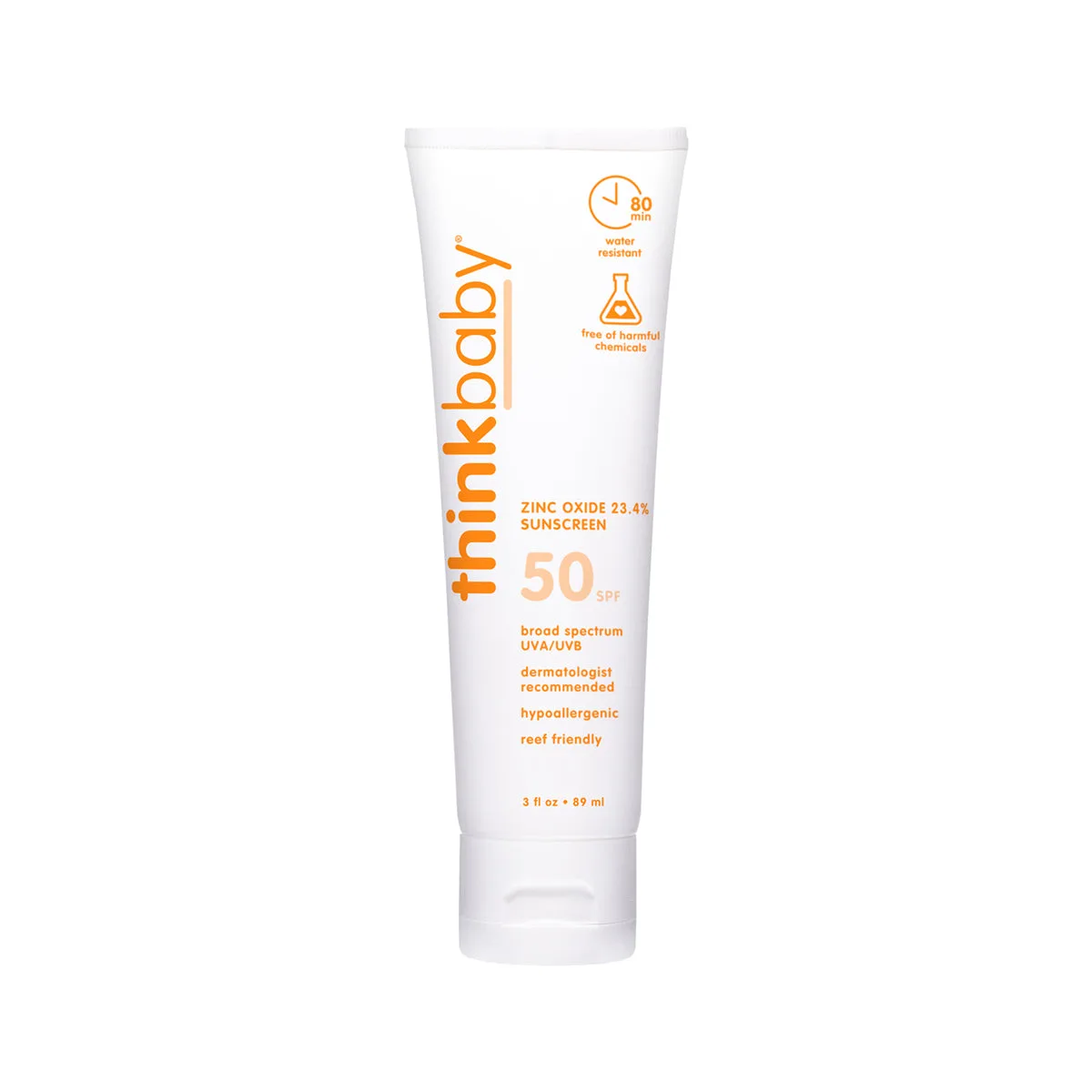
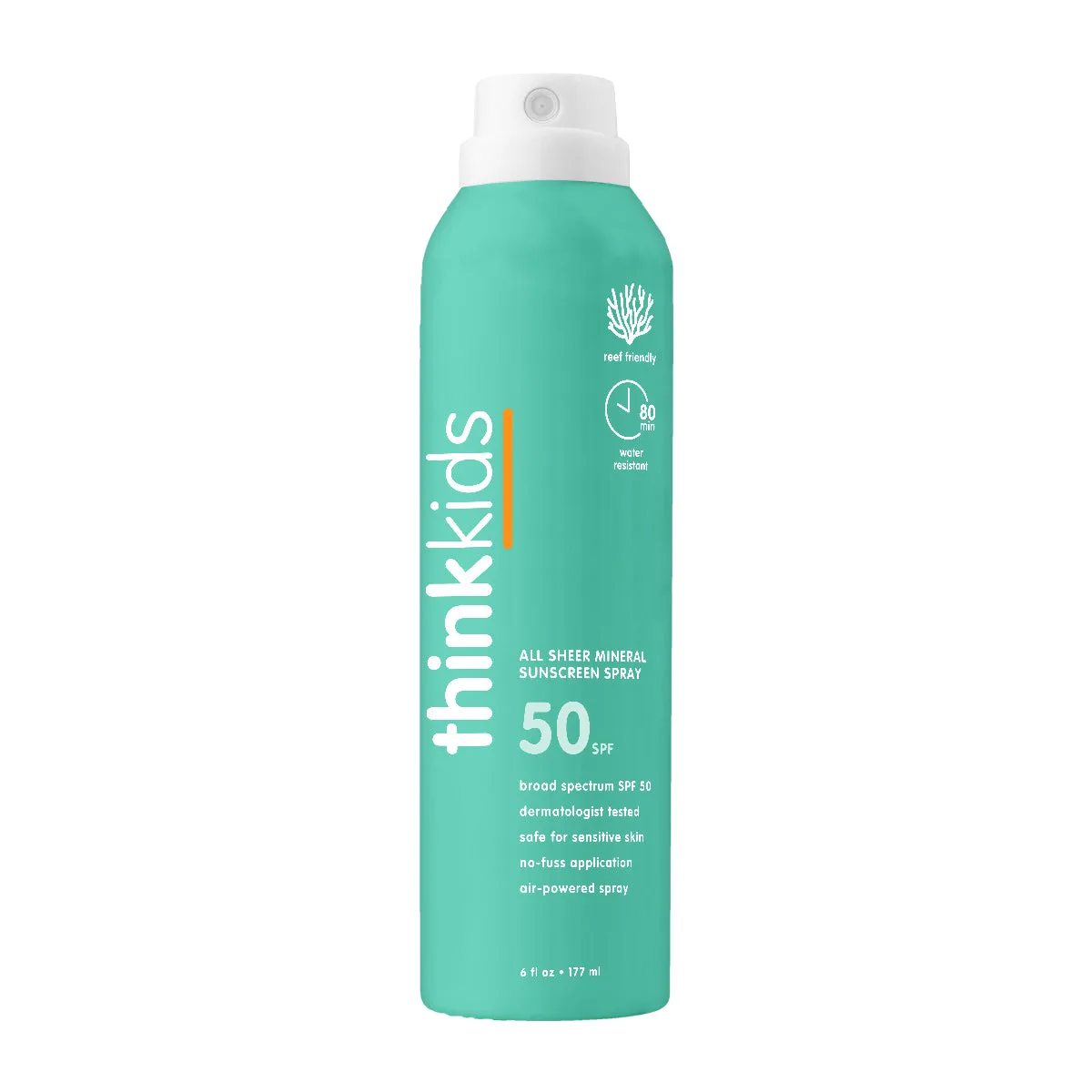
- Think Kids Safe Sunscreen SPF 50+ (6oz) - Family Size: Think Kids Safe Sunscreen SPF 50+ (6oz) Family Size is dermatologist recommended, kid-friendly, mineral-based, non-toxic, and water resistant for up to 80 minutes with broad spectrum UVA/UVB protection. If you want the small extra margin of SPF 50 for long or intense sun days, this family-size lotion covers a child's body quickly and is still water resistant for the same 80-minute window.
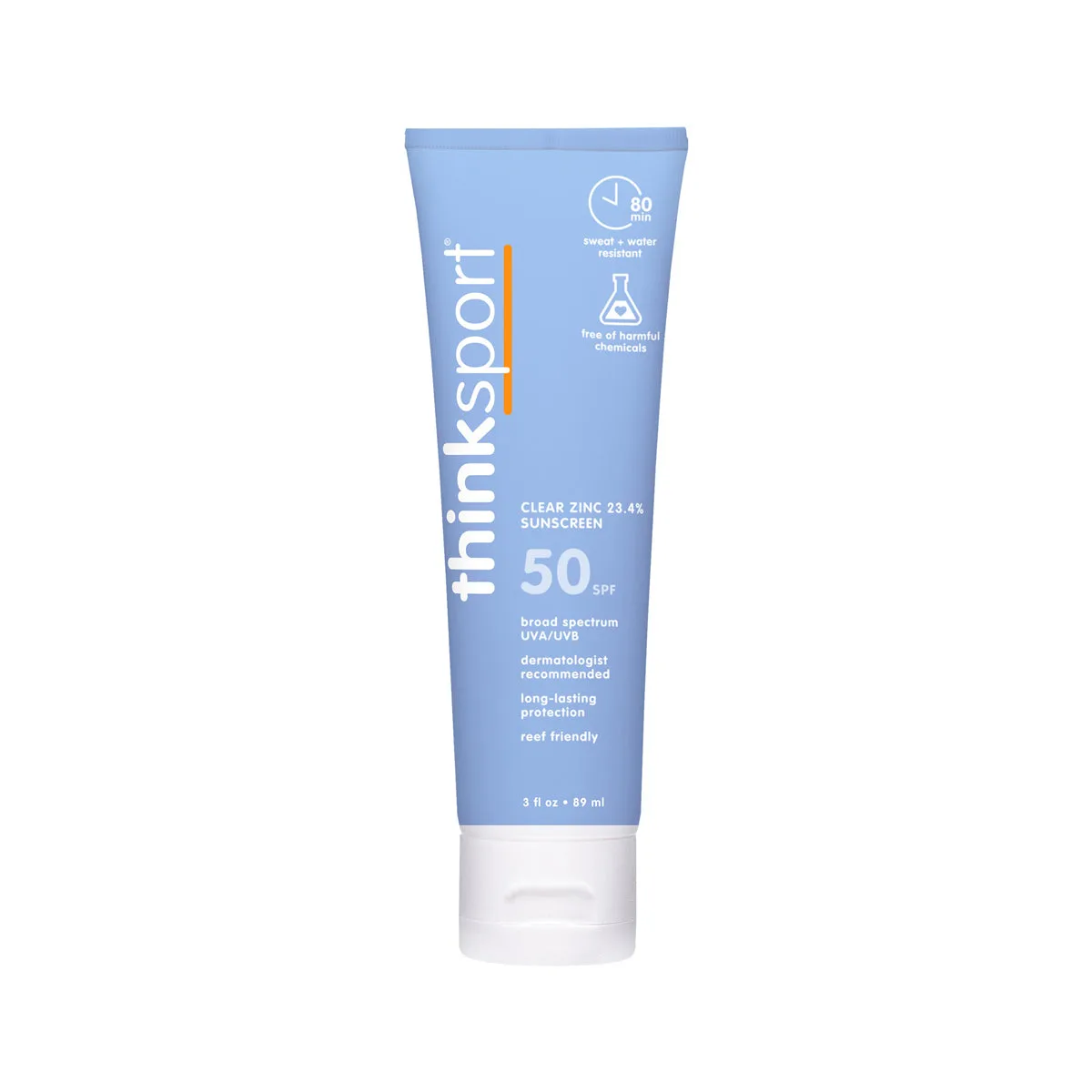
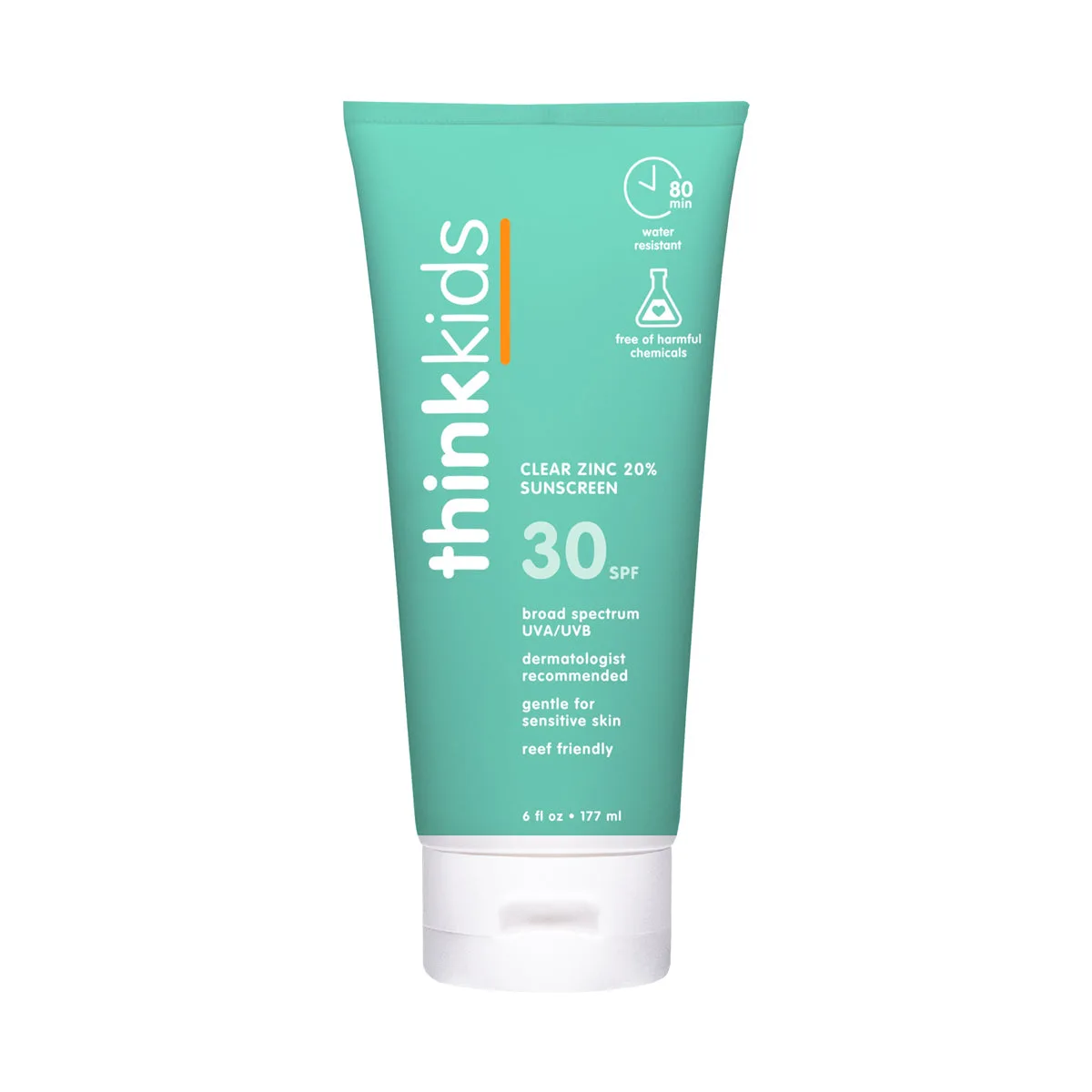
- Thinksport Kids Clear Zinc Sunscreen SPF 30 (6oz) - Family Size: Thinksport Kids Clear Zinc Sunscreen SPF 30 (6oz) Family Size is pediatric dermatologist recommended, water resistant up to 80 minutes, reef safe, broad spectrum, and dries clear with little to no white cast. For kids who refuse thick or chalky mineral sunscreen, a clear-drying SPF 30 removes the biggest excuse and makes daily reapplication more realistic.