Quick answer
Yes, number blocks and counting coins can teach early math—but only if you treat them as hands-on tools, not magical teachers. They help children see how numbers work through building and stacking, but they won't replace guided play or real-world practice. The key is how you use them, not just that you own them.
Myth: Counting toys teach math on their own
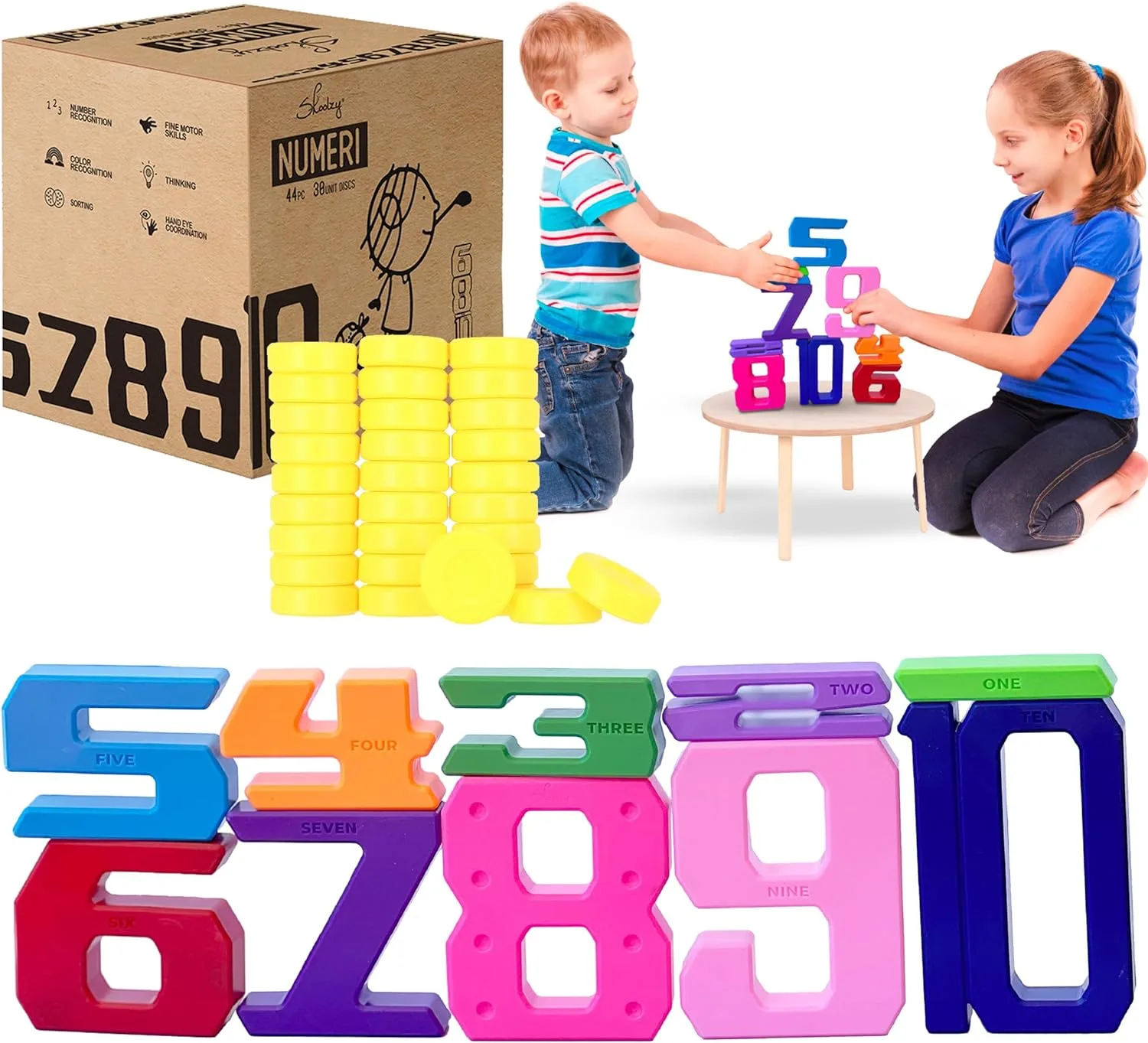
Many parents assume that handing a child a set of number blocks or counting coins will automatically build math skills. In reality, these toys are tools that need adult guidance or intentional play to unlock their learning potential. The Skoolzy Number Blocks & Counting Coins 44 Piece Set, for example, lets children build and stack numbers from One to Ten, but without a parent asking 'how many blocks tall is this tower?' or 'can you find two coins to match the number two?', the math connection may stay hidden. The toy provides the opportunity; you provide the context.
Myth: You need worksheets to learn number sense
Worksheets have their place, but hands-on counting activities often work better for young children because they engage multiple senses. When a child physically stacks blocks or moves coins, they experience quantity in a concrete way. The Skoolzy Number Blocks set encourages this by letting kids see how numbers really work as they build from One to Ten. This tactile approach can make abstract concepts like 'more than' or 'less than' easier to grasp than a static worksheet. That said, worksheets can reinforce what hands-on play introduces—the two aren't enemies.
Myth: All counting toys are the same
Not all counting toys deliver the same benefits. The design and included pieces matter. The Skoolzy Number Blocks & Counting Coins 44 Piece Set combines number blocks with counting coins, offering two ways to practice: building and stacking numbers, and using coins as counters. This dual approach can help children connect numerals to quantities. In contrast, a simple set of blocks without coins might focus only on number recognition. When choosing, look for toys that let children manipulate objects in different ways to build flexible thinking.
Verdicts on common claims
- Claim: Number blocks teach math automatically.: Without adult interaction or intentional play, children may just stack blocks without connecting them to math concepts. The learning happens when you ask questions and guide discovery. Verdict: Partly true—toys enable learning, but they don't replace teaching.
- Claim: Counting coins are only for pretend play.: Counting coins can be used for pretend play, but they also serve as concrete counters for math activities like matching quantities to numerals or simple addition. Verdict: False—they are versatile math manipulatives.
- Claim: You need a formal curriculum to teach preschool math.: Hands-on tools like number blocks and counting coins can cover many early math skills—counting, number recognition, comparing quantities—without a formal curriculum. Verdict: False—playful tools can be enough for foundational skills.
Product facts that matter
- Number Blocks & Counting Coins 44 Piece Set: Never too early to start developing kids number sense. Children see how numbers really work as they build and stack their own Skoolzy number blocks toys from One to Ten and master key early learning math skills through hands-on discovery with the counting toys. This set is designed to make abstract number concepts concrete by letting children physically build numbers. The included counting coins add another layer for practicing one-to-one correspondence and simple addition.