Quick answer
Yes, but the mold is only half the tool. A small, handle-style mold lets you freeze breast milk, puree, or smoothie into a portion your baby can hold and mouth safely. The cold numbs sore gums, while licking and biting build the tongue, lip, and jaw control that support later eating. Skip round ice-cube trays and anything that can pop free in one piece.
What a popsicle mold actually does for teething
Cold reduces swelling and dulls nerve pain in the gums, which is why a frozen pop often calms a fussy teether faster than a room-temperature teether. A handle-style mold keeps the cold part small enough that it never sits against one spot long enough to hurt. The handle also gives your baby a grip point, so the pop moves in and out of the mouth instead of being held in place.
How frozen pops build oral motor skills
Sucking, licking, and biting a pop work the same muscles used for chewing and speech. A melt-in-mouth texture lets a baby practice moving food around without the choke risk of a hard piece. That is why a slightly textured puree pop is more useful than a plain ice block: it gives resistance without turning into a hard chunk.
Safe fillings and textures for baby popsicles
Breast milk, formula, plain full-fat yogurt, and thin fruit or vegetable purees all freeze into a soft, spoonable pop. Thick chunks, whole berries, nut butter, and honey are not safe for babies under one. If you want a teething popsicle recipe, blend a familiar puree with a little water so it freezes slushy rather than rock-hard, and test the texture yourself before handing it over.
When to start and how to supervise
Most babies are ready for a frozen pop around six months, once they can sit upright with support and bring objects to their mouth. Always seat your baby upright and stay within arm's reach. Check the pop every minute or two: if it has melted to a loose piece, take it away and refreeze or finish it yourself. Never leave a baby alone with a frozen treat, and never refreeze a pop your baby has already mouthed.
Teething pop questions parents ask most
Can I use a regular ice cube tray instead of a popsicle mold?
Ice cube trays make blocks that are too large and too hard for a baby mouth. A handle-style mold keeps each portion small and gives your baby a safe grip point. Choose a mold with a built-in handle, not a tray.
How long should a baby keep a frozen pop in their mouth?
Let your baby mouth it for a minute or two at a time, then take a break. Prolonged direct cold on one spot can make gums feel numb or uncomfortable. Short sessions, frequent checks.
Do popsicles replace teethers or oral care?
No. A frozen pop is a feeding and soothing tool, not a substitute for wiping gums or brushing once teeth appear. Keep oral care separate from snack time. Use pops for skills and comfort, not hygiene.
What if my baby refuses a frozen pop?
Try a chilled, not frozen, version first. Some babies prefer a cool puree on a spoon, and that still delivers the same oral motor practice without the cold shock. Temperature is adjustable; the skill practice is the goal.
Products that match this approach
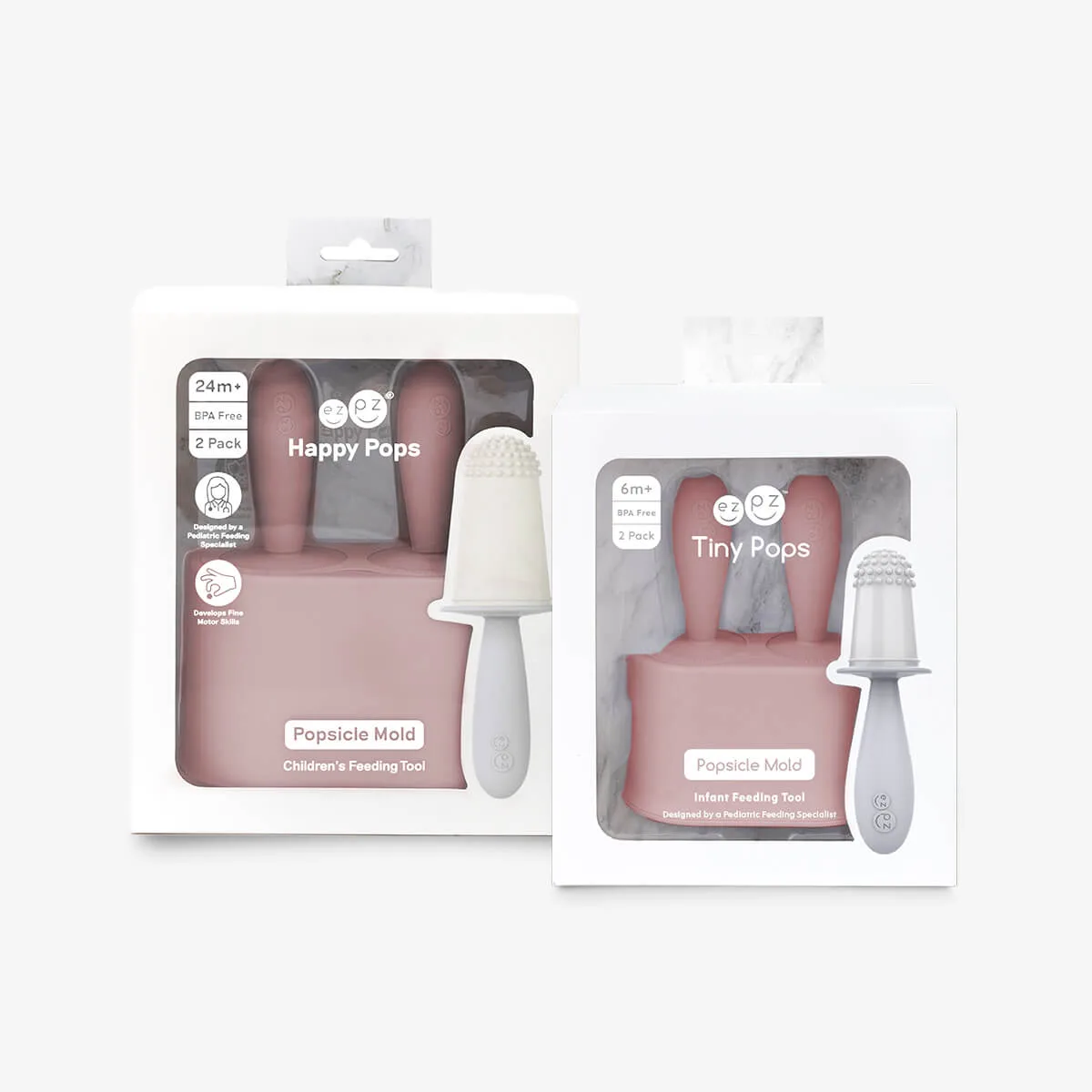
- Popsicle Bundle: The ezpz Popsicle Bundle includes one Tiny Pops and one Happy Pops, designed for self-feeding, oral development, and sensory exploration from infancy through preschool. Two sizes cover the early puree stage and the older toddler stage, so you are not buying a new mold every few months.
- Baby-Led Weaning Food Cutters: The Baby-Led Weaning Food Cutters include a strip cutter for 6m+ to promote palmar grasp and a cubed cutter for 9m+ to promote pincer grasp. Cutting food into the right shape for each grasp stage makes the transition from frozen pops to finger foods smoother.
- Baby-Led™ Tiny Spoons: The Baby-Led Tiny Spoon is designed to help babies learn to feed independently, with a handle shaped for a baby-led grip. Once teething settles, the same self-feeding motion your baby practiced on a pop transfers to a spoon.