Quick answer
Yes, teething toys can help. Chewing on a firm but flexible surface gives a baby counter-pressure that temporarily eases sore gums, and the reaching, gripping, and mouthing involved also builds fine motor skills. They are not a cure for teething pain, and they do not replace a cold washcloth, a chilled teether, or advice from your pediatrician. The best teething relief comes from matching the toy's texture and size to your baby's stage, then checking it for wear before every use.
Teething toys show up on almost every baby registry, but parents still ask whether they actually do anything or just keep babies busy. The honest answer is that they help in two ways: the pressure of chewing soothes tender gums, and the handling and mouthing practice supports dexterity and hand-eye coordination. What they cannot do is remove teething pain entirely or speed up a tooth that is already on its way.
The bigger question is which teething toy fits your baby right now. A four-month-old who is just starting to grab needs a different shape and weight than a one-year-old working on molars. This guide answers the questions parents ask most, using real product examples from the Nuby range so you can see how texture, material, and size play out in practice.
How do teething toys actually relieve sore gums?
When a tooth pushes through gum tissue, the area becomes swollen and tender. Chewing applies steady counter-pressure to that spot, which many babies find calming for a short time. The effect is similar to rubbing a sore muscle: it does not fix the underlying issue, but it changes the sensation enough to take the edge off. That is why a baby who is fussy one minute may settle once something safe goes into their mouth.
Texture matters more than shape here. Smooth silicone gives gentle pressure, while raised bumps or ridges reach slightly different spots along the gum line. A toy that combines both lets your baby choose what feels good in the moment. This is also why teethers with multiple textured surfaces tend to stay in rotation longer than a single-texture toy.
- Offer a teether before the fussy peak, not after, so your baby has something to chew when the urge hits.
- Rotate two or three teethers so the texture feels new and your baby stays interested.
What are the real teething toy benefits beyond soothing gums?
The second benefit is developmental. Reaching for a teether, passing it from hand to hand, and bringing it to the mouth are all fine motor milestones. A rattle-style teether adds sound, which encourages your baby to shake, track, and repeat the action. That loop of see, reach, grasp, and mouth is exactly the practice babies need in the first year.
Teethers also give parents a safe alternative to the things babies naturally grab when their gums hurt, such as fingers, straps, or the edge of a blanket. Having a dedicated toy that is sized for small hands and easy to clean keeps the chewing directed at something you can inspect and wash.
- Choose a teether your baby can hold without help; if it keeps dropping, it is too heavy for this stage.
- Look for bright colors and gentle sounds if you want the toy to double as sensory play.
Which teething toy safety checks should you do before every use?
Teething toy safety is mostly about condition, not just the original purchase. Squeeze the toy, tug on any attached parts, and run a finger along the edges. Silicone can develop small tears after repeated chewing, and a tear can turn into a piece that comes loose. If you see cracks, stickiness, or a change in color that will not wash off, retire the toy.
Size and shape matter too. A teether should be large enough that your baby cannot push it entirely into the mouth, and it should not have small parts that could detach. Avoid anything that has been frozen solid; a chilled teether from the refrigerator is fine, but a rock-hard one can bruise gums. Never tie a teether around your baby's neck or attach it with a long cord.
- Wash teethers with warm water and mild soap, then air dry before storing.
- Check the toy each time you hand it over; a thirty-second inspection prevents most problems.
- Skip teethers with loose beads, peeling paint, or a strong plastic smell.
Do all babies respond to teething toys the same way?
No, and that is normal. Some babies chew constantly and seem to get real relief from a textured silicone teether. Others prefer a cold washcloth, a chilled spoon, or simply more cuddling. A toy that one baby loves may be ignored by another, and the same baby may change preferences as new teeth come in.
If your baby rejects every teether, try a different temperature, texture, or shape before deciding teething toys do not work for them. If your baby seems to be in serious pain, has a fever, or is refusing to eat, that is a conversation for your pediatrician rather than a toy decision.
- Try a smooth silicone teether and a textured one side by side to see which your baby reaches for.
- Give a new teether a few days before judging it; novelty can distract at first.
How do you clean and store teething toys so they stay safe?
Most silicone teethers can be washed in warm water with a little mild dish soap, rinsed well, and left to air dry. Check the manufacturer's instructions for anything that goes in the dishwasher, and avoid harsh cleaners that can leave residue on a surface your baby puts in their mouth. A quick daily wash is usually enough unless the toy has been dropped somewhere dirty.
Storage is simple: keep teethers in a clean, dry spot your baby can reach during play, and keep a spare in your diaper bag. Do not leave them in a hot car or in direct sun for long periods, since heat can degrade silicone over time. If a teether starts to look cloudy, sticky, or worn, replace it.
- Wash before first use and after any illness.
- Keep a small pouch or bin for teethers so they do not get lost in the toy pile.
Teething toy questions parents ask most
Do teething toys actually help, or are they just a distraction?
They help by giving sore gums counter-pressure and by giving babies a safe thing to chew. They do not remove pain completely, and they work best alongside other comfort measures like cuddling or a chilled washcloth. Expect temporary relief, not a cure.
Which teething toy is best for a baby who is just starting to grab?
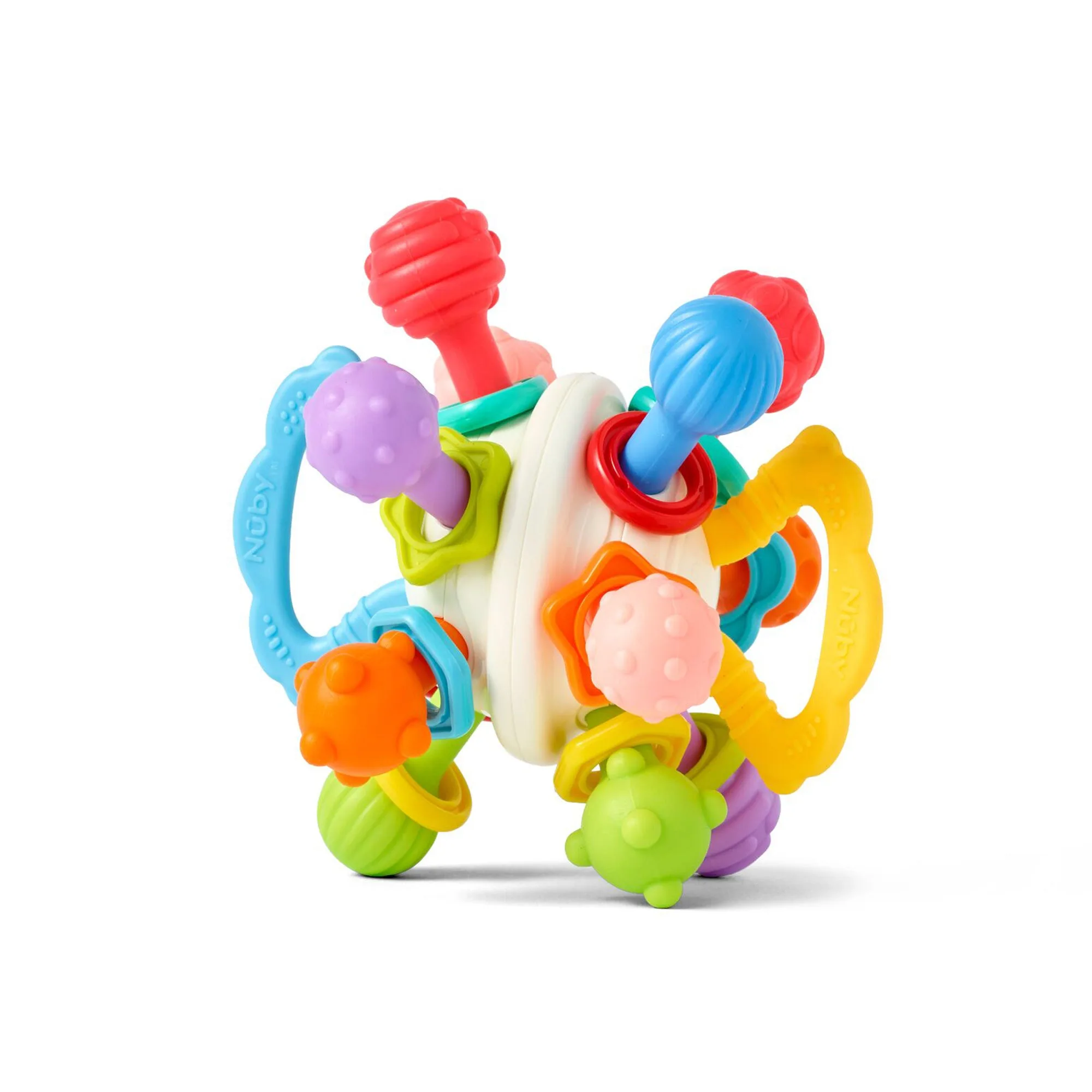
Look for a lightweight teether with a shape that is easy to hold, such as a ball or a ring-style rattle. The Twist Ball Teether is easy to grasp, and the Twista Rattle Teether Toy adds sound for babies who respond to sensory feedback. Prioritize grip and weight over complexity at this stage.
How often should I replace a teething toy?
Replace it as soon as you see cracks, tears, stickiness, or a change in color that will not wash off. There is no fixed schedule because wear depends on how much your baby chews. Inspect before every use and replace at the first sign of damage.
Can I put teething toys in the freezer?
A chilled teether from the refrigerator is fine, but a frozen-solid one can be too hard and may bruise gums. Follow the manufacturer's instructions for your specific toy. Chill, do not freeze.
What if my baby refuses every teething toy?
Try a different texture, shape, or temperature before giving up. Some babies prefer a cold washcloth or a chilled spoon. If your baby seems to be in serious pain or has other symptoms, talk to your pediatrician. Preference varies, and pain that seems severe deserves medical advice.
Teething toy examples and what they offer
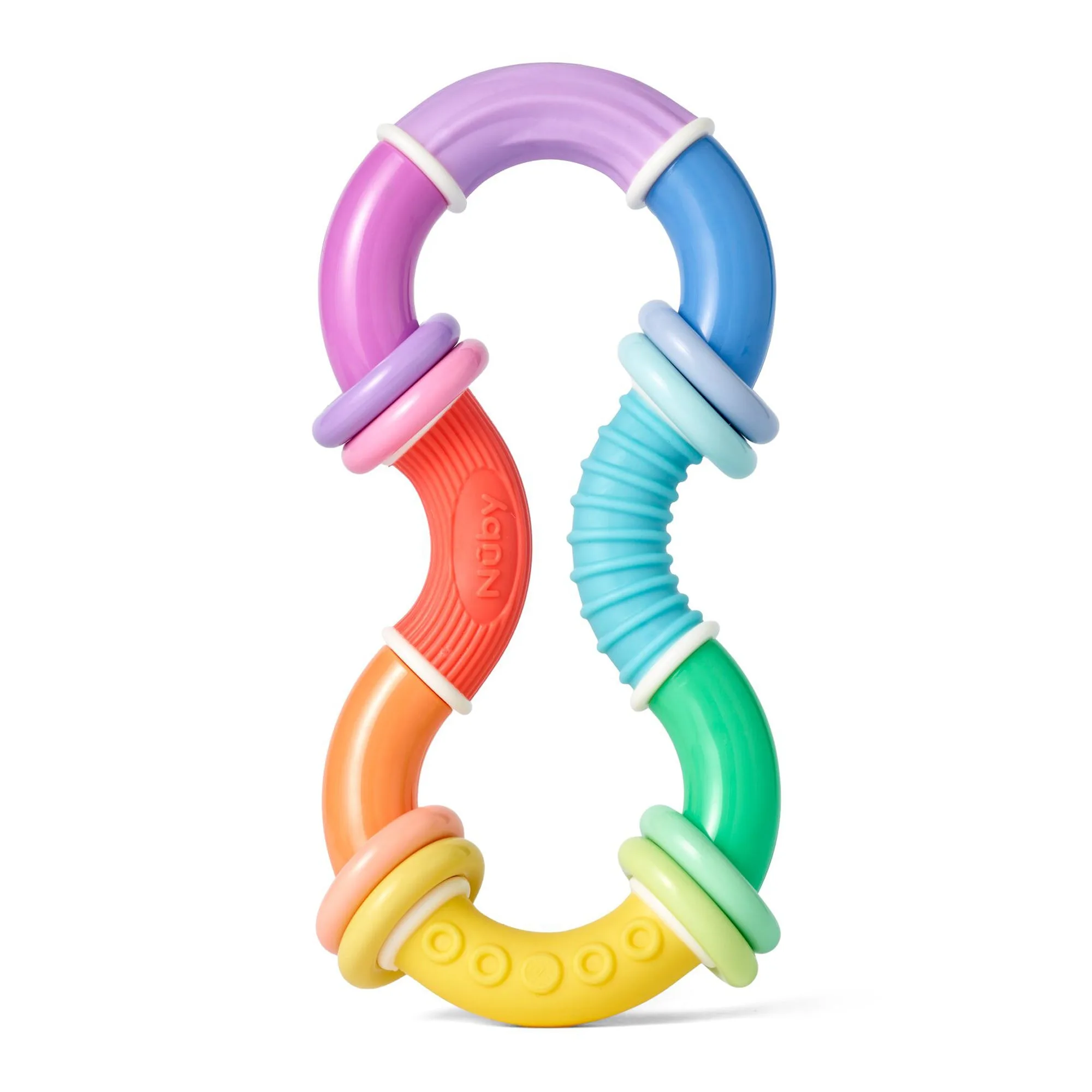
- Twista Rattle Teether Toy | Colorful Rings: Features bright colors and fun sounds, stimulates baby's senses, and helps develop dexterity and hand-eye coordination with textured surfaces for relief. The rattle element adds sound and movement, so the toy works as both a teether and a sensory toy for babies who need extra engagement.
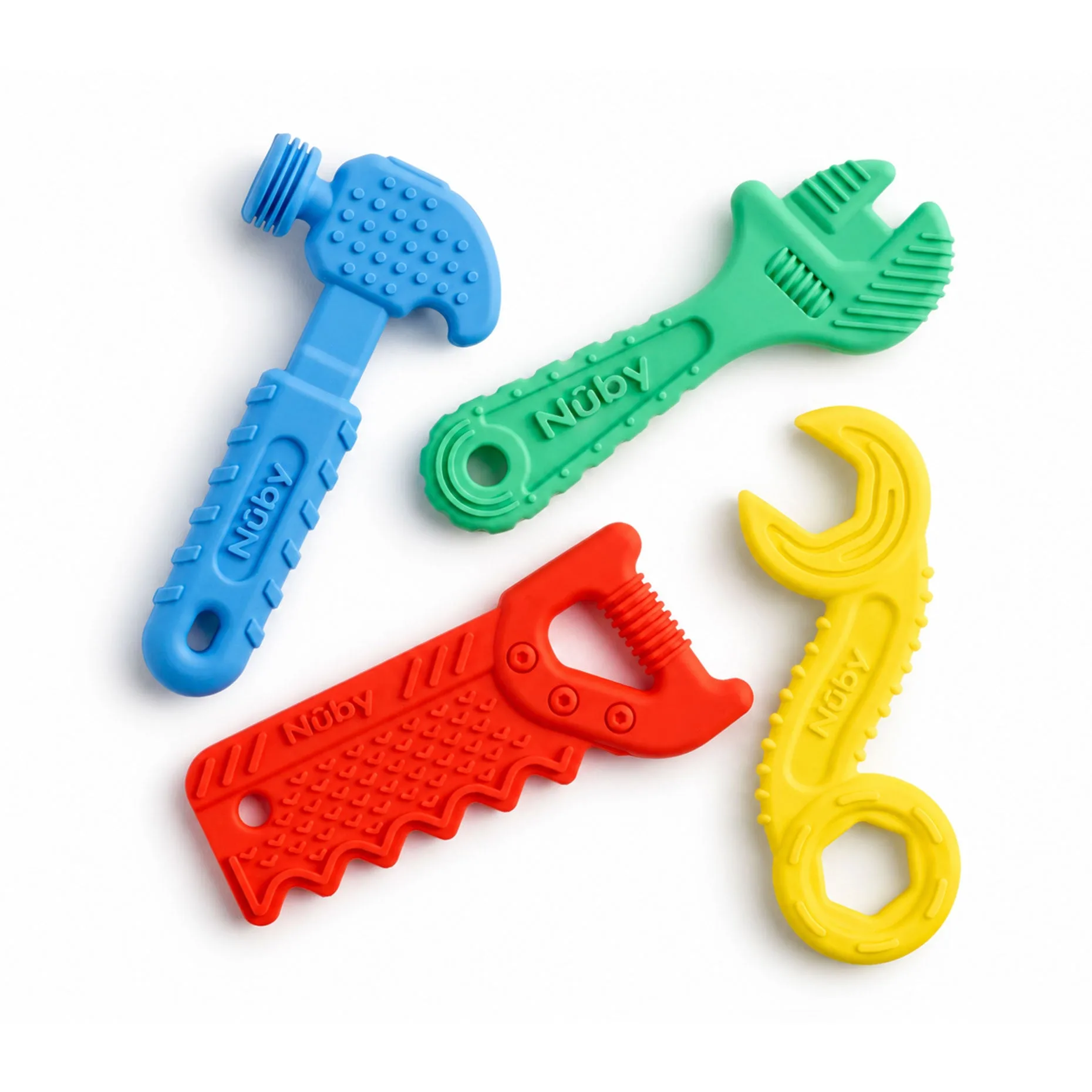
- Tool Teethers (4 Pack): Made from soft, easy-to-clean silicone with multiple textured surfaces, sized for little hands and designed to massage and soothe tender gums. Four teethers mean you can keep one in the diaper bag, one at home, and still have spares while others are being washed.
- Twist Ball Teether: Has textured surfaces that provide relief during teething, bright colors, fun sounds, and is easy for baby to grasp. The ball shape is easy to hold from different angles, which helps babies who are still figuring out how to bring a toy to their mouth.
Teething toys earn their place in the diaper bag when they match your baby's stage and stay in good condition. Start with one textured silicone option and one rattle-style teether, check them before each use, and let your baby's preferences guide the rest.