Quick Answer
In most cases, yes. A wearable bag counts as your one personal item once it holds your belongings, even if you're wearing it as a jacket or carrying it as a duffle. Airlines care about how many separate bags you board with, not whether a bag has straps or sleeves. A jacket you're wearing with nothing packed inside it is clothing, not a bag.
Every few months a traveler posts a video of themselves boarding a flight wearing what looks like a jacket but is secretly a duffle bag, and the comments fill up with the same question: does the airline count that as a personal item? The honest answer depends on one thing, and it isn't the design of the bag.
This FAQ covers the questions readers send us most often about wearable luggage airline rules, based on how personal item policies are written and enforced at the gate. Where a rule varies by carrier, we say so rather than guess.
What counts as a personal item, exactly?
A personal item is the small bag you're allowed to bring in addition to a carry-on, and it has to fit under the seat in front of you. Airlines describe it as a purse, briefcase, laptop bag, or similar. That list is about size and shape, not about whether the bag has handles or straps.
This is why a wearable bag doesn't get special treatment. If it holds your things and takes up under-seat space, it occupies the slot your personal item would occupy anyway. Wearing it doesn't create a second allowance.
- Check your fare's personal item dimensions before you pack, not at the gate.
- If you're already carrying a backpack and a purse, a third wearable bag will be treated as an extra piece.
Is a jacket with no items inside still a bag?
No. An empty jacket is clothing. The moment you zip your laptop, charger, and a change of clothes into it, it becomes luggage in the eyes of a gate agent, because it's now doing the job of a bag.
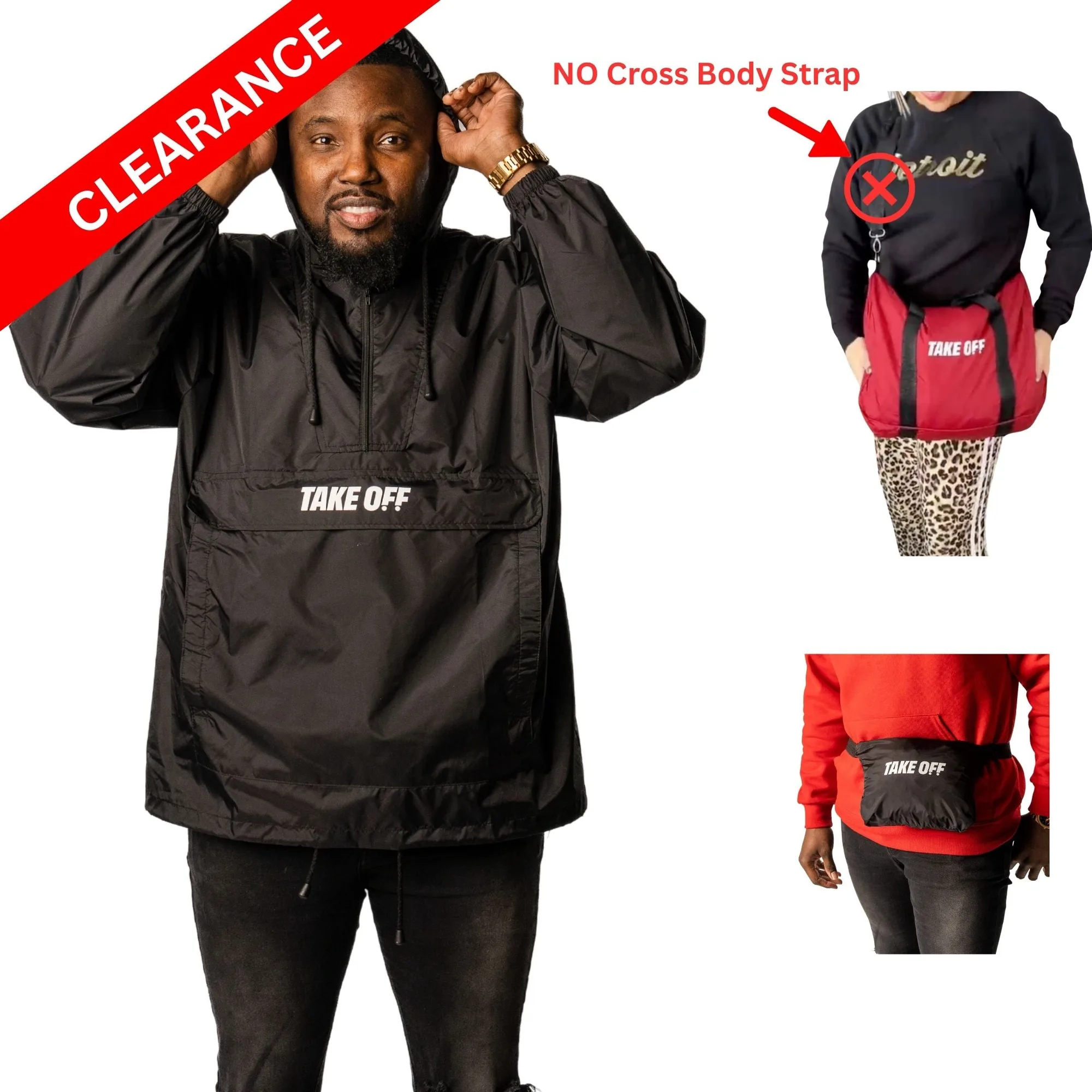
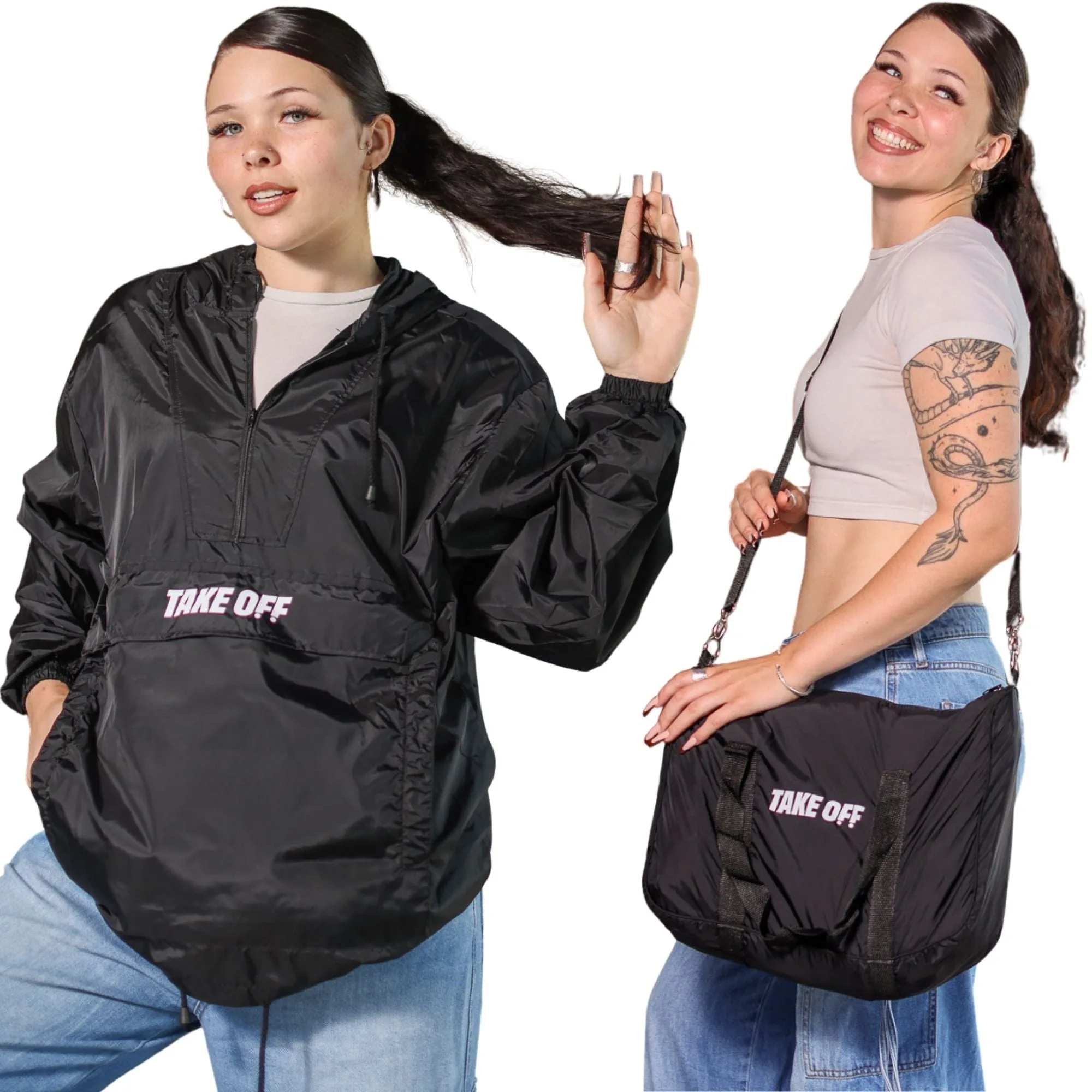
That distinction matters for the https://takeoffluggageoiu.com/products/duffle-bag-jacket-no-crossbody-strap-22d8e8d2b7d4dbd0b6734981-1384360Duffle Bag Jacket (No Crossbody Strap), which the catalog describes as transforming from a pouch to a jacket to a duffle bag in seconds. Worn as a jacket with nothing packed, it reads as a garment. Filled and carried as a duffle, it reads as a bag.
- Decide before you reach the gate whether it's your jacket or your bag, and pack accordingly.
- Don't plan to switch it from bag to jacket mid-boarding to dodge a size check.
Do gate agents actually stop people wearing bag jackets?
Enforcement is inconsistent, and that's the real risk. Some agents scan boarding passes and wave people through. Others are working a strict fare where every piece is counted and sized, and they will ask you to consolidate.
The pattern travelers report is that scrutiny rises on the most restrictive fares and on full flights where overhead space runs out. If you're flying a basic fare on a carrier known for tight limits, assume your wearable bag will be counted and plan around that.
- On a strict fare, treat the wearable bag as your personal item and check nothing else.
- Have a plan to fold or empty the bag if an agent asks you to consolidate.
Is a wearable bag allowed if it's my only bag?
Yes, and this is where the design earns its keep. If your wearable bag is the single item you board with, it fits the personal item slot and you're within the rules on virtually any carrier.
The trouble starts when travelers treat it as a free extra on top of a carry-on and a personal item. That's three pieces, and no jacket design changes the count.
- One wearable bag plus nothing else is the safest configuration on a strict fare.
- If you also bring a carry-on, the wearable bag becomes your personal item, not a bonus.
What about a small hard-shell personal item instead?
If your goal is simply to clear the strictest under-seat rules with protection and organization, a purpose-built personal item suitcase may serve you better than a wearable bag. It has a fixed, measurable size, so there's no ambiguity at the gate about what it is.
The tradeoff is flexibility. A hard-shell personal item can't be worn, and it won't compress the way fabric does when you need to squeeze it under a seat. Choose based on whether you value predictability or adaptability more.
- Hard-shell personal items are easier to defend in a size dispute because the dimensions are fixed.
- Wearable fabric bags are easier to stow in tight spaces but harder to argue about.
How do I avoid a gate-check fee with a wearable bag?
Consolidate before you reach the gate, not after. Move anything loose into the wearable bag so you're boarding with the exact number of pieces your fare allows, then keep it on your body or under the seat rather than in the overhead bin.
Also check the specific dimensions your airline publishes for personal items. Since wearable bags vary in size when packed, knowing your airline's limit tells you whether you're comfortably inside it or relying on an agent's goodwill.
- Pack the wearable bag last so you know its final packed size.
- Keep your boarding pass and ID in a pocket, not buried in the bag, in case you need to open it.
Wearable Bag Boarding Checklist
Count your pieces before security
Add up every bag you're carrying, including anything worn on your body that holds items. If the total exceeds your fare's allowance, consolidate now. One wearable bag alone is safe. Wearable bag plus carry-on plus another bag is not.
Know your airline's personal item dimensions
Look up the published size limit for your specific fare, then compare it to your bag's packed size rather than its empty size. A bag that fits when empty may not fit when full.
Decide the bag's role before you reach the gate
Choose whether the wearable bag is your jacket or your personal item, and board with it in that state. Don't switch forms at the gate. Consistency looks intentional. Mid-boarding transformations look like a workaround.
TAKE OFF Products That Fit This Question
- Duffle Bag Jacket (No Crossbody Strap): The catalog describes it as a 3-in-1 design that transforms from a pouch to a jacket to a spacious duffle bag in seconds. Because it changes form, whether it counts as a personal item depends on which form it's in when you board. Worn empty, it's clothing. Packed and carried as a duffle, it's a bag.
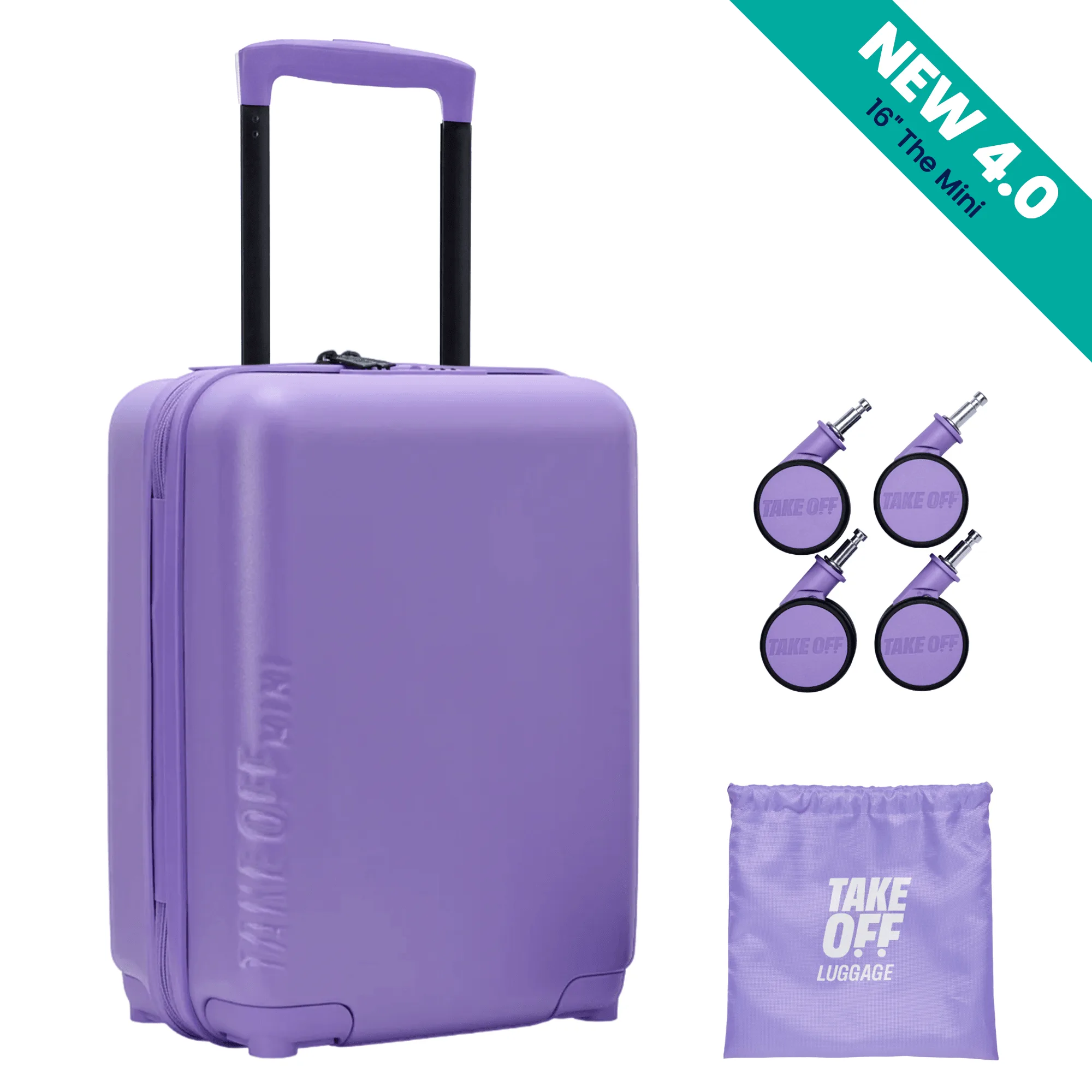
- Personal Item Suitcase MINI 4.0 - 16 Inch: The catalog presents it as a scaled-down hardshell spinner built to clear strict airline baggage rules, with the durability of a premium hardshell spinner. If you'd rather board with a fixed, measurable personal item than a wearable one, this removes the ambiguity about what the gate agent is looking at.
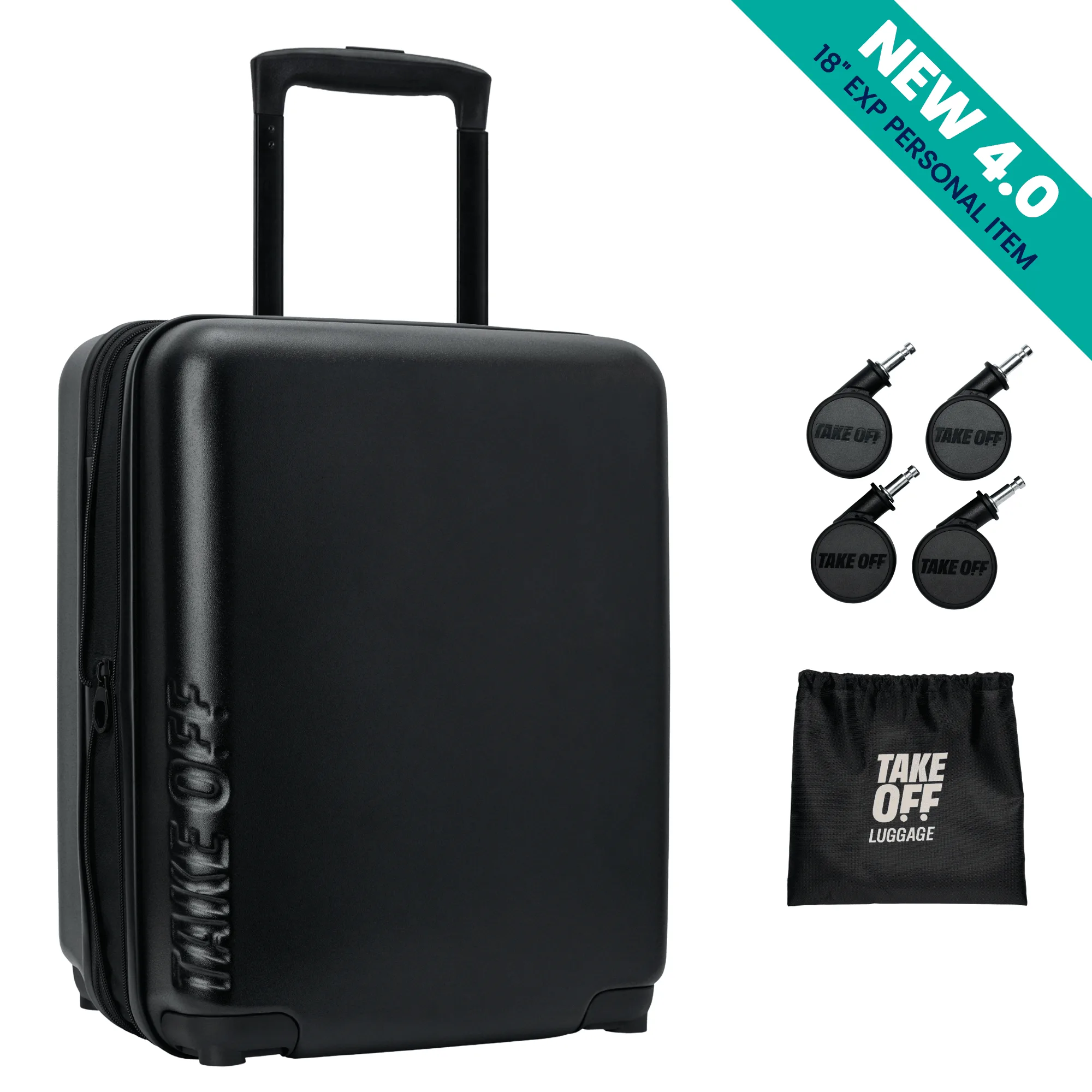
- Personal Item Suitcase 4.0 EXP - 18 Inch Expandable: The catalog says it offers 2-inch instant expansion, giving 20% more space when unzipped, and is designed as a personal item suitcase. Expansion is useful for the return trip, but expand it before the gate, not after, so it still reads as a personal item when it's counted.
Wearable bags are allowed, but they aren't exempt. Treat yours as the personal item it becomes once it's packed, check your fare's dimensions in advance, and you'll board without a debate.