Quick answer
Weighted straw trainer cups can genuinely help babies drink because the weighted end follows the liquid, so your baby can sip from almost any tilt. But they do not teach drinking on their own, and they are not necessary for every baby. If your baby already manages a plain straw cup, a weighted version adds convenience, not a new skill.
What a weighted straw actually does
A weighted straw has a small weight at the bottom of the straw. When your baby tilts the cup, the weight pulls the straw end into the liquid, so the straw stays submerged. That means your baby can drink while holding the cup upright, sideways, or even tipped toward their face. A standard straw only works when the straw end is below the liquid line, which is why some babies get frustrated when the cup is half empty or held at an odd angle.
This is a mechanical convenience, not a developmental milestone. The straw still requires your baby to seal their lips and suck, which is the same skill a plain straw teaches. If your baby is still learning to coordinate sucking and swallowing, a weighted straw will not speed that up. It simply removes one cause of frustration: losing the straw in the air.
Myth: weighted straw cups are the only way to teach straw drinking
Many parents hear that a weighted straw cup is the best first straw cup. In practice, any straw cup can work. A plain silicone straw cup with a short straw may be easier for a beginner because there is less tubing to clean and the straw is more rigid, which can help a baby feel where the liquid is coming from.
The real deciding factor is your baby's readiness. Signs include sitting with support, showing interest in your cup, and being able to bring objects to their mouth. If those signs are not there yet, no straw design will make drinking happen. Start with a small amount of water in an open cup or a plain straw cup during meals, and treat the weighted straw as an option, not a requirement.
Myth: a weighted straw cup is harder to clean
Weighted straws do have more parts: the straw, the weight, and often a valve or gasket. That means more places for milk or smoothie residue to hide. But they are not automatically harder to clean if you treat them like any other straw cup. Rinse the straw immediately after use, use a narrow straw brush, and check that the weight is not trapping liquid.
Some weighted straw cups are dishwasher safe on the top rack, but always check the specific product instructions. If you use the cup for milk or formula, clean it sooner rather than later. A quick rinse now prevents a scrubbing session later.
When a weighted straw cup is worth it
A weighted straw cup earns its place when your baby wants to hold the cup independently but tips it in every direction. It is also useful for stroller rides, car seats, and high chairs where the cup gets jostled. If your baby gets upset when the straw stops working because the cup is tilted, a weighted straw can reduce that specific frustration.
It is less useful if your baby already drinks well from a plain straw cup, or if you are looking for a cup to teach the very first straw sips. In those cases, a simple straw cup or an open cup gives you fewer parts to manage and a clearer view of how much your baby is actually drinking.
How to choose without overbuying
Start with one weighted straw cup and one plain straw cup. Use the plain straw cup during calm, seated meals when you can help. Use the weighted straw cup for travel or when your baby wants to hold the cup alone. This gives you a fair test without a cabinet full of unused cups.
Pay attention to the straw length and the valve. A straw that is too long can be hard for a small mouth to manage, and a stiff valve can make drinking feel like work. If your baby loses interest after a few sips, the cup may be the problem, not your baby. Try a different straw or go back to the plain cup for a week.
Verdicts on common weighted straw cup claims
- A weighted straw lets babies drink from any angle: True. The weight keeps the straw end in the liquid when the cup is tilted, so your baby can sip without holding the cup upright. Verdict: real benefit, but only if your baby already sucks from a straw.
- Weighted straw cups teach babies to drink faster: False. The straw still requires lip seal and suction. A weighted straw removes angle frustration, but it does not build the drinking skill itself. Verdict: no shortcut. Readiness matters more than the cup.
- Every baby needs a weighted straw trainer cup: False. Many babies do fine with a plain straw cup or an open cup. A weighted straw is a convenience for travel and independent holding, not a required step. Verdict: optional, not essential. Try one before buying more.
- Weighted straw cups are too hard to clean: Not necessarily. They have more parts, so rinse right after use and use a straw brush. Check the product instructions for dishwasher safety. Verdict: manageable with a quick routine.
Books to pair with cup practice
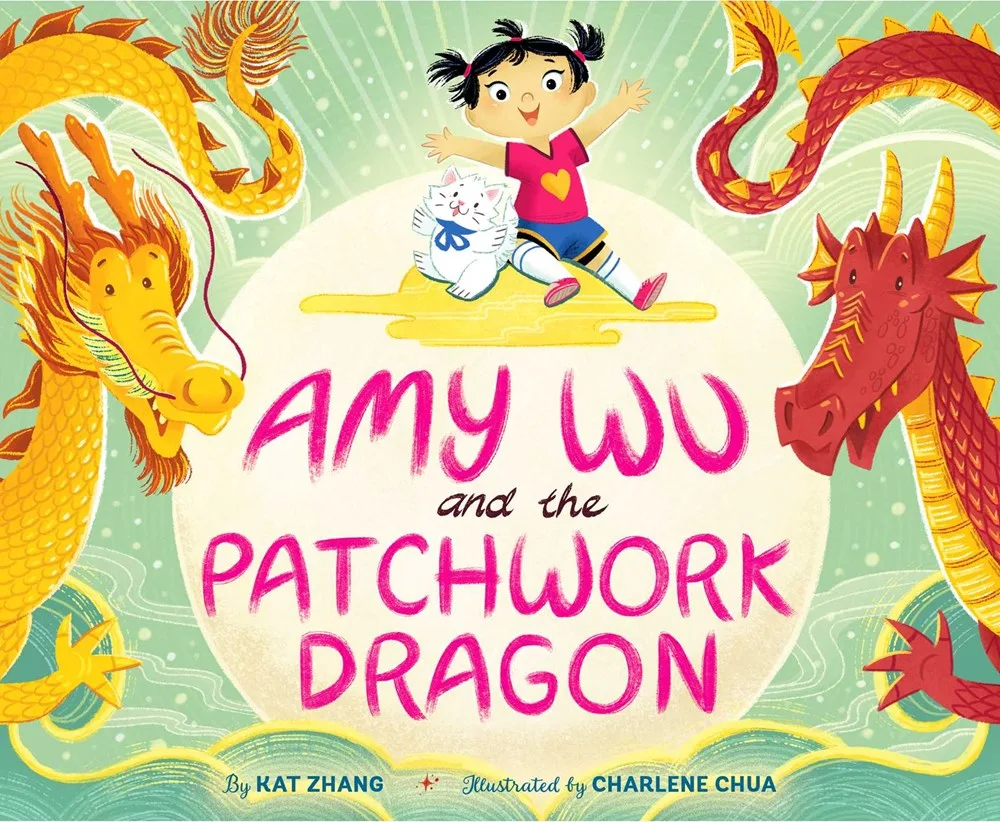
- Amy Wu and the Patchwork Dragon: Amy Wu and the Patchwork Dragon is a picture book about a girl who feels stuck when her first dragon does not look like everyone else's, then finds inspiration from her grandmother. A calm, seated story gives you a low-pressure moment to offer a straw cup without making drinking the main event.
- 12 Lucky Animals: A Bilingual Baby Book: 12 Lucky Animals: A Bilingual Baby Book is a board book that introduces the animals of the Chinese zodiac in English and Chinese, with Chinese characters alongside pinyin. Board books are easy to hold one-handed while you steady a cup, and the animal names give you something to talk about during sips.