Quick answer
Organic cotton bibs are better for teething babies because they absorb drool without exposing sensitive skin to pesticide residues, synthetic dyes, or chemical finishes. Look for GOTS-certified options with two layers of absorbent fabric and non-toxic snaps. They reduce the risk of drool rash and stay soft through repeated washing.
Why teething drool is harder on baby skin than you think
When babies teethe, they produce extra saliva that can pool around the chin, neck, and chest. That constant moisture breaks down the skin's natural barrier, leading to redness, chafing, and sometimes a raw rash. A bib that sits against that skin for hours needs to be gentle and absorbent, not just decorative.
What organic cotton bibs do differently
Conventional cotton is grown with synthetic pesticides and often finished with formaldehyde-based resins, optical brighteners, or anti-wrinkle chemicals. For a teething baby who mouths everything and has sensitive skin, those residues can add irritation. Organic cotton bibs skip those inputs entirely. GOTS certification also restricts azo dyes, heavy metals, and phthalates in snaps or fasteners. The result is a bib that absorbs drool without transferring anything unwanted onto your baby's skin.
How to use bibs effectively during teething
Change the bib as soon as it feels damp. Leaving a wet bib on can defeat the purpose and actually worsen skin irritation. Have several bibs in rotation so you always have a dry one ready. Machine wash them in warm water with a mild, fragrance-free detergent and tumble dry low. Avoid fabric softeners, which can coat the fibers and reduce absorbency over time.
Diagnosing drool rash: when a bib helps and when it doesn't
- Symptom: Red, slightly bumpy rash on the chin, neck, or chest that appears after drooling episodes. Skin may feel rough or dry. Likely drool irritation, not a food allergy or infection.
- Likely cause: Prolonged contact with saliva breaks down the skin barrier. A bib made from conventional cotton may add chemical irritation on top of the moisture. Switching to an organic cotton bib can remove one potential irritant.
- Corrective action: Keep the area clean and dry. Use an organic cotton bib, change it the moment it feels damp, and apply a barrier cream (like zinc oxide) at night. Wash bibs with fragrance-free detergent. Most mild drool rashes clear within a few days with consistent dryness.
- When to stop and see a doctor: If the rash has oozing, crusting, or blisters, or if it spreads beyond the drool zone. Also if your baby develops a fever or seems unusually uncomfortable. These signs may indicate a yeast or bacterial infection that needs medical treatment, not just a bib change.
Bibs that do the job
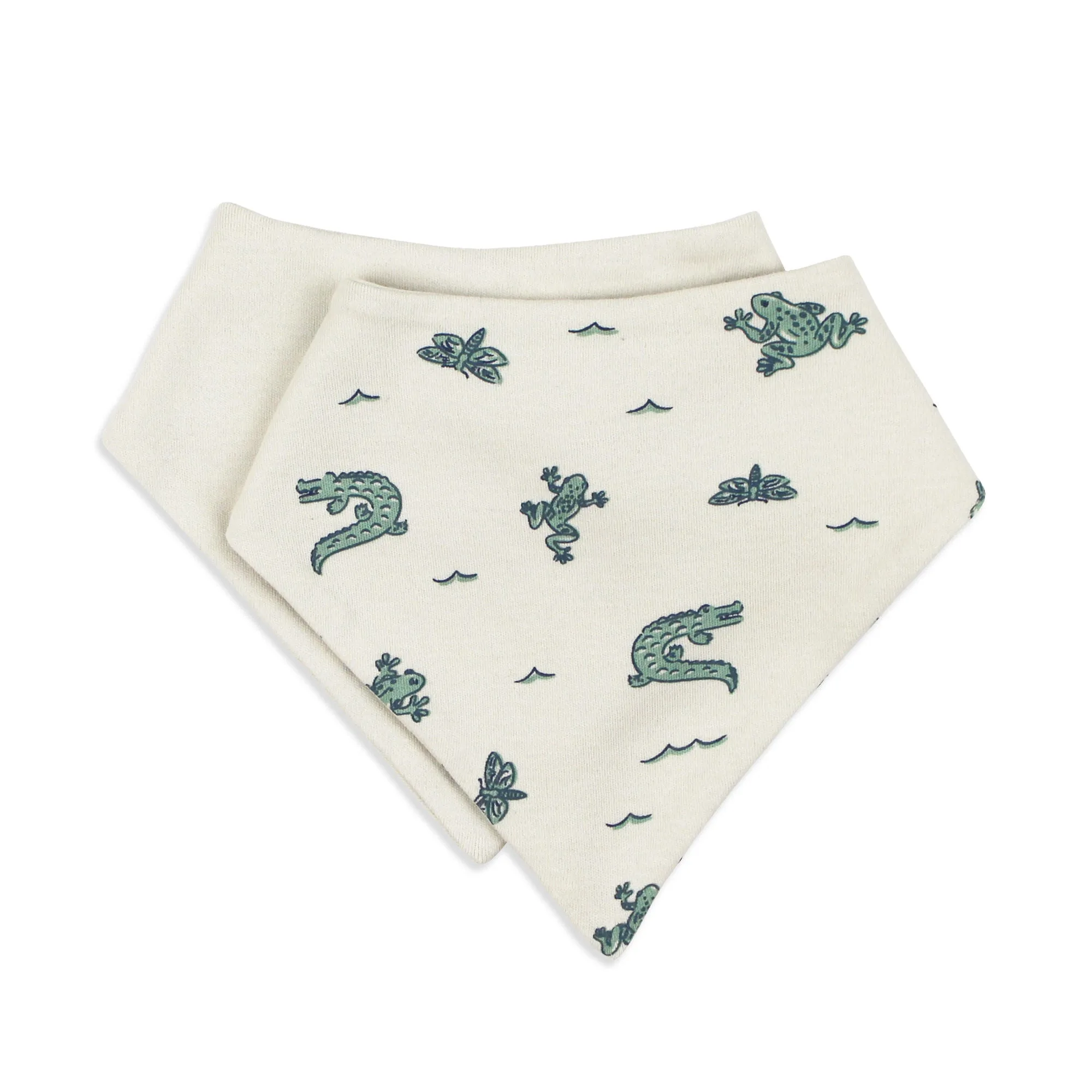
- Alligator | Organic Bandana Bib, 2-Pack: GOTS certified 100% organic cotton, 2 layers of absorbent cotton, chrome-free/lead-free/nickel-free snaps, azo-free dyes. Two layers mean more drool gets trapped before it reaches clothes. The non-toxic snaps are safe if your baby chews on the bib tag or neckline, which teething babies often do.