Quick Answer
No, most people do not need a 100W charger. You need one only when your device is designed to draw close to that wattage, such as a larger laptop under load. A 65W charger often covers a phone, tablet, or thin laptop, while 100W makes sense when you want headroom for a power-hungry laptop or several devices at once.
Charger shopping is full of big numbers, and 100W has become the headline everyone reaches for. But wattage is not a score. It is a ceiling, and your device decides how much of it to use.
This guide separates the useful claims from the marketing ones. We will look at what GaN actually changes, when a 100W charger earns its place in your bag, and when a smaller charger does the same job for less.
Myth: A Higher Wattage Charger Charges Everything Faster
A charger's wattage is the maximum it can deliver, not a promise your phone will accept it. Most phones and tablets negotiate a much lower rate, so a 100W charger and a 65W charger can fill the same phone in nearly the same time. The extra headroom sits unused.
The exception is a device built to draw high wattage, such as a larger laptop running heavy tasks. There, a higher-wattage charger can shorten charge time or simply keep the battery from draining while you work. If your device never asks for more, the bigger number changes nothing.
- Check what your device's own charger or spec sheet lists before paying extra for wattage you cannot use.
What GaN Actually Changes
GaN, or gallium nitride, is a semiconductor material that lets a charger run cooler and more efficiently than older silicon designs at the same output. In practice, that means a 100W GaN charger can be smaller and lighter than an older 100W brick, which matters if it lives in a bag.
GaN is not a magic speed boost. It does not make a phone accept more power than it is designed for. The real benefit is size, heat, and portability at higher wattages, which is why GaN is common in compact multi-port chargers.
- If you rarely carry your charger, GaN is a nice-to-have. If you travel with it daily, the size difference is the reason to buy.
65W vs 100W: Which One Fits Your Bag
For a phone, tablet, earbuds, or a thin laptop, 65W is usually plenty. It keeps everyday devices topped up without the bulk or cost of a higher-wattage unit. If you charge one or two devices at a time, 65W is the sensible default.
Step up to 100W when you have a laptop that genuinely pulls near that limit, or when you want to charge a laptop and a phone together without slowing either down. Multi-port chargers split their total output, so a 100W unit gives you more room to divide between devices.
- Add up the wattage your devices actually request, then buy slightly above that total if you charge several at once.
When a 100W Charger Is Worth It
A 100W charger earns its keep if you own a laptop rated near that figure, or if you regularly charge a laptop plus a phone or tablet from one brick. It also helps if you want one charger for home and travel instead of two.
It is not worth it if your heaviest device is a phone or a small tablet. In that case you are paying for headroom you will never use, and carrying extra size and weight for no benefit.
- One charger that covers your laptop and phone is often cheaper than buying two separate chargers.
Ports, Cables, and Other Things Wattage Hides
Wattage is only one part of the picture. Port count, cable rating, and charging standard all affect real-world results. A 100W charger paired with a cable that cannot carry that power will not deliver it, so match your cable to the charger.
Multi-port chargers also share their total output. A three-port 100W charger may deliver less to each device when all ports are in use. Read the port breakdown, not just the headline number, before you buy.
- Replace low-rated cables before blaming the charger for slow speeds.
Verdicts on Common 100W Claims
- Claim: 100W charges every device faster: Wattage is a ceiling, and your device decides how much to accept. Phones and tablets usually draw far less than 100W. Verdict: False for most phones and tablets.
- Claim: GaN means more power: GaN improves efficiency and heat, letting high-wattage chargers run smaller and cooler. It does not raise the wattage your device accepts. Verdict: True for size and heat, false for speed.
- Claim: 65W is always enough: 65W covers phones, tablets, and thin laptops, but a larger laptop under load may want closer to 100W, especially if you charge more than one device. Verdict: True for light devices, false for power-hungry laptops.
- Claim: You can ignore the cable: A cable that cannot carry the charger's output will limit charging speed. Match the cable rating to the charger and device. Verdict: False. The cable is part of the chain.
Products That Show These Tradeoffs
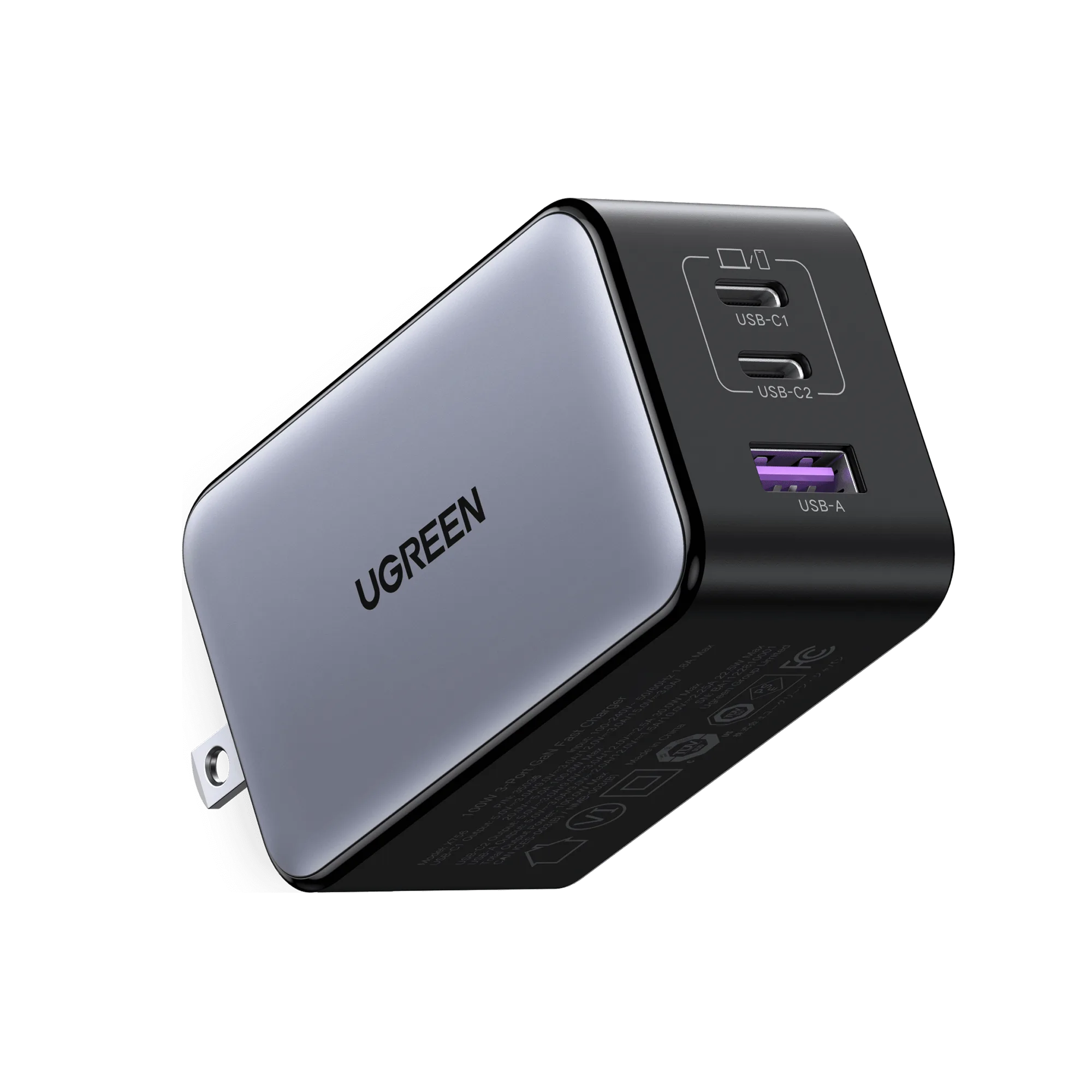
- Củ Sạc UGREEN Nhanh Nexode GaN 3 cổng 100W: Nexode GaN 3-port 100W charger with ThermalGuard 2.0, compact and foldable design, and universal compatibility. A good fit if you want one charger for a laptop plus two smaller devices, with folding pins for travel.
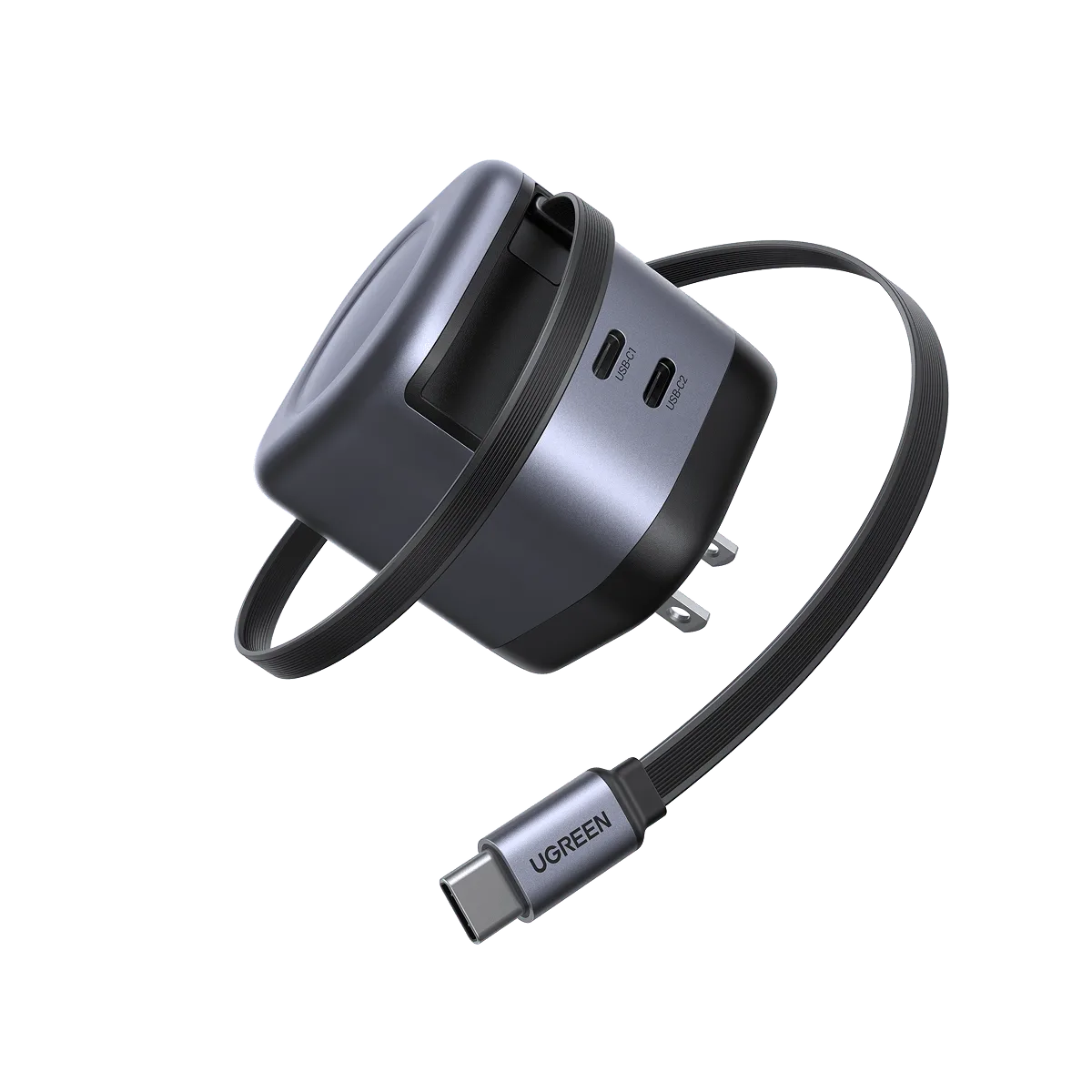
- Củ Sạc UGREEN Dây Rút USB-C 45W: 45W power delivery with an integrated USB-C cable and a compact design suitable for travel. Shows the other end of the range: enough for phones, tablets, and some thin laptops, with no separate cable to pack.
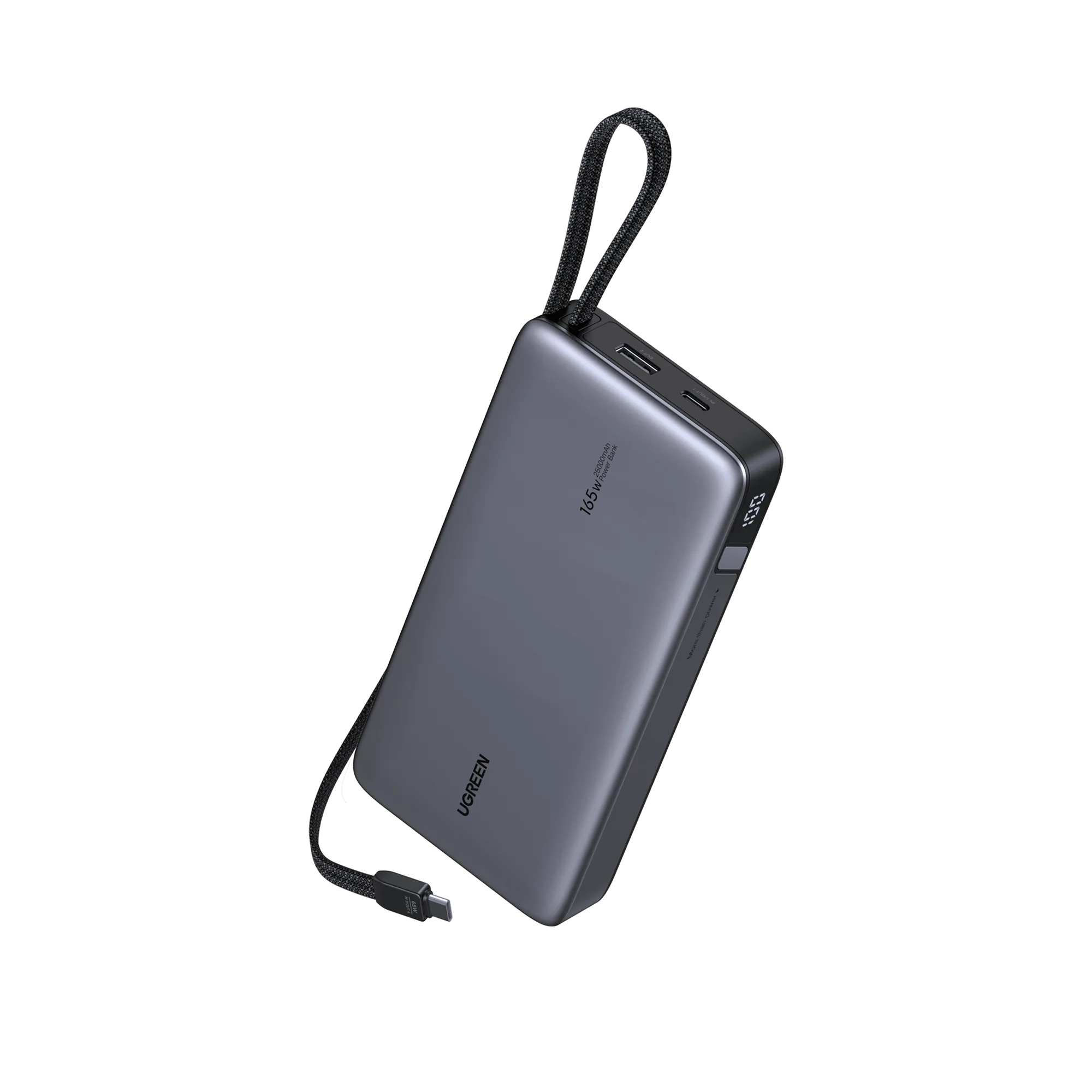
- https://ugreenetv.com/products/sg-55995-332be370d06d78b4a984ee63-1310981UGREEN Nexode Power Bank 25000mAh 165W with Built-in USB-C Cable: 25000mAh capacity with 165W total output and a built-in USB-C cable. Useful when you need high output away from a wall outlet, and a reminder that wattage matters most when several devices share one source.
Buy wattage for the devices you actually own, not for the biggest number on the box. If your heaviest device is a phone or small tablet, 45W to 65W is enough. If you charge a laptop and other gear together, a 100W GaN charger like the Nexode 3-port model gives you the headroom without the bulk.