Quick answer
Yes, if you want one machine that handles straight piecing, decorative stitches, and secure seam ends without a steep learning curve. A 12-stitch sewing machine with reverse function is a practical step up from a basic straight-stitch model for most quilting beginners.
What the 12 stitches actually give you
A 12-stitch machine typically includes utility stitches for construction and a few decorative or stretch options. For quilting, the straight stitch does most of the work, but having alternatives helps with appliqué edges, binding, and simple embellishment. If you only ever piece straight seams, a basic machine with fewer stitches can do the job, but you lose flexibility for future projects.
Why reverse matters more than stitch count
Reverse function lets you backstitch at the start and end of a seam to lock threads without tying knots by hand. On quilts that receive washing and handling, secure seam ends reduce the risk of stitches pulling out. A machine with reverse is often more forgiving for beginners than one that requires manual thread locking.
When a lower stitch count is enough
If your budget is tight or you mainly sew straight seams for patchwork, a basic machine with fewer stitches may suffice. However, check that it still offers reverse; many entry-level models do. The trade-off is fewer decorative options and potentially fewer stitch length or width adjustments, which can limit future variety.
Decision rules for choosing your stitch count
- If you are a complete beginner: Choose a machine with reverse function and at least 8–12 stitches. You will use straight stitch most, but the extras help with finishing and decorative touches as skills grow. Prioritize reverse over a higher stitch count.
- If you only piece straight seams: A basic machine with fewer stitches can work, but confirm it has reverse. Without reverse, you will need to manually lock threads, which adds time and inconsistency. Never buy a machine without reverse for quilting.
- If you plan to appliqué or embellish: Look for a machine with at least 12 stitches, including a zigzag or decorative option. A 12-stitch model covers these techniques without the complexity of a computerized machine. Stitch variety matters more if you want decorative work.
- If you are on a strict budget: Compare the cost of a basic machine plus a separate walking foot or accessories against a 12-stitch model. Sometimes the higher-stitch machine includes features that cost extra on a basic model. Check included accessories, not just stitch count.
Product facts
-
12-Stitch Sewing Machine with Reverse Function: 12-stitch sewing machine with reverse function, designed for quilting and sewing projects. It offers stitch variety and secure seam ends in one machine, which suits beginners who want room to grow without upgrading soon.
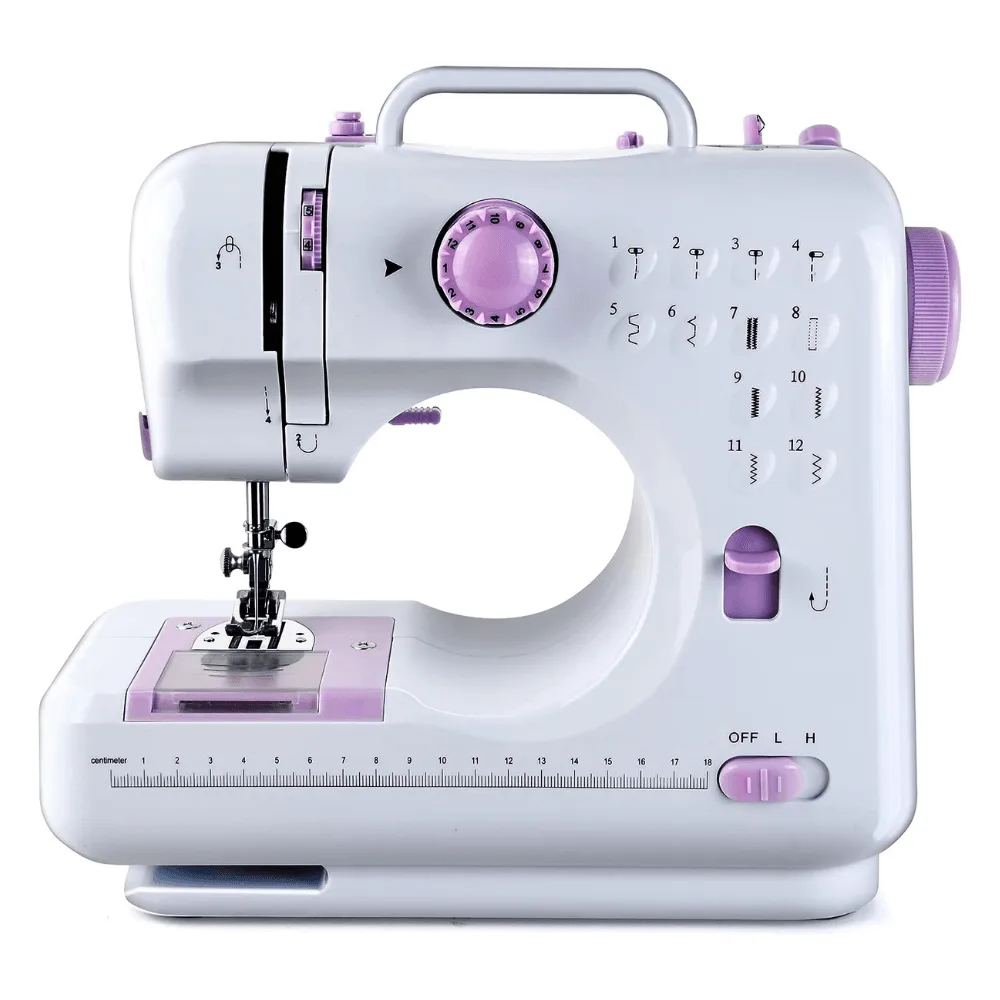
12-Stitch Sewing Machine with Reverse Function
Who this machine is for
Best for
- Quilting beginners who want one machine for piecing and simple decorative stitches
- Sewists who value secure seam ends via reverse without learning a computerized interface
- Crafters who occasionally switch between utility and decorative stitching
Not for
- Sewists who only need straight stitch and want the lowest possible cost
- Advanced quilters who require hundreds of stitches or programmable patterns
- Users who need specialized features like automatic thread cutting or large throat space