Quick Answer
If you use your armchair for reading, watching TV, or napping, a footstool is worth adding. It supports your legs, reduces pressure on your lower back, and makes the chair feel more like a lounge. But if your armchair is mainly for short sits, or your room is tight, you can skip it. The right choice depends on how you sit and the space you have.
When a Footstool Earns Its Place
A footstool is most useful when your feet don't reach the floor comfortably or when you want to recline slightly. If you sink into a deep armchair like the Abington Armchair, Ecru Linen, which has a deep soft seat, your legs may dangle or your lower back may round. A footstool bridges that gap. It also helps if you have circulation issues or simply want to put your feet up after a long day. But if you perch on the edge of your chair for quick conversations, a footstool just becomes an obstacle.
How to Pair a Footstool with Your Armchair
Match the footstool height to your chair's seat height. As a rule, the top of the footstool should be level with or slightly lower than your armchair seat. If it's too high, your knees will be above your hips, which strains your back. If it's too low, it won't support your legs. For a classic reading chair like the Finley Armchair, Moss Linen, which has elegant curves and a supportive sit, a footstool of similar height works well. Width matters too: a footstool should be at least as wide as your hips, but not so wide that it blocks walkways.
Footstool Size Guide for Small Spaces
In small rooms, choose a footstool that doubles as extra seating or storage. Round or oval footstools take up less visual space than square ones. If you have a narrow gap between your chair and the wall, measure it before buying. A footstool that's too deep will make the room feel cramped. For tight spots, consider a small pouffe or a folding footstool that you can tuck away. But remember: a footstool that's too small won't support your legs properly, so don't sacrifice function for size alone.
Decision Rules for Buying a Footstool
- If you sit for more than 30 minutes at a time: Choose a footstool that matches your armchair seat height. It will reduce strain on your back and legs. Prioritize comfort over looks.
- If your room is under 10 square meters: Pick a round or oval footstool with a small footprint. Avoid bulky square designs that block traffic. Measure your floor space first.
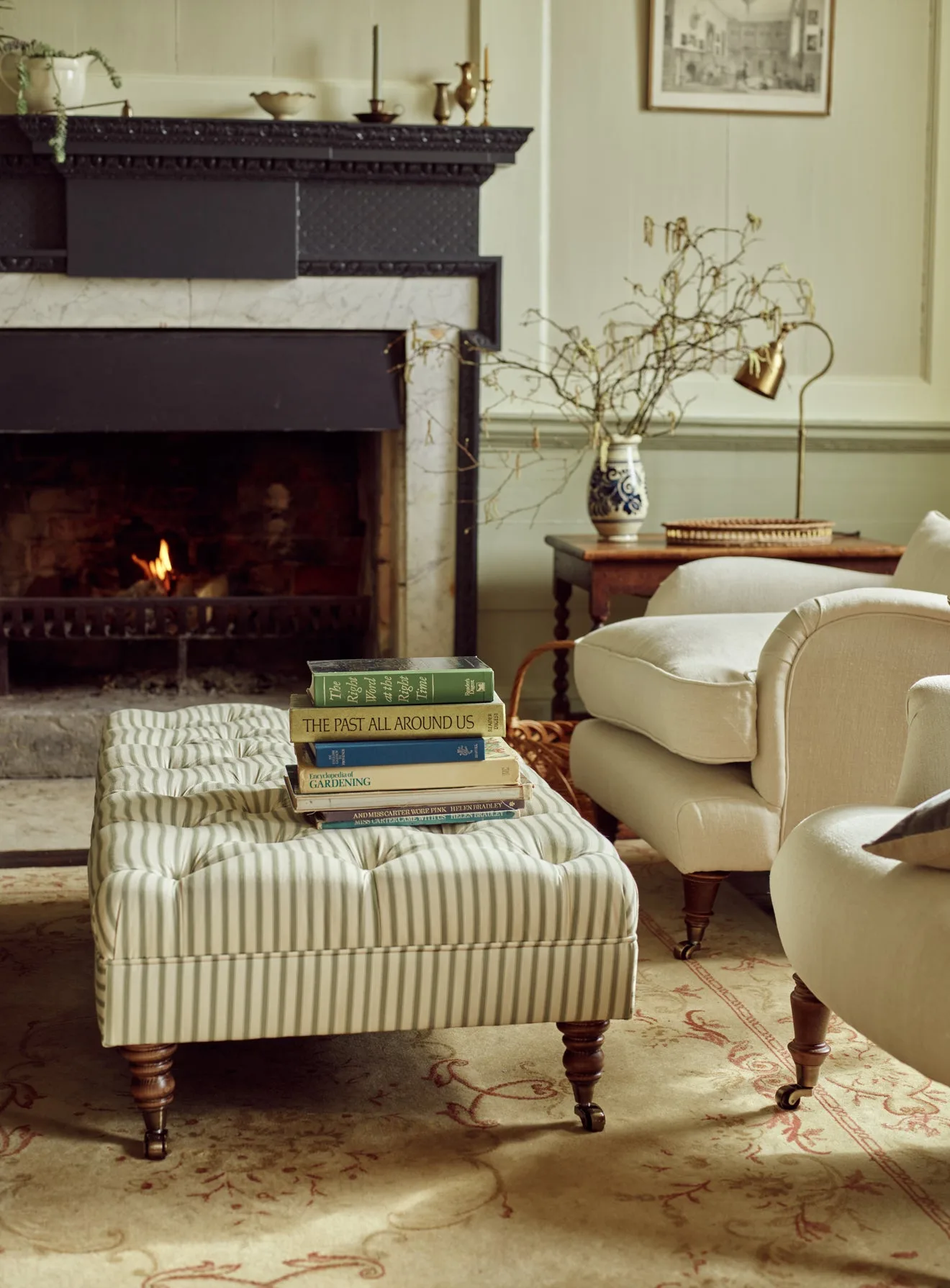
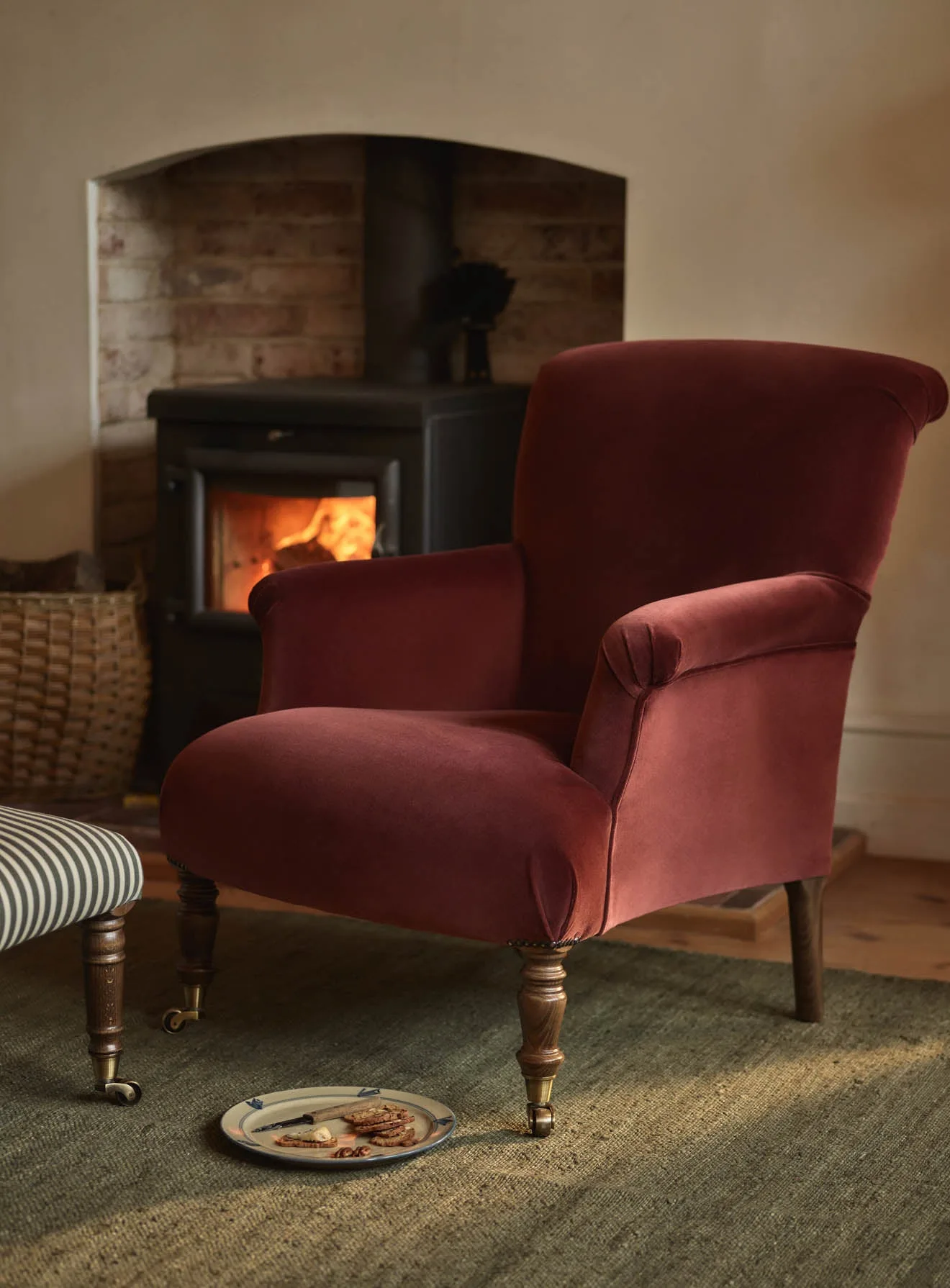
- If you want a cohesive look: Choose a footstool in a similar fabric or leg finish to your armchair. The Abington and Finley armchairs both have turned wooden legs with brass castors, so a footstool with similar detailing will tie the set together. Consider an armchair and footstool set for a unified style.
Product Facts
- Abington Armchair, Ecru Linen: A classic, comfortable armchair with a deep soft seat; upholstered in cream-coloured linen; comes with a matching feather-filled bolster cushion. The deep seat means your legs may need extra support, making a footstool a practical addition for reading or relaxing.
- Finley Armchair, Moss Linen: A classic English reading chair with elegant curves; upholstered in soft green linen; Oeko-Tex certified fabric. Its supportive sit and reading-chair design pair naturally with a footstool for long stretches of comfortable sitting.
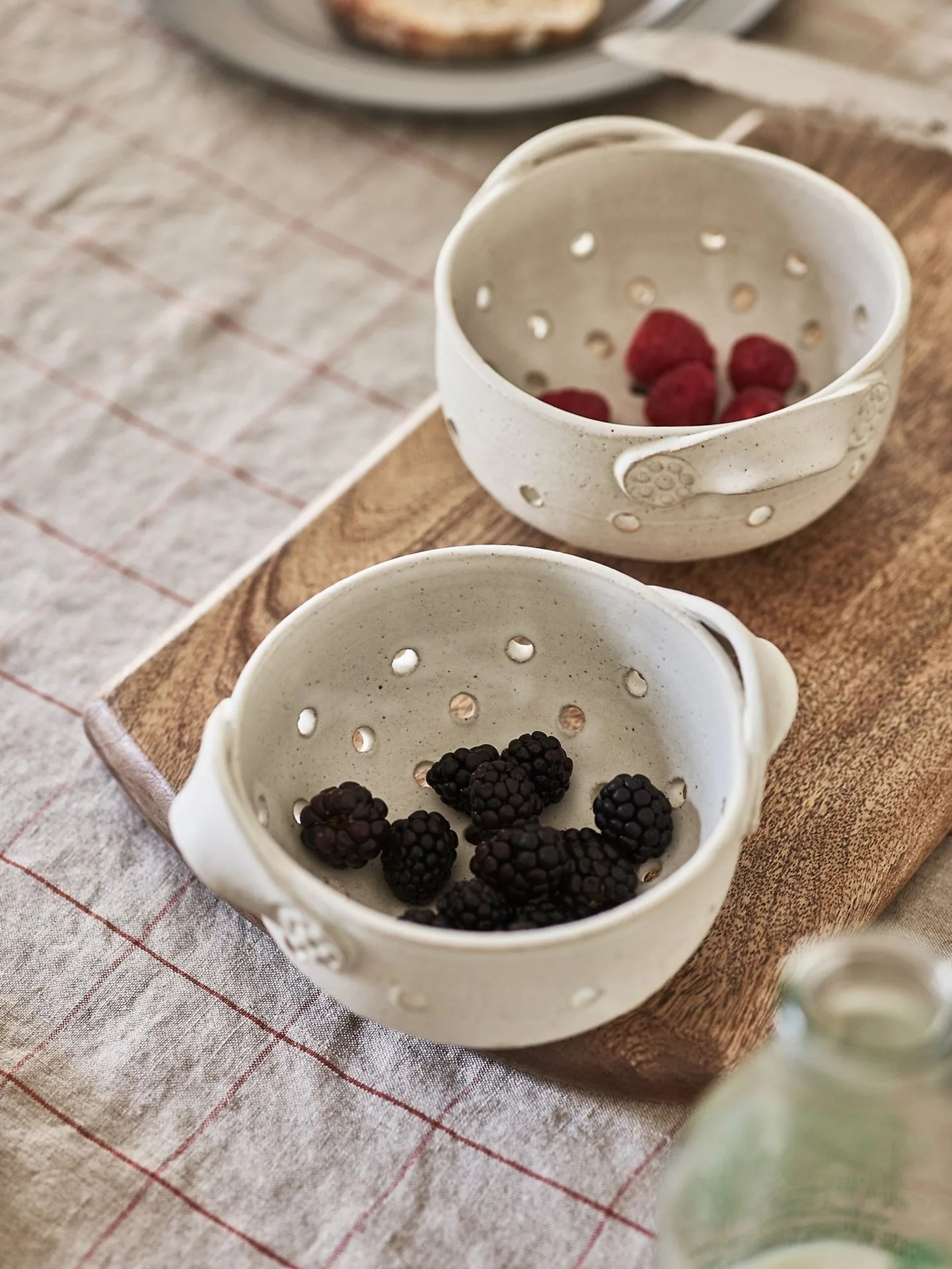
- Handmade Stoneware Berry Colander: A small stoneware colander ideal for washing fruit or salad vegetables; handmade on the south coast of England; finished in a satin vanilla glaze. While not a footstool, this piece shows the kind of small, useful accessory that can sit on a side table next to your armchair, ready for a snack while you relax.
Is a Footstool Right for You?
Best for
- People who read or watch TV in their armchair for long periods
- Anyone with a deep armchair where feet don't reach the floor
- Small spaces where a footstool can double as extra seating
Not for
- Armchairs used mainly for brief sits or conversations
- Very tight spaces with no room for an extra piece
- Those who prefer a minimalist look with fewer objects