Quick answer
You do not always need a tripod for a mirrorless camera, but you will want one whenever light is low, shutter speeds get slow, or you need the exact same framing across several shots. Handheld shooting covers most everyday situations; a tripod is the tool that makes certain shots possible rather than merely easier.
When handheld shooting is genuinely enough
Modern mirrorless bodies and lenses often include image stabilisation, and that lets many photographers shoot handheld in conditions that would have required support a decade ago. In good daylight, with a shutter speed fast enough to freeze your subject, a tripod mostly adds weight and setup time. If your photos are sharp and your framing is deliberate, you are not missing anything by leaving it at home.
- Bright outdoor scenes with fast shutter speeds
- Candid and street photography where speed matters more than precision
- Travel days when you are moving constantly and packing light
Situations where a tripod stops being optional
The moment your shutter speed drops below what you can hold steadily, stabilisation buys you a few stops but not unlimited time. Long exposures, night scenes, and deliberate landscape work all push past that limit. The same applies when you need identical framing across multiple frames, such as focus stacking, time-lapse, or shooting a property room by room. In those cases the tripod is not a convenience, it is the thing that makes the shot repeatable.
- Exposures longer than you can comfortably hand-hold
- Focus stacking, panoramas, and time-lapse sequences
- Product, architectural, and interior work that needs consistent framing
How much tripod your mirrorless kit actually needs
A common mistake is buying a tripod rated for far more weight than you carry, then leaving it behind because it is heavy. Work out your heaviest realistic combination, body plus lens plus any cage or adapter, and choose a support rated comfortably above that figure. For a full-frame body and a wide zoom, a mid-weight carbon or aluminium tripod with a ball head covers most needs. If you shoot with a long telephoto, prioritise leg stiffness and a head with a separate panning lock.
- Check the maximum load rating against your heaviest body and lens combination
- Carbon fibre saves weight; aluminium saves money
- A ball head suits general work; a geared or three-way head suits precise framing
Tripod vs handheld: the honest tradeoff
Handheld shooting is faster, lighter, and often good enough. A tripod is slower to set up, adds bulk to your bag, and can draw attention in public spaces. The tradeoff is not about which is better in general, it is about which one matches the shot in front of you. Many photographers carry a compact travel tripod for the handful of frames each trip that genuinely need it, and shoot handheld for everything else.
Tripod questions readers ask most
Do I need a tripod if my camera has stabilisation?
Stabilisation helps with minor handshake at moderate shutter speeds, but it cannot hold a multi-second exposure steady or keep framing identical between frames. Stabilisation reduces the need for a tripod; it does not remove it.
Is a cheap tripod worse than no tripod?
A support that flexes or drifts can blur a long exposure just as badly as hand-holding, and it wastes the setup time you spent. If the budget is tight, a smaller but rigid tripod beats a tall, flimsy one. Rigidity matters more than height or feature count.
Can I use a tripod with an ultra-wide lens?
Yes, and it is one of the best uses for one. Wide lenses exaggerate small framing shifts, so locking the camera down keeps horizons and vertical lines consistent across a set of shots. For architecture and landscapes, a tripod is often the difference between a usable set and a mismatched one.
Gear notes for tripod-friendly setups
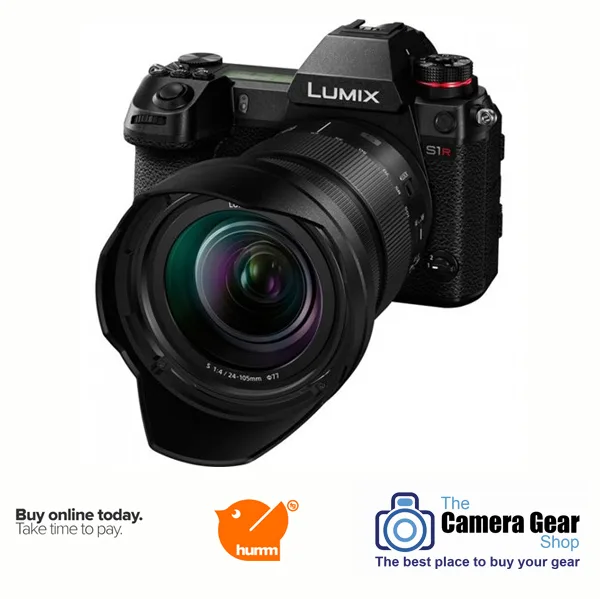
- Panasonic Lumix DC-S1R with 24-105mm Lens Kit: The Panasonic Lumix DC-S1R with 24-105mm Lens Kit pairs a full-frame 47MP sensor with a standard zoom in a single kit. High-resolution sensors reward stable shooting, so long-exposure and landscape work with this kit benefits noticeably from a solid tripod.
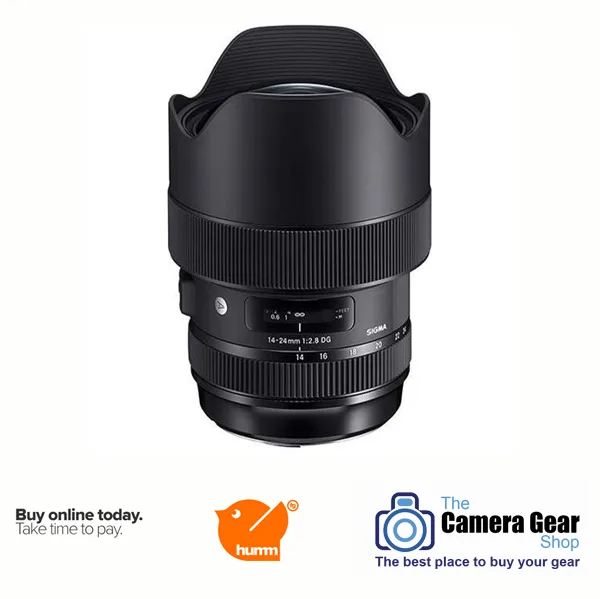
- Sigma 14-24mm f/2.8 DG HSM Art Lens Canon Mount: The Sigma 14-24mm f/2.8 DG HSM Art Lens for Canon EF mount uses a constant f/2.8 aperture and is aimed at architectural and landscape shooters. Ultra-wide framing for architecture and landscapes is exactly the kind of work where precise, repeatable framing on a tripod pays off.