Quick answer
You do not need a UV sterilizer for baby bottles if you already have a working steam or washing setup and your baby is healthy. Choose UV when you want fast, waterless cycles for pacifiers, nipples, and small accessories, and when you will actually keep it clean. If your priority is volume, choose a large steam sterilizer and dryer instead.
What UV actually does that steam does not
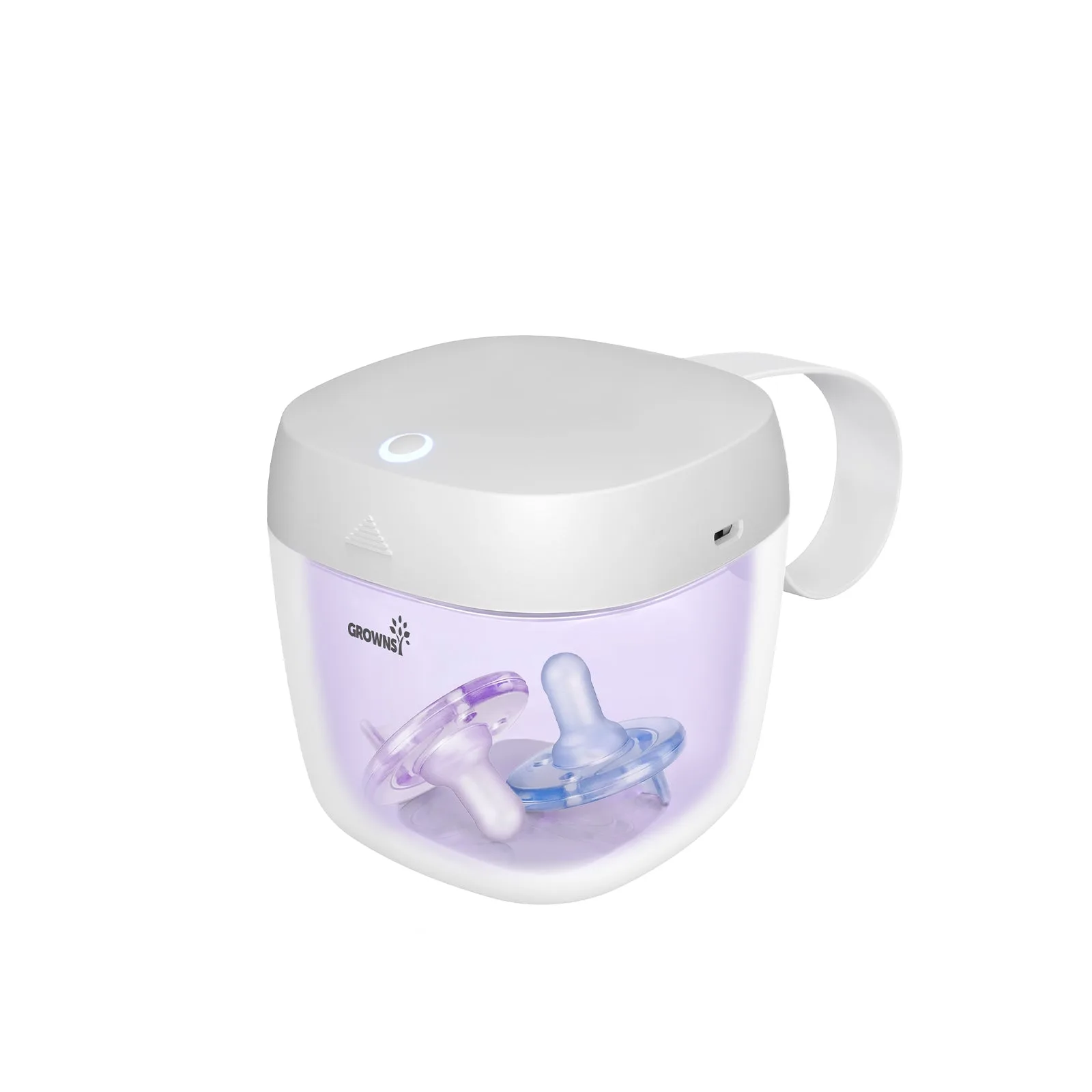
UV-C LED sterilizers use light rather than heat or boiling water. That means no water reservoir to fill, no wet bottles to dry, and no hot steam cloud when you open the lid. A portable model like the GROWNSY Portable UV Sterilizer runs a 59-second cycle for pacifiers and bottle nipples, which is practical for middle-of-the-night swaps or diaper-bag use.
The tradeoff is coverage. UV light sanitizes what it can see. If a bottle is upside down, stacked inside another, or has a shadowed interior, the light may not reach every surface. Steam and washing systems surround the item with heat or water, so they are less dependent on how you load the basket.
UV vs steam sterilizer: which is worth it for your routine
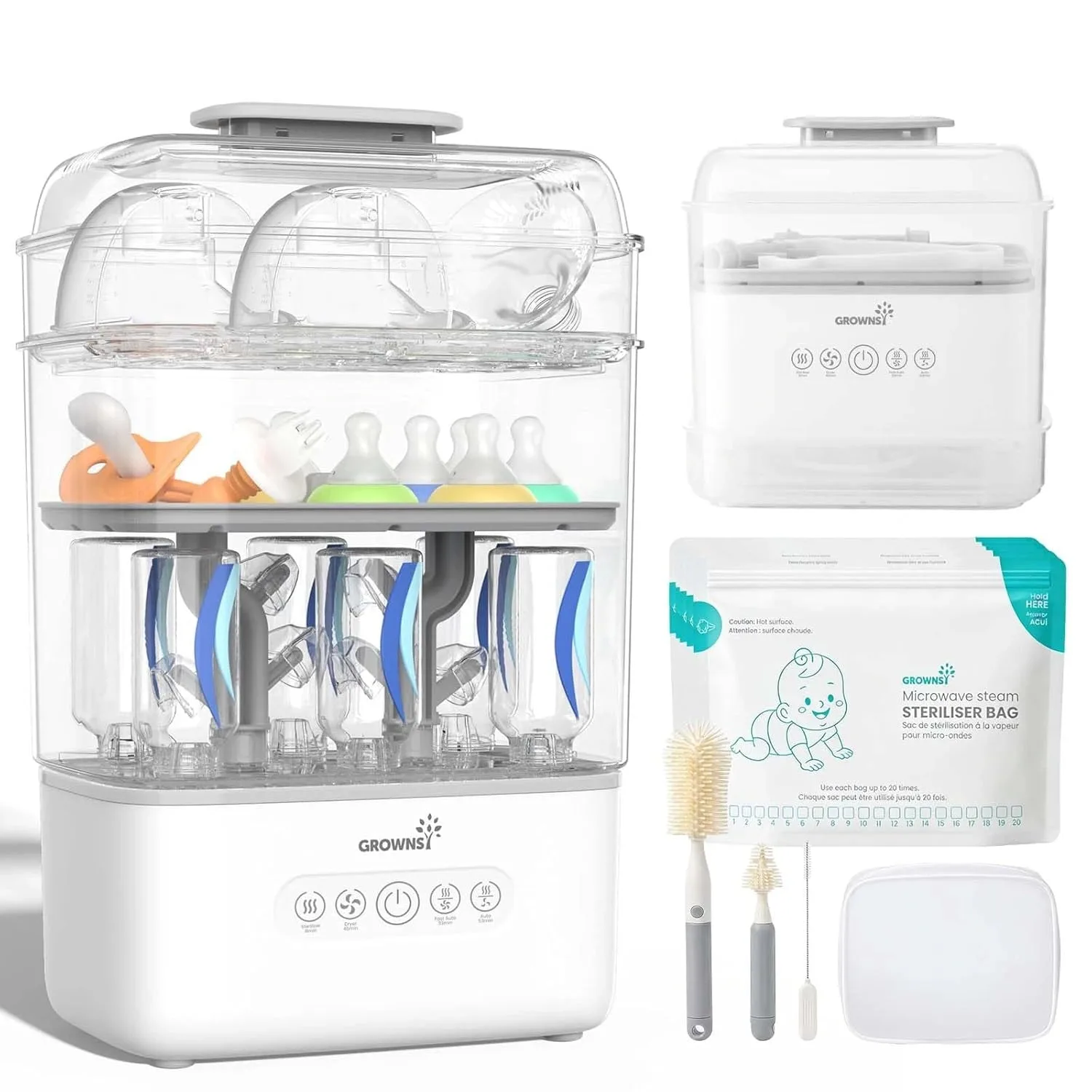
Steam sterilizers and washer-sterilizer-dryers are built for volume. They handle a full day of bottles, pump parts, and sippy cups in one load, and they dry afterward so you can put items away immediately. UV is built for speed and small items. It is not a replacement for washing: milk residue, oils, and biofilm still need soap and water or a washing cycle before any sterilizing step.
If you are deciding whether UV vs steam is worth it, count your daily items. Six or more bottles plus pump parts points to a steam or washing system. Two or three bottles plus pacifiers and nipples points to UV as a supplement, not the main system.
The hidden cost: lamp life and replacement parts
UV-C LEDs degrade over time, and replacement lamps or modules are not always listed on the product page. Before buying, check whether the lamp is replaceable and how long the manufacturer rates it. If that information is not published, treat it as a limitation and ask the seller before you commit.
Steam and washing systems have their own maintenance: descaling, filter changes, and reservoir cleaning. Neither option is maintenance-free. The question is which maintenance you will actually do on a busy week.
How to compare UV sterilizer models without overbuying
Ignore marketing claims about 99.99% sanitization until you know what is being tested and how the item is placed. A 59-second cycle on a pacifier is not the same as a 59-second cycle on a full bottle. Look for clear loading instructions, a stated cycle time, and a chamber size that matches your items.
For a buying guide, the practical checklist is: chamber dimensions, cycle time, whether the lid can be removed for direct sanitizing, and whether the unit runs on USB or wall power. The GROWNSY portable model supports direct sanitizing for pacifiers and lid sanitizing when you remove the lid, which covers the two most common small-item jobs.
Decision rules for buying a UV sterilizer
- Rule 1: Match the tool to the item: UV is strongest for pacifiers, nipples, and small accessories. Steam and washing systems are stronger for full bottles and pump parts. If most of your load is full bottles, buy a steam or washing system first.
- Rule 2: Count your daily load: Six or more bottles per day plus pump parts means you need volume. Two or three bottles plus small items means UV can work as a supplement. Write down your actual daily count before comparing prices.
- Rule 3: Check the lamp before you buy: Ask whether the UV-C lamp or module is replaceable and how long it is rated to last. If the listing does not say, ask the seller. No replacement information is a reason to pause, not a reason to guess.
- Rule 4: Wash first, always: UV sterilizing does not remove milk residue or oils. Bottles and pump parts still need soap and water or a washing cycle before any sterilizing step. Treat UV as a final step, not a cleaning shortcut.
- Rule 5: Decide on drying: UV leaves items dry without a drying cycle. Steam systems often need a separate hot-air dry or air-drying time. If wet bottles on the counter bother you, factor drying into the decision.
Products that fit different sterilization routines
- Portable UV Sterilizer Feeding Bottle Accessories: 99.99% sanitization in 59 seconds using UV-C LED technology, with direct sanitizing for pacifiers and lid sanitizing when the lid is removed. Best as a fast supplement for pacifiers and nipples, not as your only bottle system. The 59-second claim applies to the items and placement described by the brand.
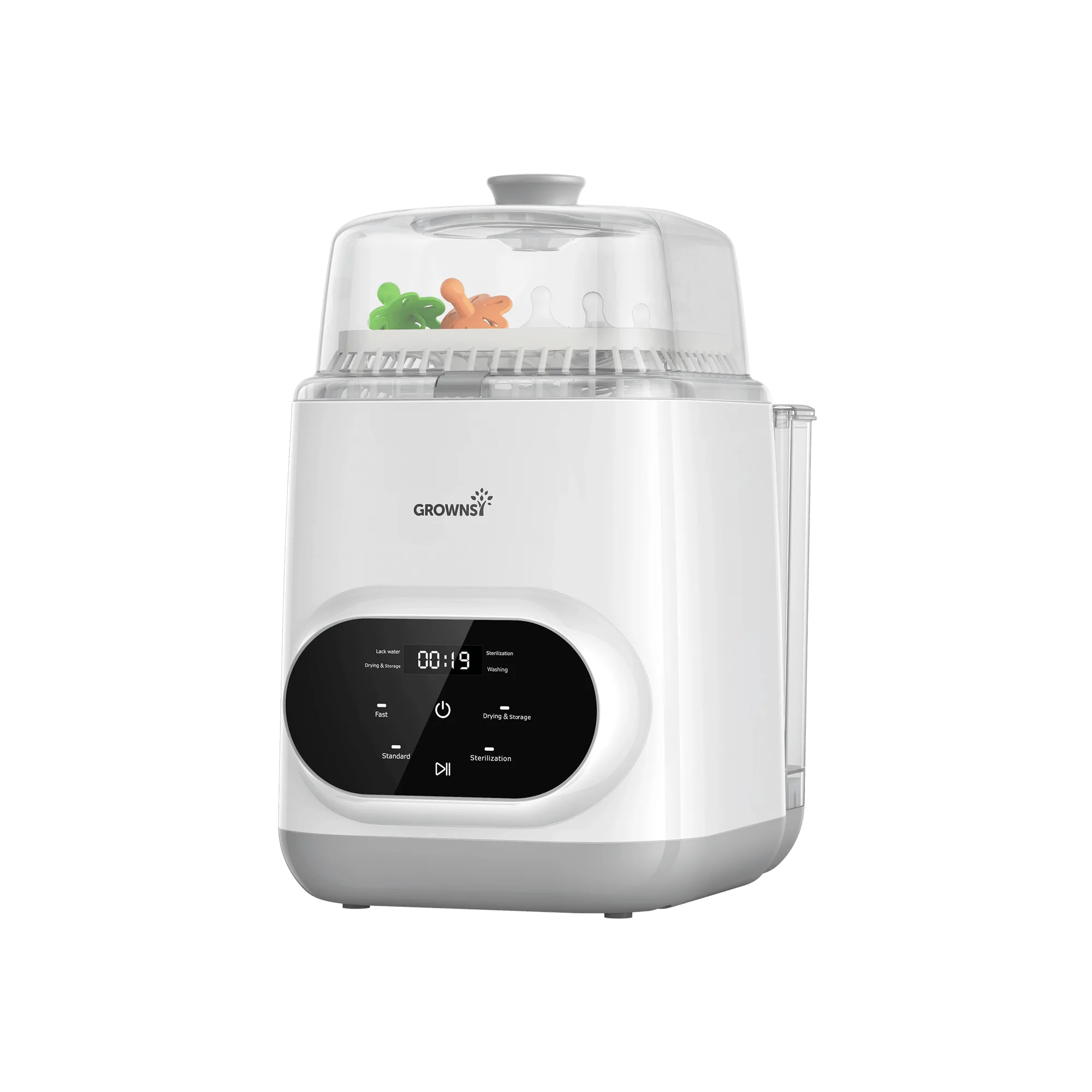
- 3 Layers Bottle Sanitizer for 6–10 Bottles: 3-tier design holds 6 to 10 bottles plus pacifiers and breast pump parts in one cycle. If you are sterilizing a full day of feeding gear, a large steam sterilizer and dryer covers more items per load than a small UV chamber.
- 4-in-1 Bottle Washer Sterilizer and Dryer: 4-in-1 system that washes, steam sterilizes at 212°F, hot-air dries, and stores for 72 hours, using 26 spray jets and 24,000 Pa power. This replaces hand scrubbing and a separate sterilizer, which matters if you want one machine to handle washing, sterilizing, and drying.
Who should buy a UV sterilizer
Best for
- Parents who want a fast, waterless cycle for pacifiers and bottle nipples
- Families who already have a steam or washing system and want a small second option for accessories
- Travel and diaper-bag use where a portable, USB-friendly unit is practical
Not for
- Families sterilizing six or more bottles plus pump parts every day, who need a large steam or washing system
- Anyone looking for a single machine to wash, sterilize, and dry a full day of feeding gear
- Parents who will not keep up with lamp replacement or cleaning the chamber