Quick answer
No, you don't automatically need a subwoofer for desk speakers. A well-placed 2.0 pair can cover speech, most music, and casual gaming. But if you want deep bass for movies, games, or bass-heavy music, a 2.1 system with a dedicated subwoofer is the only way to get it. The right choice depends on your room, your listening habits, and whether you can place a subwoofer where it actually works.
The claim: every desk needs a subwoofer
The persistent myth is that without a subwoofer, your desktop audio is incomplete. That's not true. A 2.0 speaker pair with woofers large enough for your room can deliver satisfying bass for most everyday tasks. The real question isn't whether a subwoofer is better in theory—it's whether your room, desk layout, and listening material justify one. In a small untreated room, an extra subwoofer can even create boominess that makes audio less clear, not more.
What a subwoofer actually adds (and what it doesn't)
A subwoofer handles low-frequency effects: the rumble in movies, the thump in games, the low end of bass-heavy music. It does not improve speech clarity, stereo imaging, or midrange detail. Those come from the main speakers and their placement. If your main speakers already produce enough bass for your taste, adding a subwoofer mostly adds cost and another box to place. If they don't—or if you want physical impact you can feel—a subwoofer is the only component that delivers it.
When a 2.0 setup is the smarter choice
Choose 2.0 if your desk is in a small room, you mostly listen at moderate volume, and your content is speech, podcasts, acoustic music, or casual gaming. Fewer components mean simpler setup and no subwoofer placement problems. You also avoid the risk of low-frequency buildup in corners or under desks where a subwoofer often ends up. If your current speakers already sound full enough, adding a subwoofer is a solution without a problem.
When a subwoofer earns its place
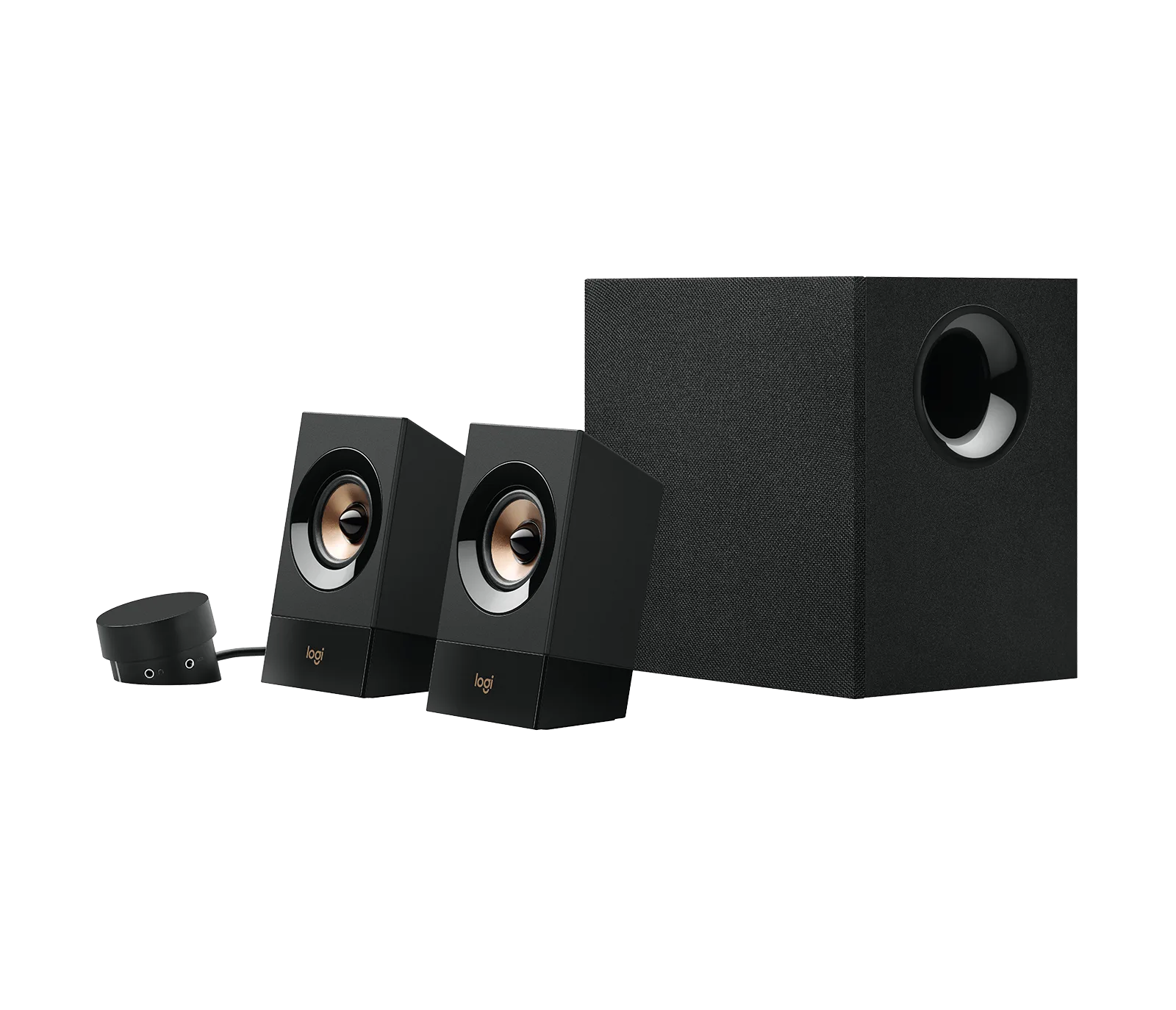
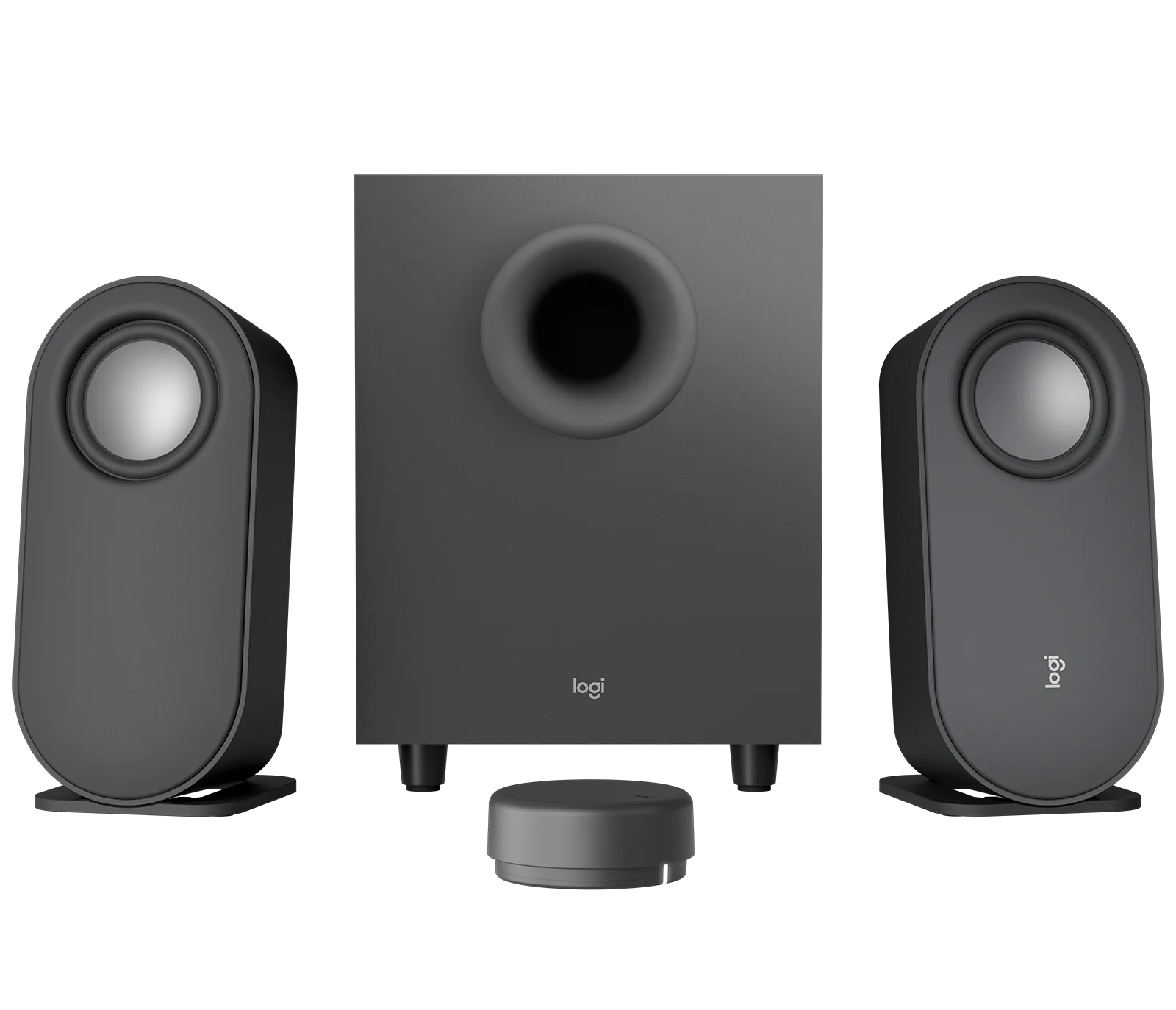
Choose a 2.1 system if you watch movies with deep soundtracks, play games where low-end cues matter, or listen to bass-heavy music. The dedicated subwoofer in a system like the Logitech Z625 Speaker System handles the low frequencies so the main speakers can focus on mids and highs, which can reduce distortion at higher volumes. You also get an optical input for a direct digital connection from a TV, computer, or gaming console—useful if you want one audio system for both desk and screen. The tradeoff is placement: a subwoofer needs floor or under-desk space, and corner placement can exaggerate bass.
How to decide for your own desk
Start by identifying what you actually listen to. If 80% of your desk time is calls and background music, a 2.0 pair is likely enough. If movie nights or immersive games are a priority, a subwoofer will make a noticeable difference. Then check your space: do you have a spot for a subwoofer that isn't jammed against a wall or in a corner? If not, a 2.0 system with larger woofers may be the better compromise. Finally, consider your source. A subwoofer system with optical input can simplify connecting a TV or console, while a simple 2.0 pair may be easier to route from a laptop or dock.
Verdicts on common subwoofer claims
- Claim: You can't get good bass without a subwoofer.: A 2.0 speaker pair with adequately sized woofers can produce satisfying bass for many rooms and listening levels. The subwoofer adds depth and impact, but it isn't the only path to bass. Verdict: False as a blanket rule. Depends on your speakers and room.
- Claim: A subwoofer always improves audio quality.: A subwoofer extends low-frequency response, but in small or untreated rooms it can cause boominess that muddies the midrange. Placement and room size matter as much as the subwoofer itself. Verdict: Not always. Placement and room acoustics determine the result.
- Claim: For movies and games, a subwoofer is unnecessary.: Low-frequency effects are a deliberate part of movie and game sound design. Without a subwoofer, you miss that layer of impact. A 2.1 system with a dedicated subwoofer is the only way to reproduce it. Verdict: False. For immersive content, a subwoofer earns its place.
Product facts to ground your decision
- Z625 Speaker System with Subwoofer and Optical Input - Black: The Logitech Z625 Speaker System delivers powerful, room-filling sound with a dedicated subwoofer and optical input for clear audio from your TV, computer, or gaming console. This is a concrete example of a 2.1 system where the subwoofer handles low frequencies and the optical input lets you connect digital sources directly—useful if you want one audio setup for both desk and screen.