Quick answer
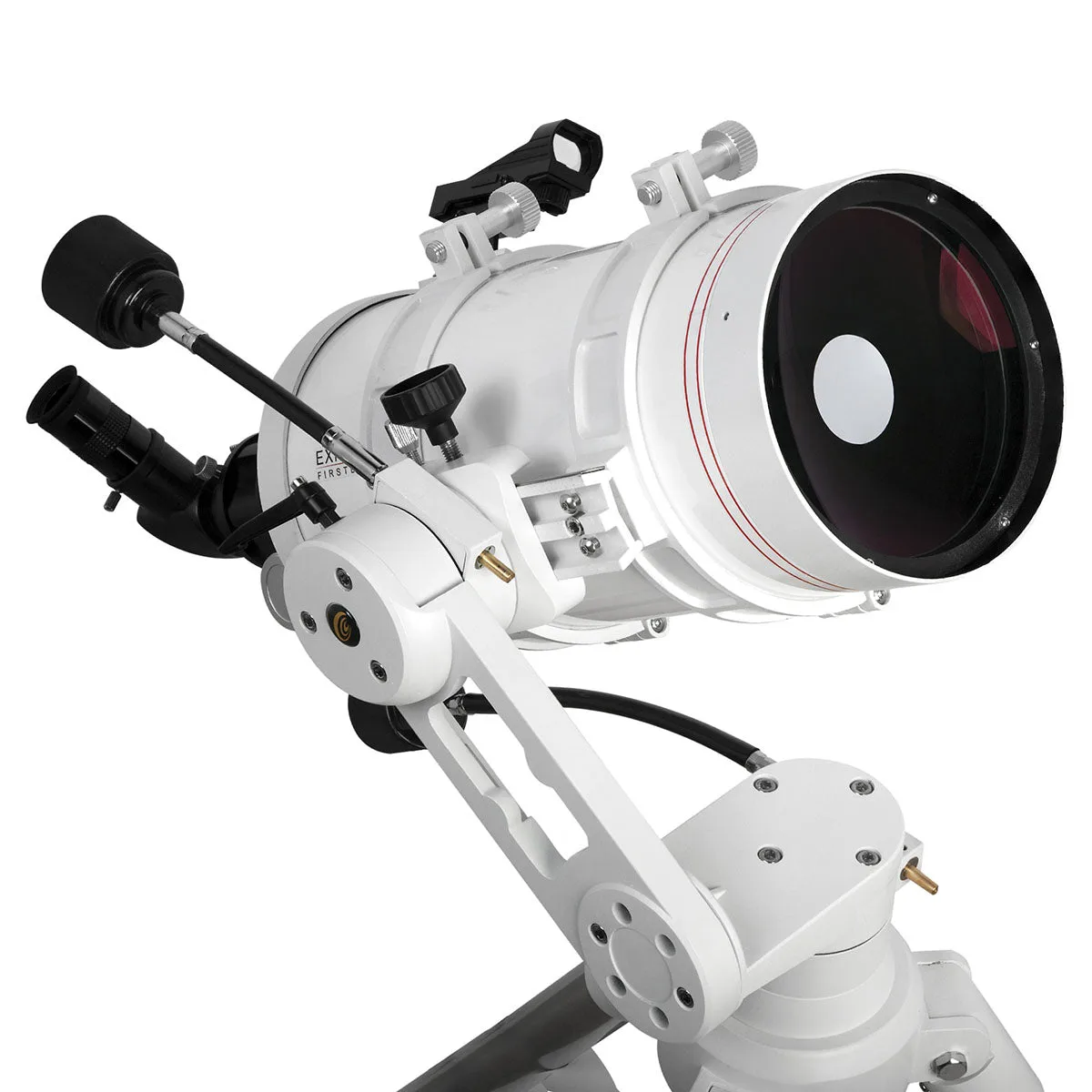
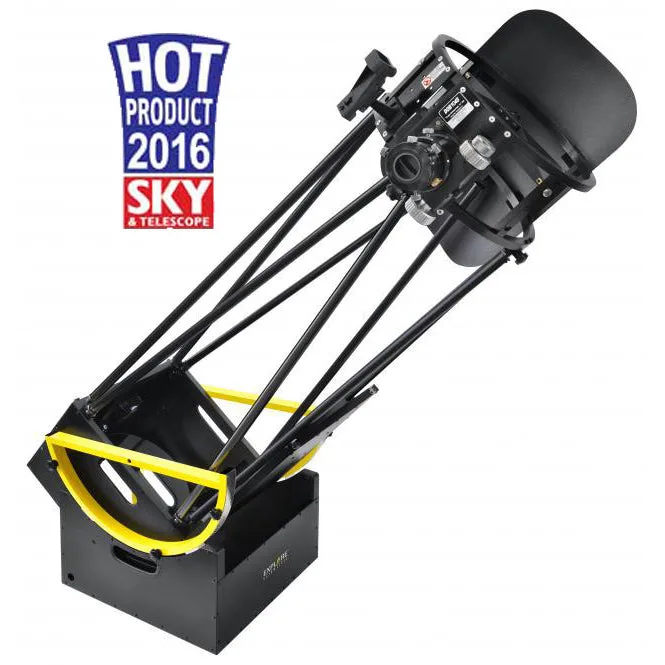
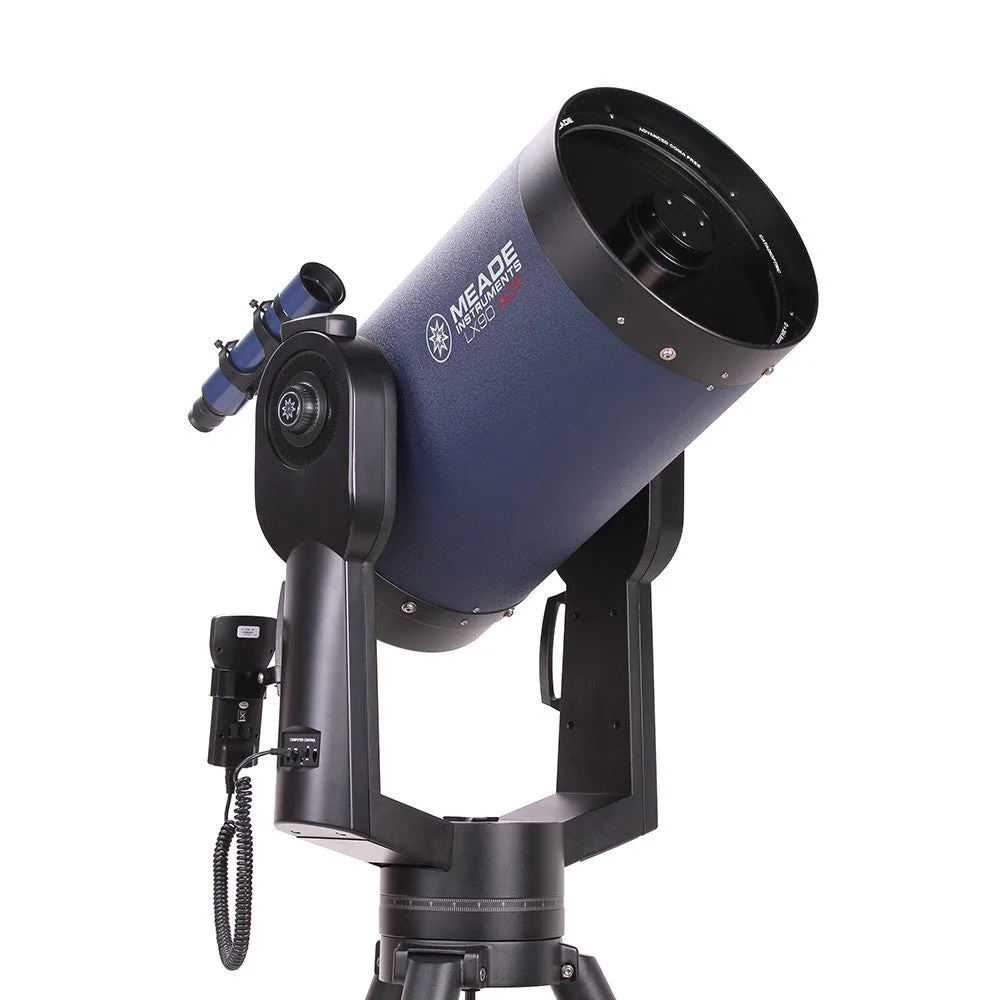
For faint deep-sky objects and the most light for your money, a Dobsonian reflector like the Explore Scientific 10" Truss Tube Dobsonian is the stronger choice. For sharp, high-magnification views of the Moon and planets in a compact tube that tracks the sky, a Maksutov-Cassegrain such as the Explore Scientific FirstLight 152 mm Mak on the Twilight I mount is the better fit.
How the two optical designs differ
A Dobsonian is a Newtonian reflector on a simple, low-cost alt-azimuth rocker box. You push it by hand to follow objects, and its open or truss tube lets a large mirror fit into a manageable footprint. A Maksutov-Cassegrain uses a thick corrector lens at the front and a spherical mirror at the back, folding light through a long focal length inside a short tube. That folded path is why a 152 mm Mak can sit on a modest mount while still delivering high magnification.
The practical split: Dobsonians trade tracking and compactness for aperture per dollar. Maksutovs trade aperture per dollar for portability, sharpness across the field, and a tube that works well on a driven mount.
Light grasp and what you can actually see
Aperture sets your limiting magnitude. The Explore Scientific 10" Truss Tube Dobsonian uses a 254 mm mirror that the catalog states captures over 1,500 times as much light as the naked eye, which is why it can reveal faint galaxies, nebulae, and resolved star clusters that smaller scopes miss. The Explore Scientific FirstLight 152 mm Mak gathers less light, so its strength is not faint fuzzies but high-contrast detail on bright targets.
If your list is topped by the Orion Nebula, Andromeda, and globular clusters, the Dobsonian's light grasp matters more than any other specification. If your list is the lunar terminator, Jupiter's cloud belts, and Saturn's rings, the Mak's long focal length and clean optics often win the night.
Portability, setup, and tracking
The 10" truss Dobsonian breaks down into a compact bundle for transport, but it is still a large, heavy instrument that you assemble on site and nudge by hand. The FirstLight 152 mm Mak ships as a complete package with the Twilight I mount, so it is quicker to carry out and set up for a short session. Because the Mak sits on a driven equatorial or alt-az mount, it can track a planet at high power, which is a real advantage for sketching, sharing the eyepiece, or attaching a camera.
Hand-tracking a Dobsonian at 200x or more takes practice; a driven mount removes that chore. That single difference often decides which scope actually gets used on a work night.
Where astrophotography changes the answer
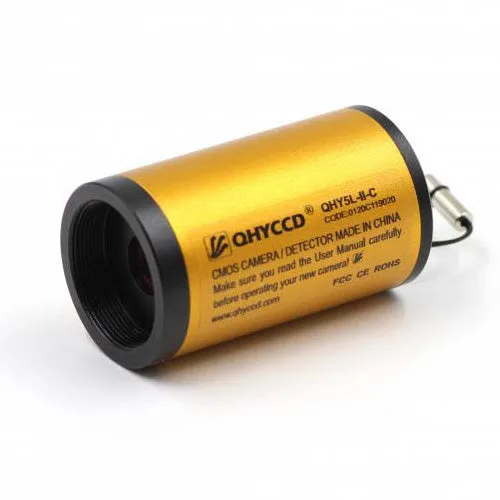
Neither design is a dedicated deep-sky imaging rig, but the Mak's tracking mount makes it the more natural starting point for lunar and planetary imaging. A small planetary camera such as the QHYCCD 5L-II Color CMOS can capture high-frame-rate video through the Mak, and the same camera can double as an autoguider if you later add a deep-sky setup. The Dobsonian's manual mount is poorly suited to long exposures, though it can still be used for visual observing and, with a tracking platform, some short-exposure work.
If imaging is the goal, budget for the mount and camera, not just the tube. The camera's USB 2.0 data rate and ROI modes are what let you freeze atmospheric turbulence on bright planets.
Cost and long-term value
Dollar for dollar, a Dobsonian delivers the most aperture. The Explore Scientific 10" Truss Tube Dobsonian lists at USD 817.49, and the Explore Scientific FirstLight 152 mm Mak on the Twilight I mount lists at USD 863.99. The Mak costs slightly more for less light grasp, but you are paying for the mount, the compact tube, and the tracking that comes with it.
Think of it as buying aperture versus buying convenience. Neither is wasted money; they simply serve different observing habits.
The trade-offs at a glance
- Aperture vs. portability: The 10" Dobsonian's 254 mm mirror gathers far more light, but the 152 mm Mak's folded tube is smaller and easier to carry out for a quick session. Choose the Dobsonian for faint targets; choose the Mak if you observe in short windows.
- Manual push vs. driven tracking: The Dobsonian rocker box is pushed by hand, while the Mak's Twilight I mount can track objects as they drift. Tracking matters most at high magnification and when sharing the view.
- Planetary detail vs. deep-sky reach: The Mak's f/12.5 optics favor the Moon and planets; the Dobsonian's larger aperture favors galaxies and nebulae. Match the design to the objects you actually observe most.
- Visual vs. imaging path: The Mak's mount and a camera like the QHYCCD 5L-II make planetary imaging practical; the Dobsonian is primarily a visual instrument. If you want to image planets, start with the Mak and a high-frame-rate camera.
Two designs, two jobs
- Explore Scientific 10" Truss Tube Dobsonian - DOB1045-00: The Explore Scientific 10" Truss Tube Dobsonian uses a 254 mm mirror that captures over 1,500 times as much light as the naked eye. That light grasp makes faint deep-sky objects visible and resolves detail in star clusters that smaller scopes cannot show.
- Explore Scientific FirstLight 152 mm Maksutov-Cassegrain on Twilight I Mount - FL-MC1521900MAZ01: The Explore Scientific FirstLight 152 mm Maksutov-Cassegrain includes a MAK152 f/12.5 optical tube and the Twilight I mount. The long f/12.5 focal length and included tracking mount make it well suited to high-magnification lunar and planetary viewing.
- QHYCCD 5L-II Color CMOS Planetary Camera & Autoguider - QHY5L-IIC: The QHYCCD 5L-II Color CMOS Planetary Camera & Autoguider reaches 30 FPS at 1280x1024 and higher frame rates in ROI modes over USB 2.0. High frame rates let you capture and stack short exposures that freeze atmospheric turbulence on bright planets.
Which one fits you?
Best for
- Visual observers who want the most light grasp per dollar and enjoy hunting faint deep-sky objects
- Backyard stargazers with dark skies and space to store a larger scope
- Beginners who want a simple, push-to-point reflector with no electronics to learn
Not for
- Observers who need a driven mount for high-power planetary viewing or imaging
- City dwellers with limited storage or a short walk to the observing spot
- Anyone who wants a compact, grab-and-go scope for quick lunar sessions