Quick answer
Build the rest space around one quiet corner your dog can reach but not be stepped over. Put a crate there as the anchor, add a bed that fits inside it, and keep the area low-traffic. Then layer in a predictable routine so the space becomes a cue for settling, not a place your dog only sees when you leave.
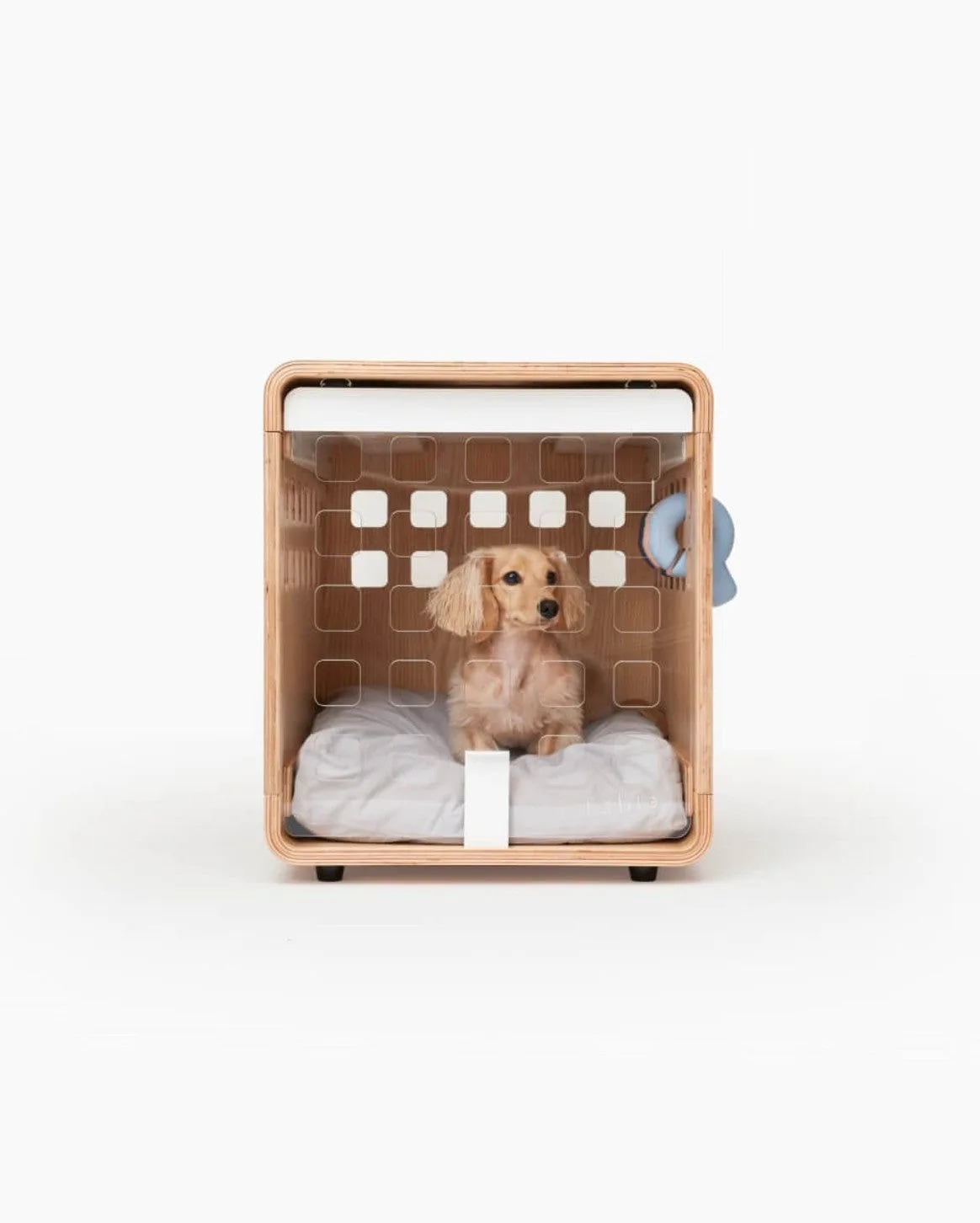
crate
Choose the corner before you choose the gear
A calming dog bed setup starts with location, not bedding. Pick a spot where your dog can see the room's main entrance without being in the path between the kitchen, the door, and the couch. Corners work well because they remove the need to watch a second side. Avoid placing the setup directly against a radiator, in front of a floor vent, or under a window that gets direct afternoon sun, since those spots swing in temperature and can make a dog restless.
If you live in a multi-story home, put the primary rest space on the floor where your dog spends most of the day. A bed upstairs that your dog only uses at night is a sleep spot, not a rest space. You want a place your dog can choose during the day when the house is busy.
Decide whether the crate is the anchor or the add-on
A dog crate and bed combo works best when the crate is the fixed structure and the bed is the soft layer inside it. That arrangement gives your dog a den-like boundary and a comfortable surface at the same time. If your dog already settles well on an open bed and has never been crate-trained, you can still use a crate as a side table or a quiet den without closing the door, but you should not expect the same containment benefit.
One honest tradeoff: a crate takes up floor space and is harder to move than a standalone bed. If your home is small or you rearrange furniture often, measure the footprint first and confirm the crate can sit in the corner without blocking a doorway or a closet. A setup that crowds the room will get moved, and a rest space that moves does not stay calming.
Layer the bed so it fits the crate and the dog
The bed should fill the crate's floor without bunching at the corners. A bed that is too large will fold up the sides and reduce usable space; one that is too small slides around and gives your dog nothing to lean against. Look for a bed described as water-resistant and breathable if your dog runs warm or tends to chew, since those materials are easier to wipe and less likely to trap odor.
If you are buying the crate and bed together, a matched set removes the guesswork about whether the bed fits inside the crate. That is the main practical reason to consider a bundle rather than sourcing the two pieces separately.
Add a routine cue so the space means rest
A rest space only works if your dog associates it with settling. Feed a meal or a stuffed toy in the space, then leave your dog alone there for short, calm periods while you are still home. Do this before you ever need the space for a departure or a guest. If the only time your dog sees the crate is when you walk out the door, the space becomes a predictor of being left, and you will see more whining, not less.
Keep the routine boring. Same word, same treat, same short duration at first. Dogs read patterns, and a predictable pattern is what turns a corner of the room into a calming dog bed setup rather than just furniture.
Step-by-step: build the rest space
- 1. Pick a low-traffic corner: Choose a spot where your dog can see the room's main entrance but is not in the walking path between the door, kitchen, and couch. Keep it away from direct heat, vents, and sunny windows. Checkpoint: stand in the spot. If you would have to step over a dog to get anywhere, pick a different corner.
- 2. Measure the footprint before buying: Mark the crate's dimensions on the floor with tape. Confirm the crate fits without blocking a doorway, closet, or drawer, and that you can still open the crate door fully. Common mistake: buying a crate that fits the dog but not the room, then moving it weekly until the routine never sticks.
- 3. Set the crate as the anchor: Place the crate in the chosen corner and leave the door open at first. Let your dog investigate on their own rather than coaxing them in. Checkpoint: your dog should be able to walk in and out without ducking or turning sideways.
- 4. Fit the bed inside the crate: Use a bed sized to fill the crate floor without bunching at the corners. A water-resistant, breathable bed is easier to wipe and less likely to hold odor. Common mistake: adding a bed that is too thick, which raises the floor and reduces the headroom your dog needs to stand.
- 5. Add the routine cue: Feed a meal or a puzzle feeder in the space, then leave your dog there for short, calm periods while you are still home. Use the same word and the same treat each time. Checkpoint: if your dog only sees the space when you leave, the cue is backwards. Practice while you are home first.
- 6. Keep the space boring and consistent: Avoid rotating bedding, moving the crate, or turning the area into a play zone. A rest space should look and smell the same day to day. Next step: if your dog will not settle after two weeks of short sessions, check whether the spot is too hot, too busy, or too close to a window before changing the gear.
Products that fit this setup
- Best Selling Rest Set: The Best Selling Rest Set pairs the award-winning Fable Crate with a water-resistant, breathable bed designed to fit within the crate, and the crate doubles as a functional side table. This is the most direct way to get a matched dog crate and bed combo, since the bed is sized for the crate rather than guessed at, and the side-table design lets the setup earn its floor space in a living room.
- Puzzle + Play Set: The Puzzle + Play Set includes The Puffin Game interactive puzzle feeder, which can hold over 1.5 cups of dry food and has a weighted base that creates irregular motion. If your dog gets restless in the rest space, a meal-sized puzzle feeder gives mental work before settling, which supports the routine cue step without adding a second walk.
- Walk Set: The Walk Set includes a multi-style hands-free leash that can be worn as a belt, bandolier, or wrist-strap, plus a waste bag holder with dual attachment points. A predictable pre-rest potty break is part of the routine, and a hands-free leash makes that short trip easier when you are also managing a dog that is still learning to settle.