Quick answer
For most dogs, the most effective home routine combines daily brushing with a dog toothbrush and dog toothpaste, plus a dental chew for dogs on days you can't brush. If your dog tolerates brushing, prioritize it; if not, use dental chews for dogs and talk to your vet about professional cleanings. Match the chew size and texture to your dog's chewing style, and never use human toothpaste.
You don't need a veterinary degree to keep your dog's mouth healthier. You need a routine that fits your dog's tolerance, and the right tools: a dog toothbrush, dog toothpaste, and dental chews for dogs that actually get chewed.
This guide explains how brushing and chewing work together, how to choose each product, and when to skip a chew entirely. It's written for real dogs—including the ones who hate having their teeth touched.
Why brushing still beats everything else
Brushing physically disrupts plaque before it hardens into tartar. No chew, spray, or water additive does that as thoroughly. Daily brushing is ideal, but three to four times a week still makes a measurable difference for most dogs. If your dog only tolerates a quick pass on the outer surfaces of the upper teeth, that's still worth doing—those surfaces collect the most visible plaque.
The catch is compliance. A dog who fights brushing gets stressed, and you stop doing it. That's where dental chews for dogs earn their place: they work on the chewing action alone, no handling required. Think of brushing as the foundation and chews as the backup that keeps things from sliding on busy days.
- Start with a finger brush or gauze if your dog is new to mouth handling.
- Brush the outer surfaces first; the tongue side stays cleaner on its own.
- Replace a dog toothbrush when bristles splay or after illness.
Choosing a dog toothbrush that your dog will accept
Dog toothbrushes come in three practical shapes: a finger brush for beginners and small mouths, a dual-headed brush for efficiency, and a long-handled brush for reaching back teeth on larger dogs. The best choice is the one you can actually use without a wrestling match. A finger brush gives you the most control on a nervous dog; a long-handled brush gives you reach on a big dog with tight cheek space.
Bristle softness matters more than brand. Stiff bristles can irritate gums, especially on dogs with existing gum inflammation. If your dog has bleeding gums or heavy tartar, start with a soft brush and let your vet assess whether a cleaning is needed first.
- Finger brush: best for puppies and dogs new to brushing.
- Long-handled brush: best for medium and large dogs with tight cheek space.
- Dual-headed brush: saves time once your dog is comfortable.
Dog toothpaste: what to look for and what to avoid
Dog toothpaste is formulated to be swallowed, because dogs don't rinse. That's the key difference from human toothpaste, which can contain xylitol and fluoride at levels that are toxic to dogs. Never use human toothpaste on your dog, even a small amount. Dog toothpaste comes in flavors like poultry, malt, and peanut butter—pick the one your dog actually likes, because acceptance is the whole game.
Enzymatic dog toothpastes are the most common and work by breaking down plaque with enzymes in addition to the mechanical action of brushing. You don't need to rinse. If your dog refuses toothpaste entirely, brushing with a moistened brush still helps, but the flavor is what usually turns a reluctant dog into a cooperative one.
- Avoid human toothpaste: xylitol and fluoride are risks for dogs.
- Enzymatic formulas are a solid default for most dogs.
- Let your dog lick a dab off your finger before the first real brush.
Dental chews for dogs: matching chew to dog
Dental chews for dogs range from soft, highly digestible puppy chews to dense rawhide flats. The right pick depends on your dog's size, chewing style, and how quickly they swallow. A dog who gulps needs a chew that breaks down slowly and is sized so it can't be swallowed whole. A heavy chewer needs something dense enough to last more than a few seconds.
Texture matters too. Soft chews are easier on senior dogs and puppies but do less mechanical cleaning. Dense chews do more scrubbing but carry more risk for dogs who swallow large pieces. Always supervise, and match the chew's size to your dog's mouth—not just their weight.
- Puppies: choose chews labeled for puppies and sized for small mouths.
- Gulpers: avoid chews that can break into swallowable chunks.
- Seniors: softer textures are kinder to worn or missing teeth.
How to build a routine that sticks
A realistic routine beats a perfect one. Try brushing three nights a week and offering a dental chew on the other nights. Keep the toothbrush and toothpaste where you'll see them—next to the leash or by the couch. Pair brushing with something your dog already likes, such as a walk or a treat afterward.
If your dog has bad breath that returns quickly, visible brown tartar, or red gums, home care isn't enough. Those signs usually mean a veterinary cleaning is needed first, with home care maintaining the result afterward. Dental chews and brushing slow plaque; they don't remove established tartar.
- Brush at the same time each day to build the habit.
- Use a chew on nights you skip brushing—not instead of it forever.
- Schedule a vet check if gums bleed or breath stays foul.
Decision rules: what to buy first
- If your dog already tolerates mouth handling: Buy a long-handled dog toothbrush and an enzymatic dog toothpaste in a flavor your dog likes. Add dental chews for dogs as a backup on skipped nights. Brushing is the priority; chews are the safety net.
- If your dog hates having their mouth touched: Start with a finger brush and a highly palatable dog toothpaste. Practice for 10 seconds at a time, then build. Use a dental chew on days you can't brush. Acceptance first, thoroughness later.
- If your dog is a puppy under six months: Choose chews labeled for puppies and sized for small mouths, like a puppy-specific chew treat. Use a finger brush and dog toothpaste made for puppies. Puppy chews support teething and development; don't use adult-density chews yet.
- If your dog is a heavy chewer or gulper: Pick dense chews sized so they can't be swallowed whole, and supervise every chew session. Skip chews that break into large chunks. Chew size and texture matter more than flavor.
- If your dog has visible tartar or bleeding gums: See your vet before buying more home-care products. Home care maintains a clean mouth; it doesn't remove established tartar. Professional cleaning first, then maintain.
Products that fit this routine
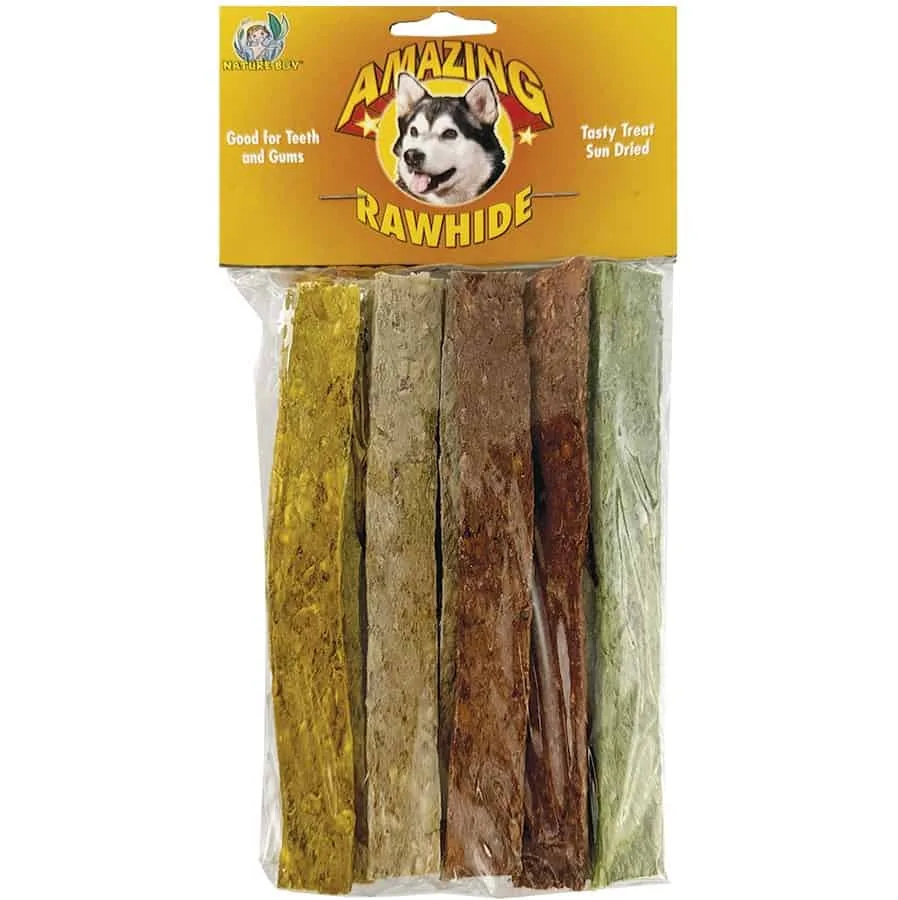
- Amazing Munchy Rawhide Flats Dog Treats 15 Ct: Long-lasting rawhide flats that satisfy chewing instincts while helping clean teeth and reduce plaque buildup. A dense chew option for dogs who need more chewing time than a soft treat provides; supervise and size appropriately.
- Healthy Edibles Turkey & Sweet Potato Puppy Chew Treat 3 Pack: Specially formulated for puppies three months and older; highly digestible, long-lasting chew with DHA for brain and eye development, calcium for teeth and bones, and flaxseed for skin and coat. A puppy-appropriate chew that supports development while giving a teething puppy something safe to gnaw.
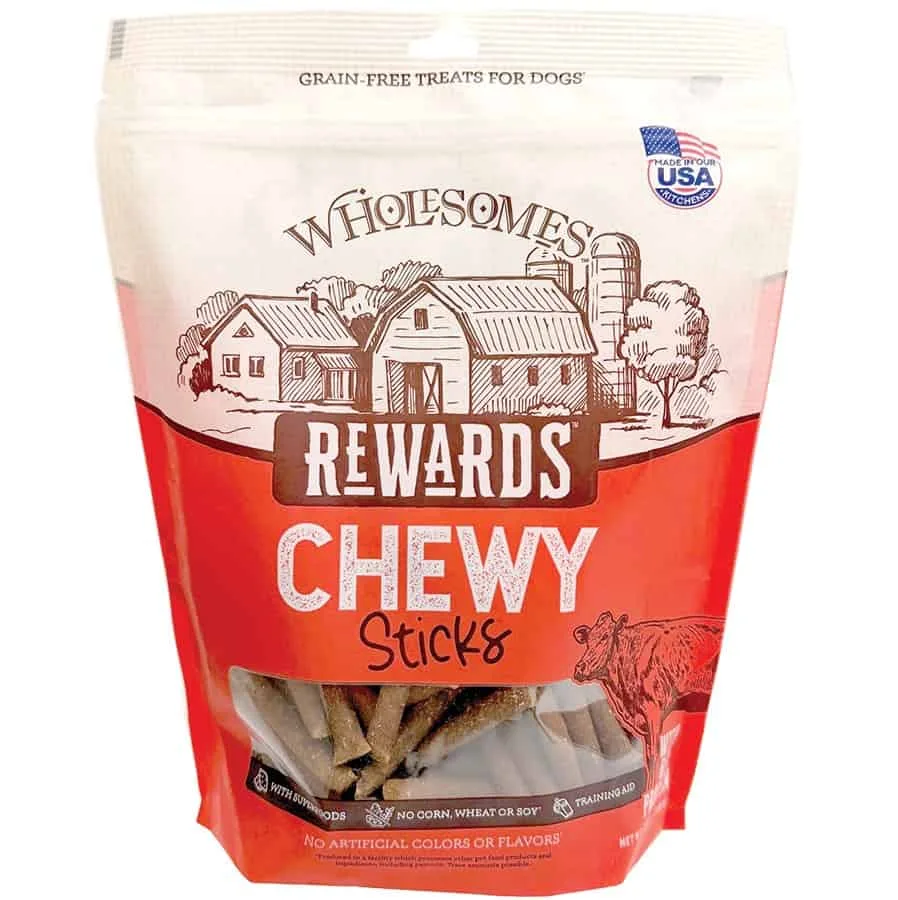
- Wholesomes Rewards Chewy Sticks Beef Dog Treats 25 oz: Soft, protein-rich treats sized for training, made with real beef and without corn, wheat, or fillers. Useful as a low-stress reward during brushing practice, so the toothbrush predicts something good.
Who this routine fits
Best for
- Owners who want a practical home dental routine without daily perfection
- Dogs who tolerate some handling but not full brushing every day
- Puppy owners starting mouth handling early
Not for
- Dogs with severe gum disease or loose teeth—see a vet first
- Dogs who swallow chews whole without supervision
- Owners looking for a chew that replaces veterinary cleanings
Pick one brush, one toothpaste your dog likes, and one chew that fits their size and chewing style. Brush when you can, chew when you can't, and let your vet handle the tartar that's already there. That's a dog dental care routine you'll actually keep.