Quick answer
If your dog drags its back legs, a rear support dog wheelchair can restore mobility by taking weight off the hind limbs and letting your dog walk on its front legs. But first, see a veterinarian to rule out treatable causes. If the cause is irreversible, a properly fitted rear wheelchair can keep your dog active and comfortable.
What dragging back legs actually looks like
Dragging back legs isn't always obvious. You might notice your dog's back paws knuckling under, scraping the ground, or crossing over. Some dogs scuff their nails until they bleed. Others wobble when turning or struggle to rise from a lying position. These are all signs of rear limb weakness or loss of proprioception—the ability to sense where the paws are. If your dog cannot use back legs at all, that's a more advanced stage. The pattern matters: is it one leg or both? Did it come on suddenly or gradually? Sudden onset is more likely an injury or disk problem, while a slow, progressive decline points to degenerative conditions.
Common causes of back leg weakness in dogs
The most frequent causes vets diagnose are intervertebral disc disease (IVDD), degenerative myelopathy (DM), arthritis, and spinal injuries. IVDD often causes sudden pain and weakness, especially in breeds like Dachshunds and French Bulldogs. Degenerative myelopathy is a slowly progressive, non-painful condition that typically starts in the hind legs and moves forward; it's common in German Shepherds and Corgis. Arthritis can make walking painful and cause a stiff, dragging gait. Less common causes include tumors, infections, or fibrocartilaginous embolism (a spinal stroke). Only a vet can tell the difference, so don't skip that step.
When to see a vet immediately
If your dog suddenly can't use its back legs, is crying out in pain, or has lost bladder or bowel control, treat it as an emergency. Time matters for conditions like IVDD—surgery within 24–48 hours can sometimes restore function. Even if the weakness came on gradually, a veterinary exam with X-rays or an MRI can identify the cause and guide treatment. Never start a wheelchair without a diagnosis, because you could mask a treatable problem.
How a rear support wheelchair helps
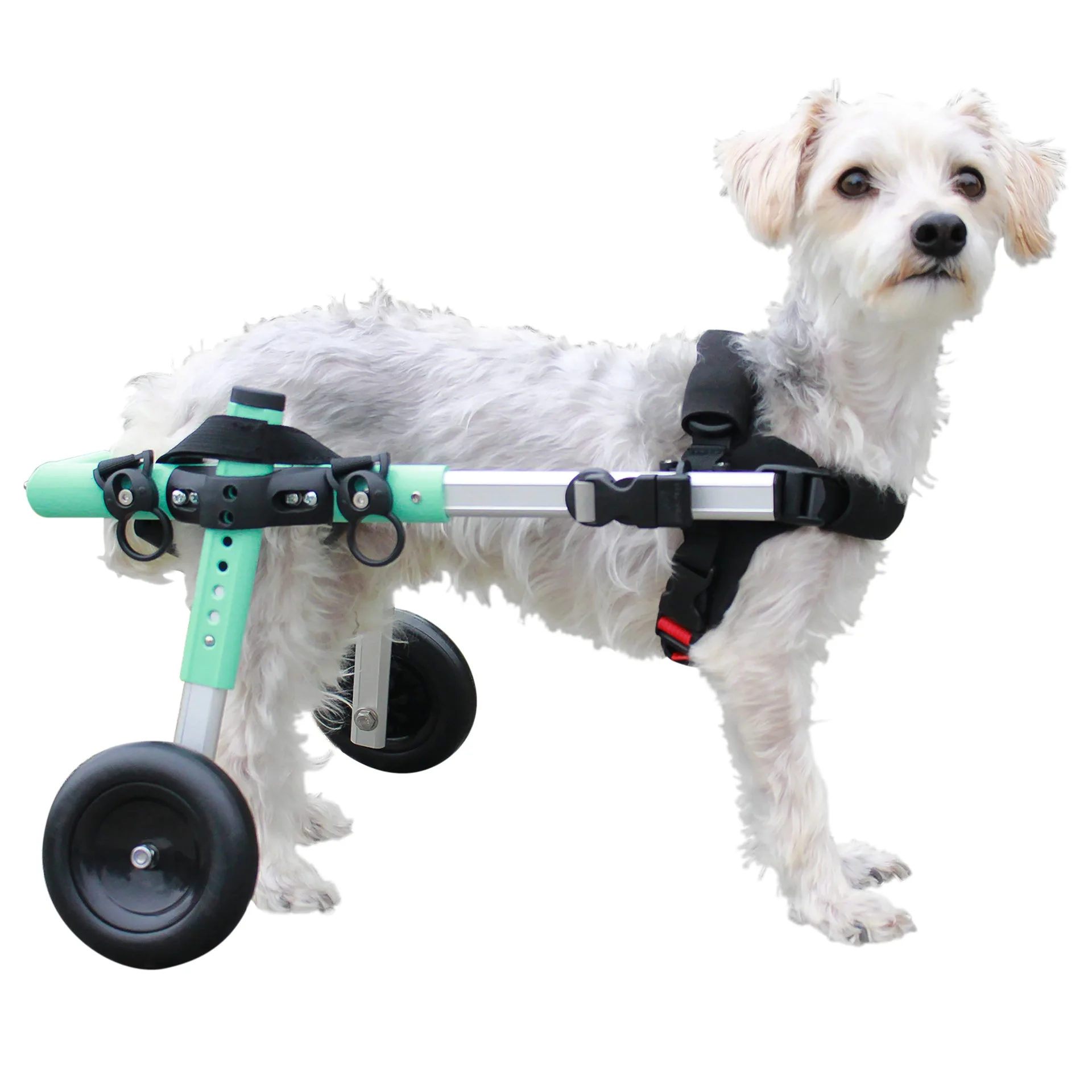
A rear support dog wheelchair supports the hindquarters while your dog's front legs do the walking. This reduces strain on the back legs, prevents dragging injuries, and lets your dog exercise—which is vital for muscle tone, digestion, and mental health. For dogs with degenerative myelopathy, a wheelchair can extend their active months and improve quality of life. For those recovering from IVDD surgery, it can provide controlled mobility during rehab. The key is fit: the wheelchair must match your dog's weight and measurements, and the rear harness should support without pinching.
Choosing the right wheelchair for your dog
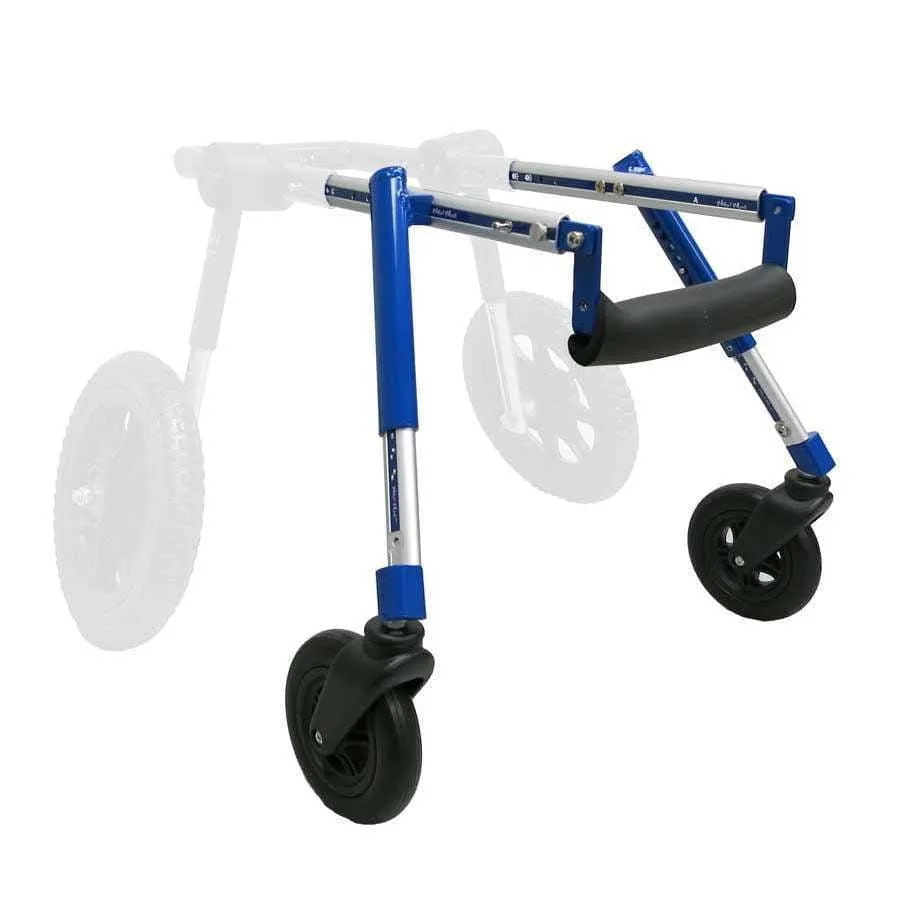
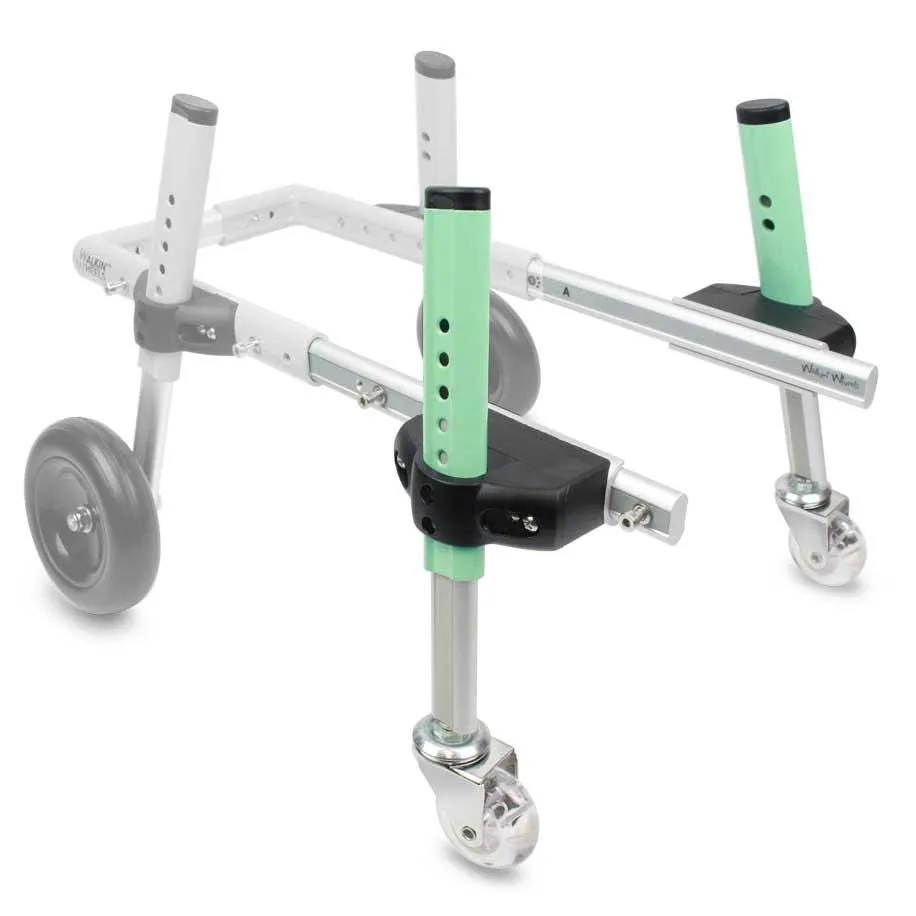
Walkin' Pets offers rear wheelchairs for different sizes, plus front wheel attachments if weakness progresses to all four legs. For small dogs (11–25 lbs), the Walkin' Wheels SMALL Dog Wheelchair provides hind leg support and is a good starting point. If your dog later needs front support too, the Walkin' Wheels SMALL Front Wheel Attachment converts it into a full-support quad wheelchair. For large dogs (70–180 lbs), the Walkin' Wheels LARGE Front Wheel Attachment does the same for the large rear wheelchair. Always measure your dog carefully and consult the sizing guide.
What to do if a wheelchair isn't enough
If your dog has lost front leg strength as well, a rear-only wheelchair won't work. You'll need a full-support (quad) wheelchair. If your dog is in pain that can't be managed, or has lost the ability to eat, breathe comfortably, or enjoy daily life, talk to your vet about quality-of-life decisions. A wheelchair is a tool to maintain mobility, not a cure. It works best when combined with veterinary care, physical therapy, and home adjustments like non-slip rugs and ramps.
Symptom checker: what to do next
- Sudden inability to use back legs: Could be IVDD, spinal stroke, or injury. See a vet immediately—this is an emergency. Do not wait; time-sensitive treatment may restore function.
- Gradual hind leg weakness and knuckling: Often degenerative myelopathy or arthritis. Schedule a vet exam to confirm the cause. If untreatable, a rear wheelchair can maintain mobility and quality of life.
- Front legs also weak: A rear-only wheelchair won't be enough. You'll need a full-support (quad) wheelchair. Consider a front wheel attachment if you already own a compatible rear wheelchair.
Wheelchair options for rear leg weakness
- Walkin' Wheels SMALL Dog Wheelchair: Walkin' Wheels SMALL Dog Wheelchair is designed for pets weighing 11–25 lbs and provides hind leg support. A good fit for small dogs with rear leg weakness who still have front leg strength.
- Walkin’ Wheels SMALL Front Wheel Attachment: Walkin' Wheels SMALL Front Wheel Attachment converts a SMALL rear wheelchair into a full-support quad wheelchair for pets 11–25 lbs. If your dog's front legs weaken later, you can adapt the same wheelchair instead of buying a new one.
- Walkin' Wheels LARGE Front Wheel Attachment: Walkin' Wheels LARGE Front Wheel Attachment fits pets 70–180 lbs and converts a LARGE rear wheelchair into a full-support quad wheelchair. Large dogs with both front and rear weakness get balanced support without replacing the whole wheelchair.