Quick answer
For most hiking situations, a well-fitted dog harness is safer than a collar because it distributes pressure across the chest and shoulders, reducing neck strain and the risk of tracheal injury. However, a collar can be acceptable for calm, well-trained dogs on easy, leash-free trails where you only need to hold an ID tag. The right choice depends on your dog's size, behavior, and the terrain.
Why harnesses win on safety for active hiking
When you're navigating uneven terrain, your dog may lunge after a squirrel, slip on a loose rock, or need a quick correction. A harness like the Quick Fit™ Dog Harness is built with reinforced materials and soft neoprene padding, so impact is absorbed by the body rather than the neck. This design is especially important for dogs prone to pulling or for breeds with delicate tracheas, such as small or brachycephalic dogs.
Harnesses also offer more points of control. If your dog needs a steadying hand on a steep descent, you can grip the harness handle (if equipped) without choking them. Reflective stitching on many models adds visibility during early-morning or dusk hikes, a feature standard on the Quick Fit™ Dog Harness.
When a collar might still make sense
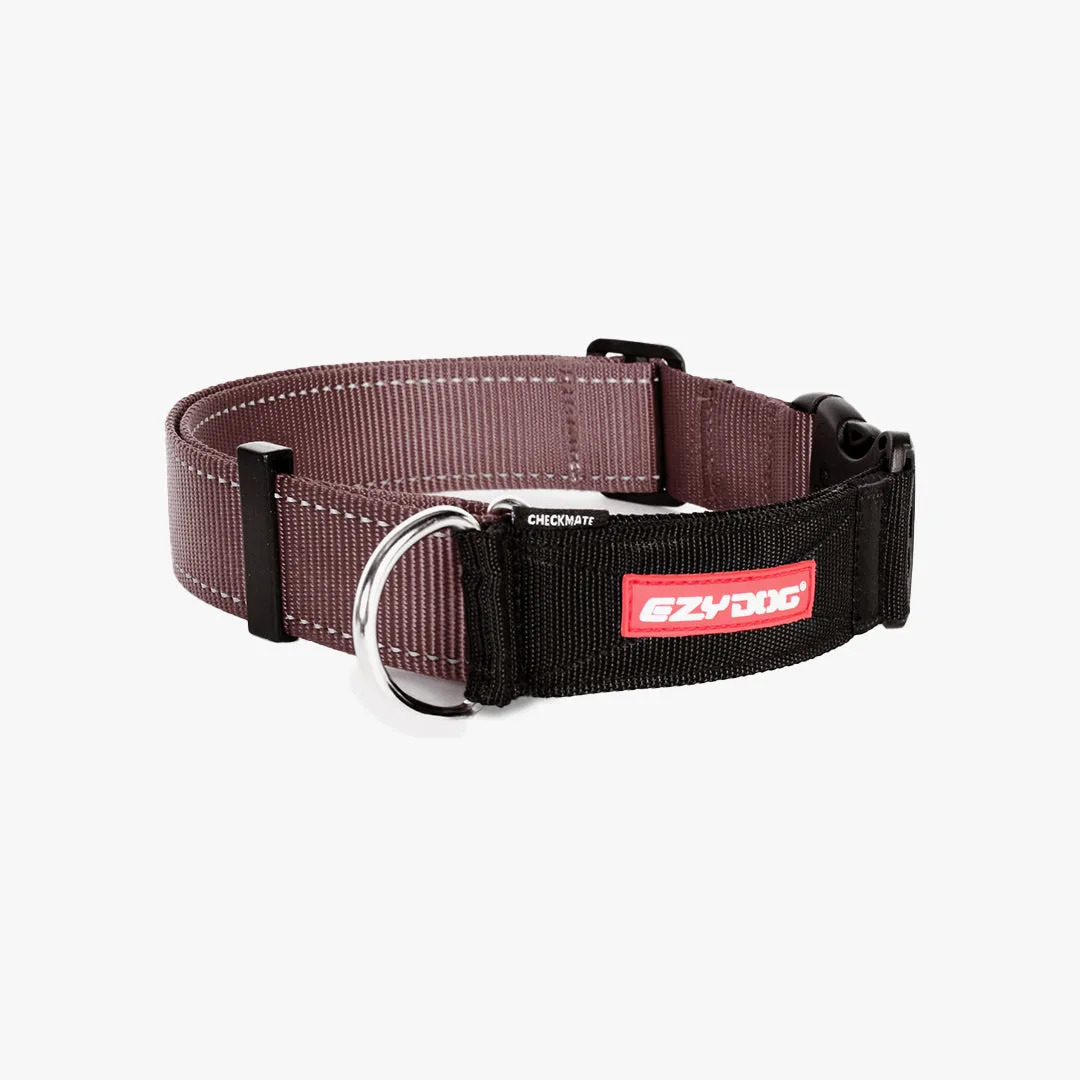
Collars are lightweight, familiar, and excellent for holding ID tags. For a dog that walks calmly beside you on a mellow, well-marked trail and never pulls, a collar can be sufficient. The SALE XL WIDE CHECKMATE COLLAR, for example, is a Martingale-style collar that adjusts without resizing each time, offering a secure fit for training sessions. However, Martingale collars are designed to tighten slightly under pressure, which can be risky if a dog bolts suddenly on a rocky path.
The main trade-off is that collars concentrate force on the neck. On a long hike, repeated tension can cause coughing, gagging, or long-term injury. If you choose a collar for hiking, pair it with a harness for actual walking and use the collar only for tags.
Harness vs collar: the hiking trade-offs
- Neck safety: Harness distributes force across the chest and shoulders, protecting the trachea. Collar concentrates pressure on the neck, increasing injury risk on uneven terrain. Choose a harness for any trail with pulling, running, or steep sections.
- Control and handling: Harnesses offer multiple attachment points and often a handle for lifting or steadying your dog. Collars provide only a single point at the neck, offering less leverage. A harness gives you better control on descents and near hazards.
- Convenience and ID: Collars are lighter and always hold tags. Harnesses take slightly longer to put on but can also accommodate patches (like Pre-Printed Side Patches) for quick identification. Use a collar for tags, but clip the leash to a harness for actual hiking.
Product facts at a glance
- Quick Fit™ Dog Harness: The Quick Fit™ Dog Harness offers the perfect blend of comfort, control, and convenience. Built with reinforced materials and soft neoprene padding, it’s ideal for everything from daily walks to outdoor adventures. The one-click design makes it quick to put on, while the secure fit and reflective stitching provide safety on the move. For hiking, the neoprene padding prevents chafing on long ascents, and the one-click buckle means you can gear up quickly at the trailhead. Reflective stitching is a real safety bonus in low-light conditions.
- SALE XL WIDE CHECKMATE COLLAR: EzyDog Checkmate Dog Training Collars are Martingale collars that do not require the act of resizing for each fitting. The adjustable dog collar also has your pooch's comfort in mind, outfitted with a soft and durable nylon for years of use and years of comfort. This collar's no-resize feature is convenient for dogs whose neck size varies slightly, but because it tightens under tension, it is best reserved for training sessions or calm walks, not rugged hiking where sudden pulls are common.
Which should you choose?
Best for hiking
- Dogs that pull or get excited on trails
- Small or brachycephalic breeds prone to tracheal issues
- Any hike with steep, rocky, or unpredictable terrain
Not ideal for hiking
- Very calm, well-trained dogs on easy, flat trails where pulling never occurs
- Situations where you only need to carry ID tags and the dog never strains the leash