Choosing between a dog harness and a collar is more than a style preference—it's a safety decision. Every day, millions of dogs go on walks wearing either a collar or a harness, and the choice can significantly impact their health, comfort, and your control. While collars have been the traditional go-to, harnesses have gained popularity for good reason. This guide breaks down the safety aspects of both, helping you make an informed choice for your furry friend.
We'll explore the anatomy of neck injuries, the mechanics of pulling, and the scenarios where each option excels. By the end, you'll know whether a harness or collar is the safer choice for your dog's specific needs, activity level, and temperament.
The Anatomy of Neck Injury: Why Collars Can Be Risky
The neck is a delicate area for dogs, containing the trachea, esophagus, and a complex network of nerves and blood vessels. When a dog pulls on a collar, the pressure concentrates on this vulnerable region. Repeated pulling can lead to tracheal collapse, especially in small breeds like Chihuahuas and Yorkshire Terriers, who are genetically predisposed to this condition. Even in larger dogs, sudden lunges can cause whiplash-like injuries to the cervical spine.
Studies (though not cited here) suggest that a significant percentage of dogs with neck pain or spinal issues have a history of pulling on collars. The risk is amplified when using a flat collar as the primary walking tool, as it offers no distribution of force. For dogs that are prone to pulling, a collar can turn every walk into a potential injury event. This is why many veterinarians recommend harnesses for dogs that pull, as they redirect pressure away from the neck.
- Avoid using a collar for dogs with a history of tracheal collapse or neck injuries.
- If you must use a collar, opt for a wide, padded one to distribute pressure more evenly.
- Never attach a retractable leash to a collar—the constant tension can be harmful.
Harness Benefits: Control Without Compromise
A harness distributes the force of a pull across the chest and shoulders, which are much sturdier parts of the dog's anatomy. This not only reduces the risk of neck injury but also gives you better control over your dog's movements. With a front-clip harness, you can even steer your dog gently, which is particularly useful for reactive dogs or those in training. The Even better, many harnesses are designed with no-pull features that naturally discourage pulling by turning the dog's body when they strain.
For dogs that are escape artists, a well-fitted harness is much harder to slip out of than a collar. This is a critical safety feature, as a dog that escapes can run into traffic or get lost. Harnesses also provide a secure attachment point for car safety, as they can be used with a seatbelt tether. Additionally, harnesses are essential for activities like hiking or swimming, where a collar can get caught on branches or cause discomfort.
- Front-clip harnesses are ideal for training and reducing pulling.
- Back-clip harnesses are fine for calm dogs that don't pull.
- Always measure your dog's chest and neck to ensure a snug but comfortable fit.
Collar vs Harness: When Each Is the Better Choice
While harnesses are generally safer for walking, collars still have their place. Collars are essential for holding ID tags and are required by law in many places. For dogs that walk politely on a loose leash, a collar can be perfectly safe and is more convenient for everyday wear. However, even well-behaved dogs can be startled and lunge, so many owners choose a harness for walks and keep a collar just for tags.
Consider your dog's breed, age, and health. Puppies have developing necks and tracheas, so a harness is a safer choice from the start. Senior dogs with arthritis may benefit from a harness that doesn't put pressure on their neck. On the other hand, if your dog is small and you only walk in quiet areas, a collar might suffice. The key is to assess the risk and choose accordingly.
- Use a collar for ID tags, but attach the leash to a harness for walks.
- Switch to a harness if your dog pulls, has respiratory issues, or is a puppy.
- For multi-dog walks, consider a coupler that attaches to harnesses to avoid tangling.
Real-World Scenarios: Hiking, Swimming, and Car Rides
Different activities demand different safety gear. On a hike, a harness is non-negotiable—it provides a secure point to clip a backpack or a safety line, and it prevents injury if your dog slips on a trail. EzyDog's Hiking Bundle includes a harness and leash combo designed for rugged terrain, ensuring your dog stays safe and comfortable. Similarly, for water activities, a harness is essential for attaching a life jacket, like the DFD Life Jacket, which keeps your dog buoyant and visible.
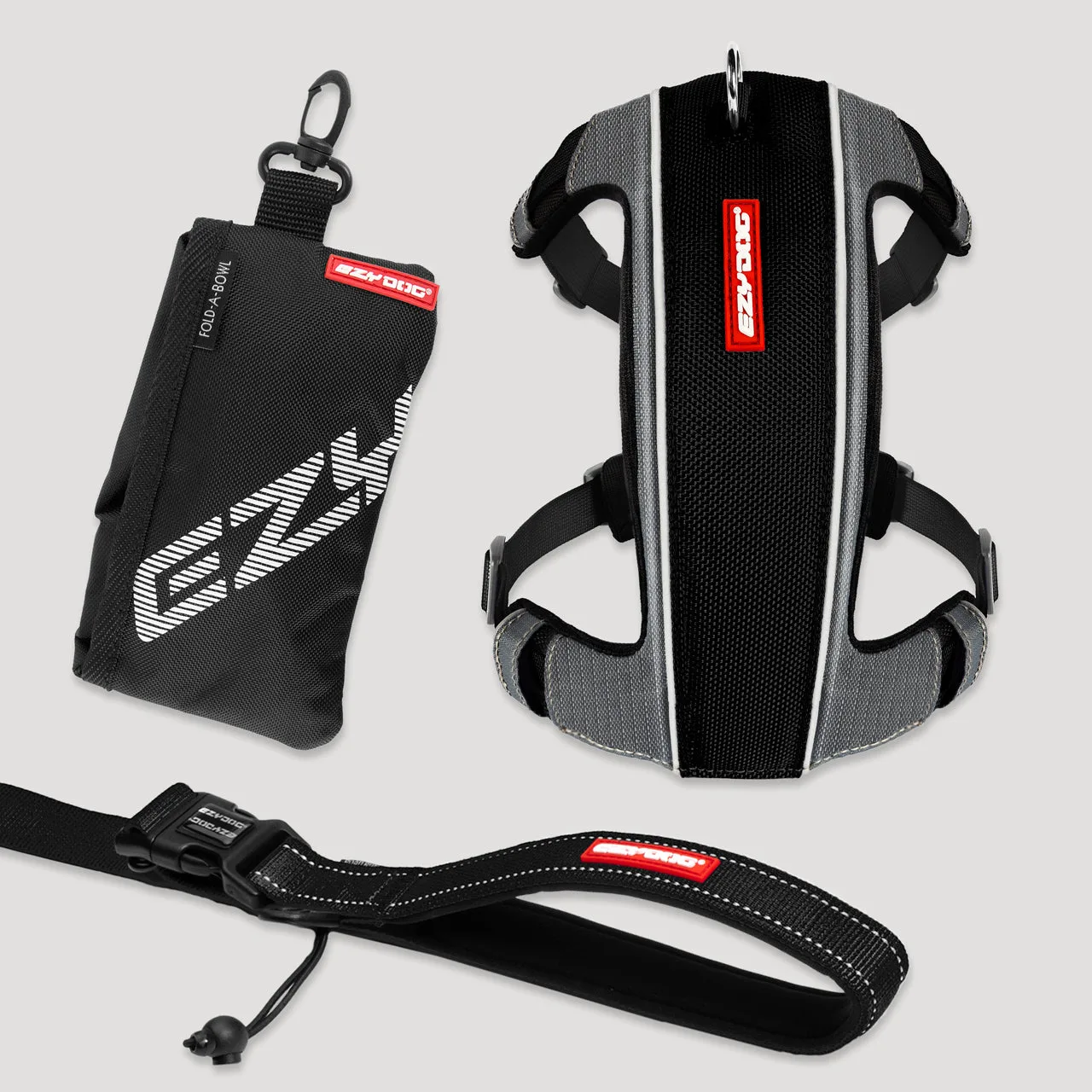
Hiking Bundle
In the car, a harness is the only safe option. A collar can choke your dog in a sudden stop, and a loose dog is a distraction and a hazard. Using a harness with a car restraint system, such as the Drive Dog Car Hammock, provides a safe and comfortable travel experience. For daily walks, the Vario 4 Multi-Function Leash offers versatility, but pairing it with a harness ensures safety without sacrificing convenience.
- Always use a harness for hiking to attach gear and prevent falls.
- For swimming, a harness with a life jacket is crucial for safety.
- In the car, secure your dog with a harness and a crash-tested restraint.
Making the Switch: Tips for Transitioning from Collar to Harness
If you've decided to switch to a harness, do it gradually. Let your dog sniff and inspect the harness before putting it on. Use treats and positive reinforcement to create a positive association. Start with short sessions indoors, then move to the yard, and finally to walks. Ensure the harness fits properly—you should be able to fit two fingers between the harness and your dog's body. A well-fitted harness should not chafe or restrict movement.
Some dogs may resist the harness at first, but patience is key. You can also try a harness with a front clip, which gives you more control and can help with training. Remember, the goal is safety and comfort, so take the time to find the right harness for your dog's shape and size.
- Introduce the harness with treats and praise.
- Adjust the straps gradually for a snug fit.
- Start with short walks and gradually increase duration.
In the debate between dog harness vs collar, the harness is the clear winner for safety, especially for dogs that pull or have neck sensitivity. While collars are necessary for ID tags, they should not be the primary walking tool for most dogs. By choosing a high-quality harness, you protect your dog's neck, improve your control, and make walks more enjoyable for both of you. Explore EzyDog's range of harnesses and leashes to find the perfect fit for your furry friend.