Quick Answer
For most kennel owners, kennel floor runs (raised poly decking over a covered run) offer superior drainage, easier cleaning, and better joint comfort than concrete. Concrete is durable and budget-friendly upfront but requires proper slope and sealing to avoid urine pooling and odor issues. Choose runs for health and hygiene; choose concrete only if you have a tight budget or need a heavy-duty surface for large, destructive dogs.
The Problem: Standing Urine, Odor, and Sore Joints
A poorly drained kennel floor traps urine and moisture, leading to ammonia buildup, bacterial growth, and persistent odors that are hard to eliminate. Dogs forced to lie on wet concrete develop pressure sores, calluses, and joint stiffness, especially in older or arthritic animals. The wrong flooring also makes daily cleaning a chore—hosing down a flat concrete slab often just spreads the mess instead of removing it.
The core challenge is balancing drainage, comfort, and durability. Concrete is strong and inexpensive to install, but it’s porous, cold, and hard on joints. Kennel floor runs, typically made of poly decking or chain-link panels raised above a drainable base, solve the moisture problem but cost more and may not suit every dog’s temperament or size.
Solution 1: Concrete Kennel Floor (When Budget Rules)
A properly poured concrete slab with a minimum 1/8-inch-per-foot slope toward a floor drain can work for kennels housing large, heavy-chewing dogs that would destroy raised decking. Seal the concrete with a non-slip, pet-safe epoxy coating to reduce porosity and make cleaning easier. However, even sealed concrete stays cold in winter and hard on joints; you’ll need to add rubber mats or straw bedding in rest areas.
Concrete is a permanent, low-maintenance surface, but it lacks the drainage and cushioning that many dogs need for long-term health. If you choose concrete, budget for a drain system and plan for regular deep cleaning with an enzymatic cleaner to control odors.
Solution 2: Kennel Floor Runs (Better Drainage and Comfort)
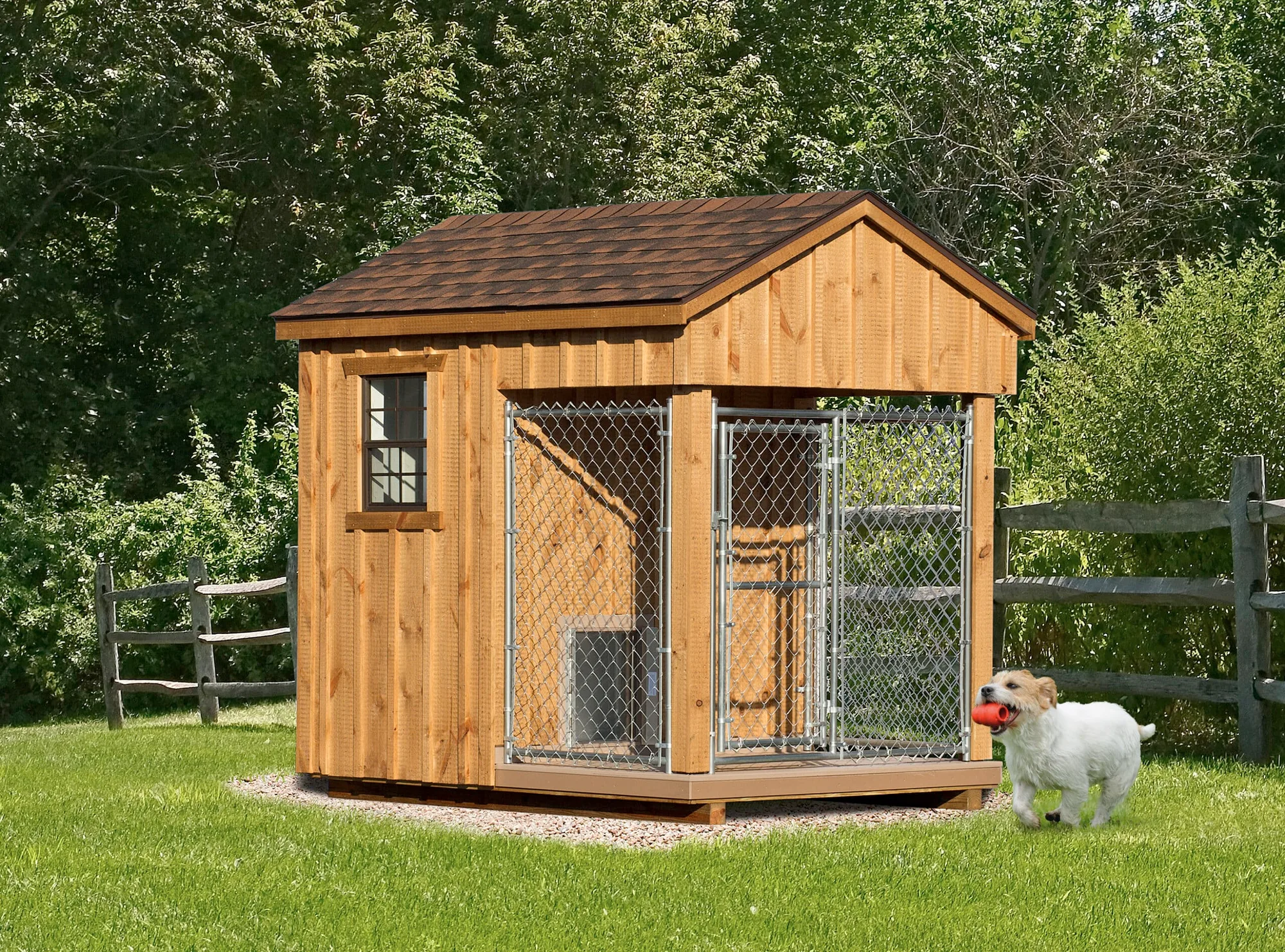
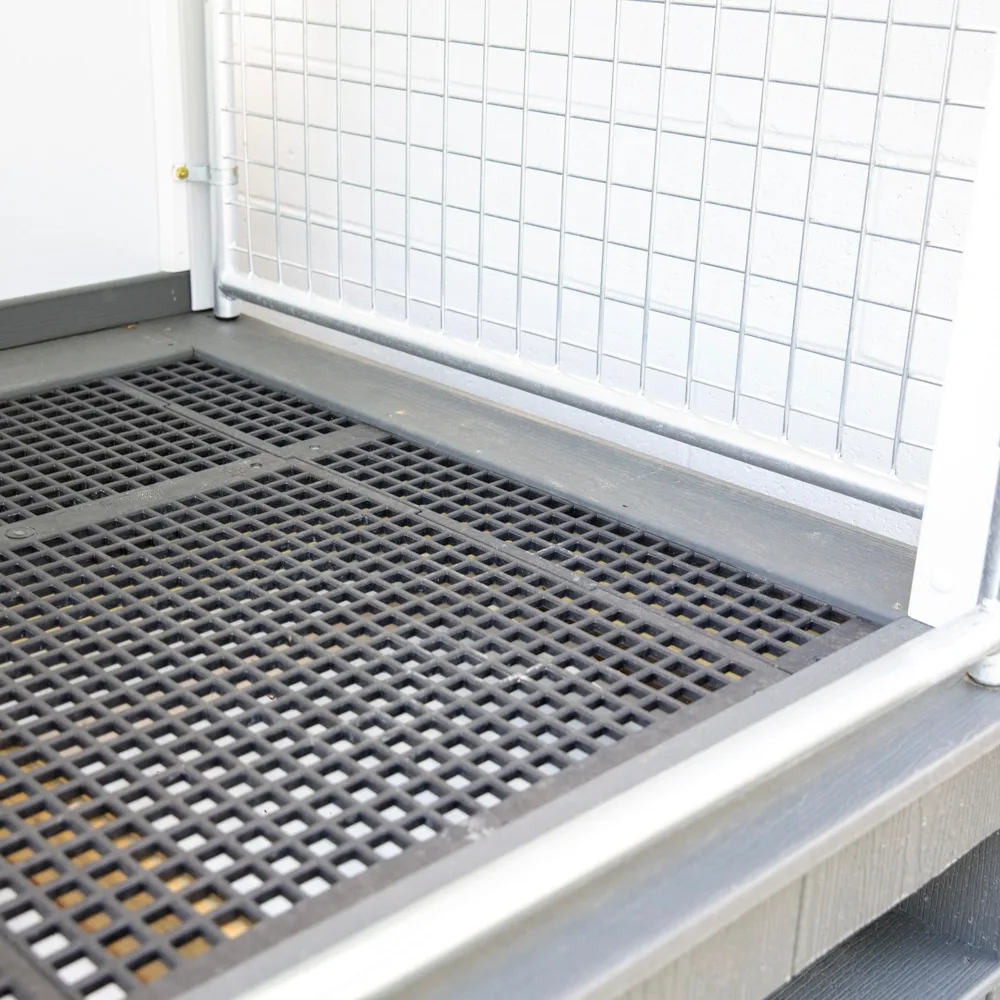
Kennel floor runs consist of a covered run area with raised poly decking or chain-link panels that allow urine and water to fall through to a gravel or concrete base below. This design keeps dogs dry and clean, reduces ammonia fumes, and makes hosing down the run quick and effective. The slight elevation also provides air circulation underneath, which helps prevent paw infections.
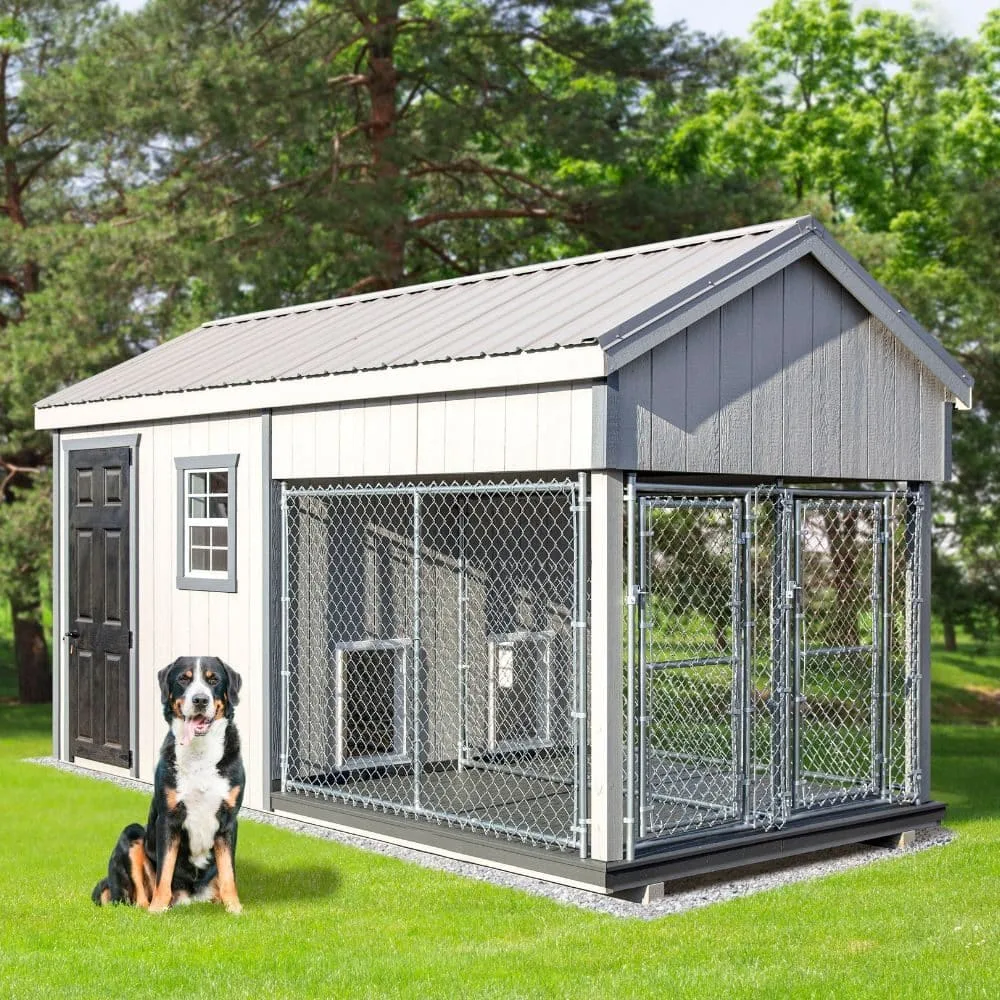
Many fully finished kennels, like the 8×16 Dog Kennel from Backyard Pet Supplies, come standard with poly decking on runs and an interior lined with glassboard for easy sanitation. The raised decking is gentle on joints and works well for most breeds. The tradeoff is a higher upfront cost compared to a plain concrete slab, and the decking may need occasional replacement if a dog chews aggressively.
Key Differences at a Glance
Drainage: Kennel floor runs win hands-down—urine and water pass through, keeping the surface dry. Concrete requires a precise slope and drain to avoid puddles. Comfort: Poly decking is warmer and more forgiving on joints; concrete is hard and cold. Cleaning: Runs can be hosed off in minutes; concrete needs scrubbing and enzyme treatments. Cost: Concrete is cheaper to install initially, but runs add long-term value through better health and easier maintenance. Durability: Concrete lasts decades with proper sealing; runs may need decking replacement after 5-10 years depending on use.
When to Choose Each Option
Choose kennel floor runs if you prioritize dog comfort, hygiene, and easy cleaning. They’re ideal for boarding kennels, breeding facilities, and multi-dog households where urine volume is high. Choose concrete only if your budget is extremely tight, you have a single large dog that chews through everything, or you’re building a temporary kennel that won’t see daily use. For most owners, the extra investment in a run system pays off in fewer vet visits and less time scrubbing.
Diagnosis: Which Flooring Fixes Your Kennel Problem?
- Symptom: Your kennel smells like ammonia even after cleaning, or your dog develops calluses on elbows and hocks. Moisture and hard surfaces are the root cause.
- Likely Cause: A flat concrete floor that traps urine and provides no cushioning. Even sealed concrete can hold odors over time. Concrete alone rarely solves hygiene or comfort issues.
- Corrective Action: Replace or overlay the floor with raised poly decking (kennel floor runs). If budget allows, install a fully finished kennel with poly decking and glassboard lining for maximum drainage and easy cleaning. Runs eliminate standing moisture and improve joint health.
- Stop or Choose Another Option: If your dog is a heavy chewer that destroys raised decking, or you need a surface for a very large breed (over 120 lbs), consider a sealed concrete floor with rubber mats in resting areas instead. Concrete works only when combined with proper slope, drain, and bedding.
Kennel Flooring Products That Deliver
- 8×16 Dog Kennel: Insulated Box Covered Run Poly Decking on Runs Interior Lined with Glassboard Fully Insulated Plexiglass Dog Door 11.5 GA Chain-Link Panels This 8×16 kennel includes poly decking on the run area, which provides excellent drainage and joint comfort right out of the box. The glassboard interior makes cleaning quick and prevents odor absorption.
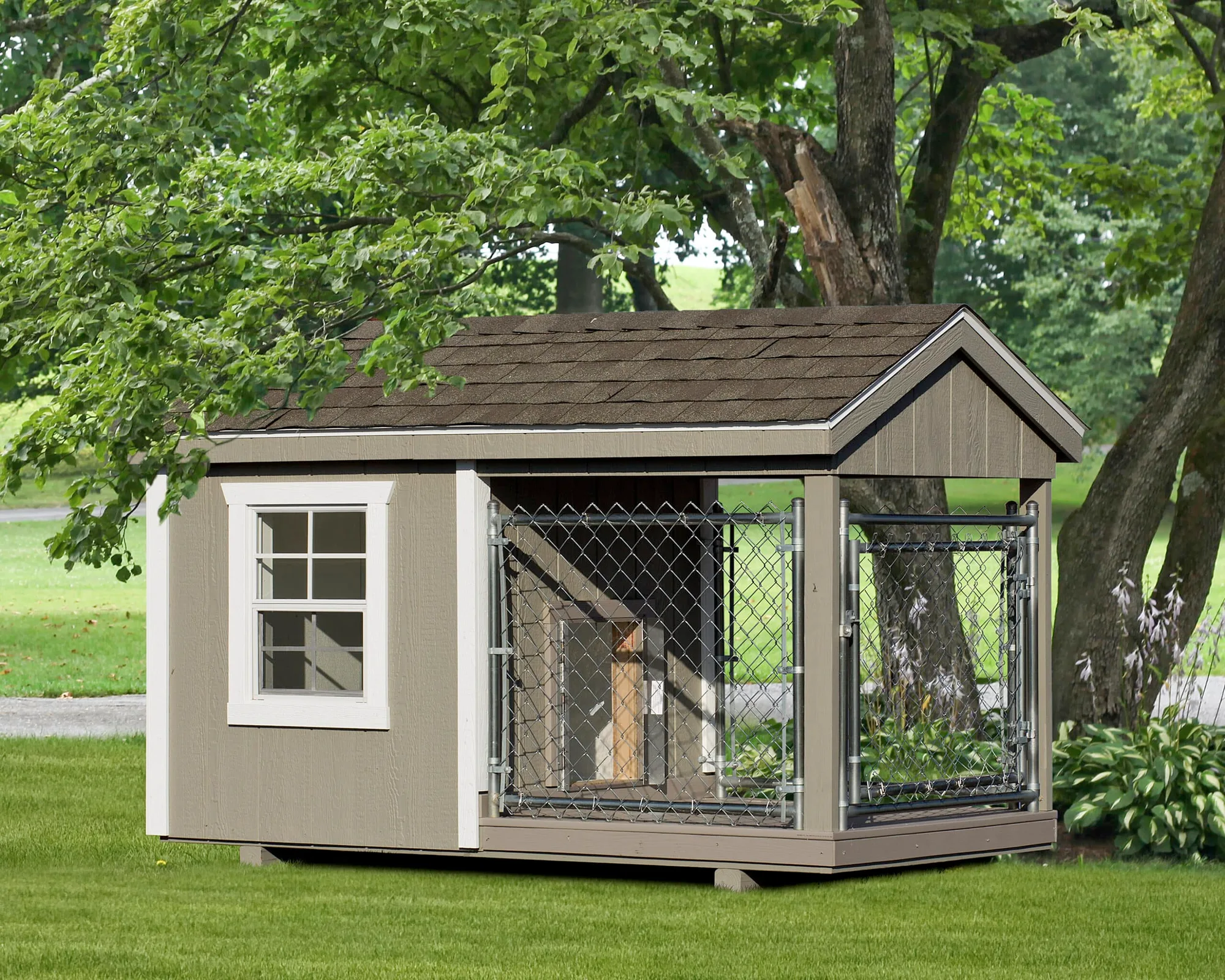
- 4×8 Dog Kennel: 4×4 Insulated Box 4×4 Covered Run Poly Decking on Runs Interior Lined with Glassboard Fully Insulated Plexiglass Dog Door 11.5 GA Chain-Link Panels The 4×8 model offers the same poly decking and glassboard lining in a smaller footprint, ideal for single-dog setups or as an add-on run. The raised decking keeps your dog dry and comfortable even during wet weather.