Quick answer
A dog wheelchair (like the Walkin' Wheels line) uses a lightweight, adjustable frame with rear wheels that support the hind legs while allowing full freedom of movement. A traditional dog cart is typically heavier, less adjustable, and often designed for pulling or carrying weight rather than supporting mobility. For most dogs with rear leg weakness, paralysis, or recovery needs, a modern wheelchair offers better fit and activity support.
How a Dog Wheelchair Differs from a Cart
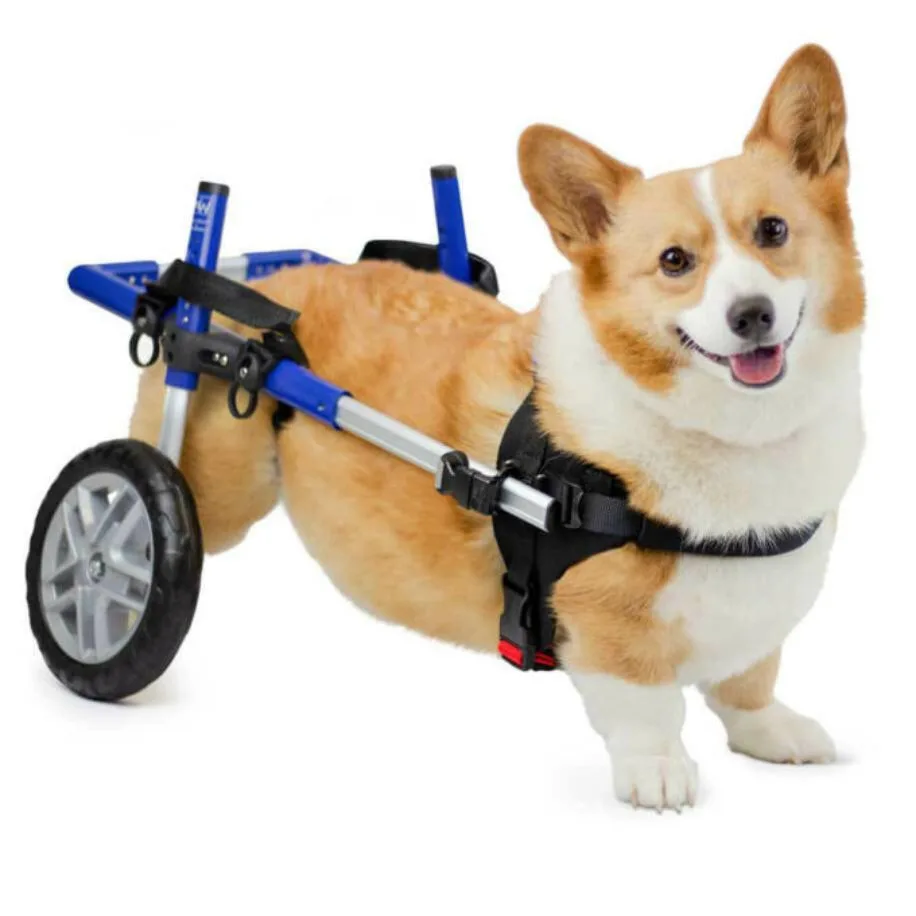
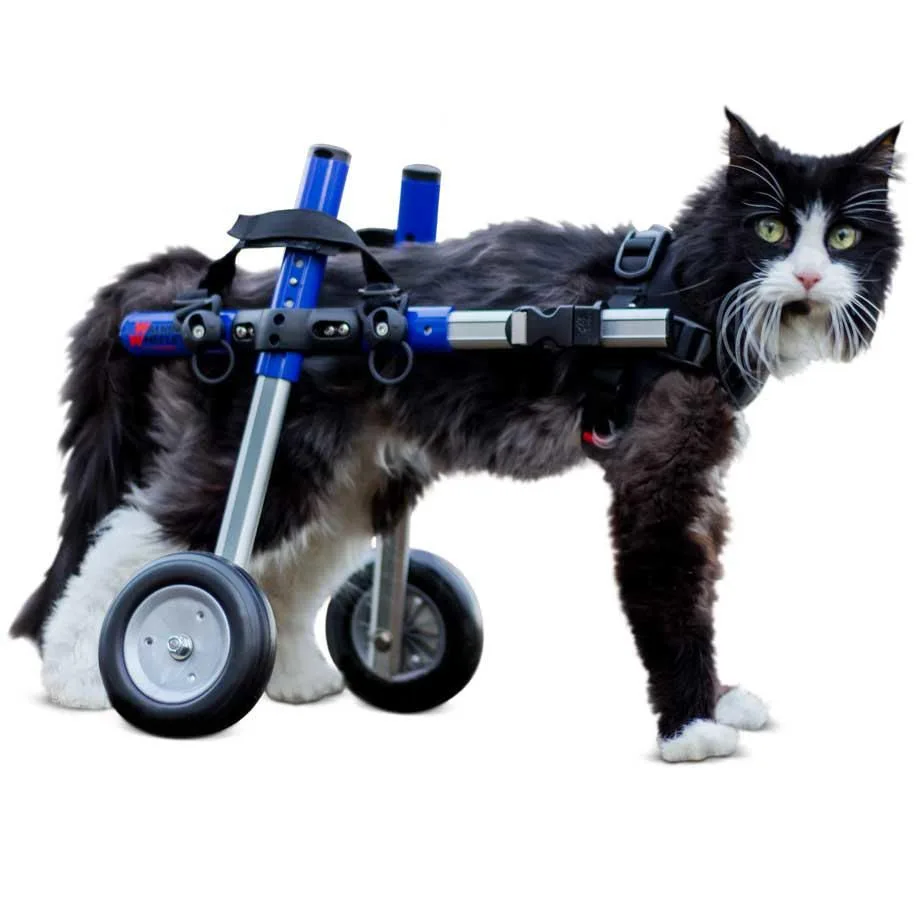
The terms dog wheelchair and dog cart are sometimes used interchangeably, but they refer to different designs. A dog cart is often a heavier, two-wheeled device that supports the rear end and may include a platform or sling. These were common before modern adjustable wheelchairs became widely available. A dog wheelchair, such as the Walkin' Wheels line, uses a lightweight aluminum frame with adjustable height, length, and width to match your dog's exact measurements. This adjustability is key for comfort and proper weight distribution.
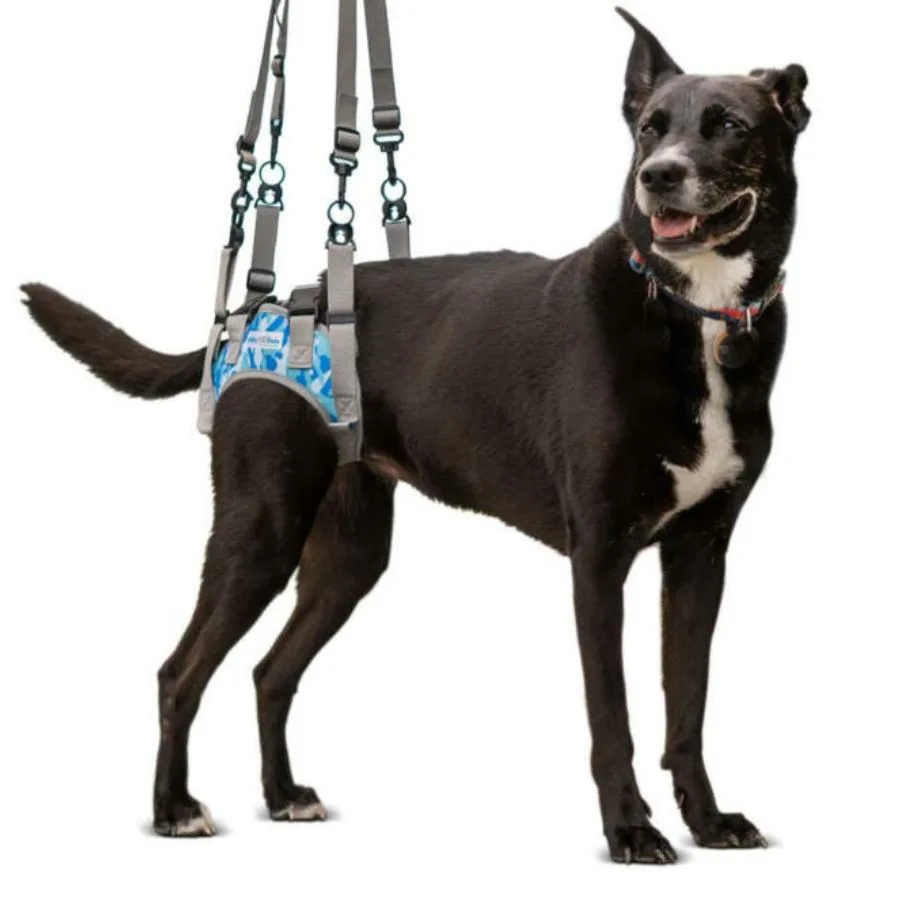
Another key difference is how the device attaches. A cart may use a single strap or harness that can shift during movement. A wheelchair uses a rear harness or sling that cradles the hips and thighs, distributing pressure evenly. The Walkin' Wheels rear wheelchairs include a padded harness designed to stay in place during activity, which reduces the risk of chafing or slipping.
When a Wheelchair Works Better Than a Cart
For dogs with rear leg weakness from IVDD, degenerative myelopathy, hip dysplasia, or post-surgery recovery, a wheelchair provides targeted support. The rear wheels take the weight off the hind legs while the front legs remain free to walk, trot, or run. The Walkin' Wheels Medium dog wheelchair, for example, is designed for dogs 26-49 lbs and offers rear support that allows them to stay active despite paralysis or joint pain. Its adjustability means you can fine-tune the fit as your dog's condition changes.
A cart, by contrast, is often built for heavier work or pulling, not for daily mobility. If your dog needs to move around the house, go for walks, or play, a wheelchair is the more practical choice. The Walkin' Wheels Small wheelchair (11-25 lbs) and Dachshund wheelchair (2-40 lbs) are examples of breed- and size-specific designs that prioritize comfort and ease of movement.
When a Cart Might Still Make Sense
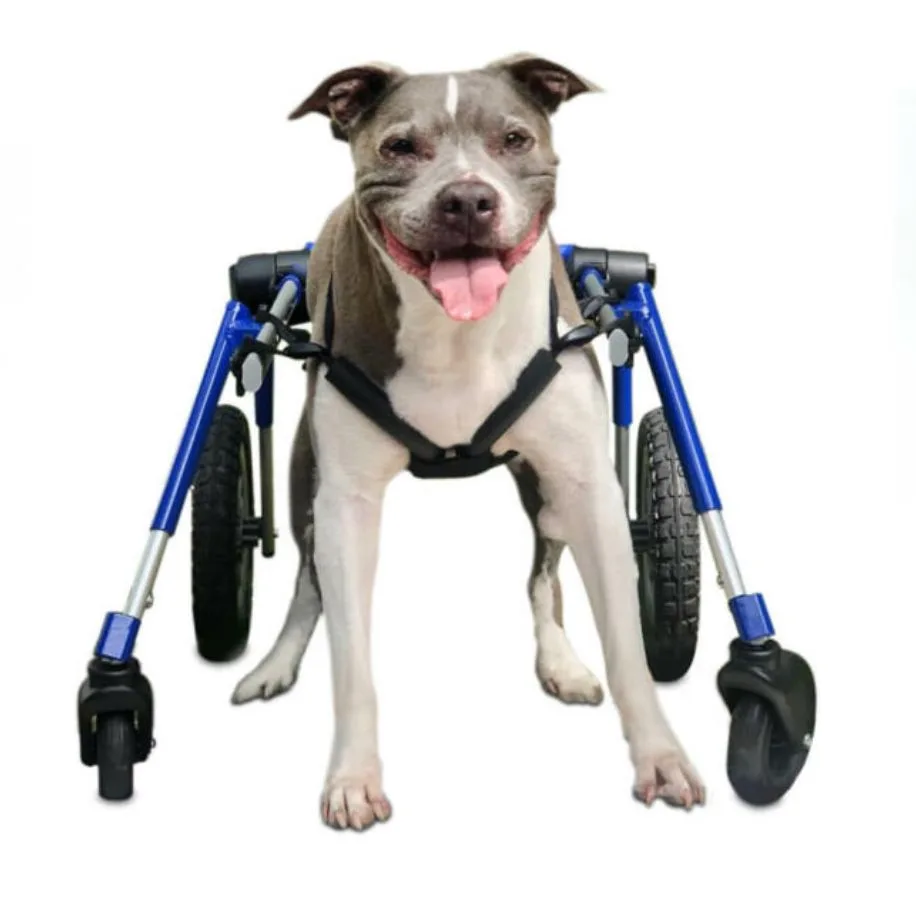
A traditional dog cart can be a good option for very large, strong dogs that need to pull weight or for dogs that will be stationary for long periods. However, for most mobility needs, a wheelchair offers more flexibility. If your dog has both front and rear limb weakness, you can add a front wheel attachment (like the Walkin' Wheels Large Front Wheel Attachment for dogs 70-180 lbs) to convert a rear wheelchair into a full support quad unit. This modular approach isn't possible with a fixed cart.
Tradeoffs at a glance
- Adjustability: A modern dog wheelchair like Walkin' Wheels offers multiple adjustment points (height, length, width) to match your dog's exact size and condition. A cart typically has fewer or no adjustments, which can lead to poor fit and discomfort. If your dog's condition may change over time, choose a wheelchair.
- Weight and portability: Wheelchairs use lightweight aluminum frames, making them easier to lift and transport. Carts are often heavier and bulkier, which can be a hassle for daily use or travel. For everyday use, a wheelchair is more practical.
- Support and comfort: A wheelchair's padded harness distributes weight evenly across the hips and thighs. A cart's sling or platform can concentrate pressure on a smaller area, increasing the risk of sores or chafing. For dogs with sensitive skin or long-term use, a wheelchair is gentler.
- Modularity: Some wheelchairs allow you to add a front wheel attachment to create a full-support quad unit. Carts are typically fixed and cannot be upgraded as needs change. If your dog's condition might progress, a modular wheelchair is a smarter investment.
Product facts
- Walkin' Wheels MEDIUM Dog Wheelchair: The Walkin’ Wheels Medium dog wheelchair provides rear support for paralyzed and injured pets weighing between 26 to 49 lbs. It helps dogs struggling with joint pain, dysplasia, IVDD, Degenerative Myelopathy, cruciate injury, or general hind leg weakness. This size covers the most common weight range for medium breeds. The adjustable frame means you can dial in the fit as your dog's condition progresses or improves, something a fixed cart cannot offer.
- Walkin' Wheels DACHSHUND Wheelchair: Walkin’ Wheels Rear DACHSHUND wheelchair gives dachshunds weighing from 2 to 40 pounds their mobility back. It is fully adjustable in height, length, and width, and is specifically designed for the dachshund's short legs and long torso. Dachshunds have a unique body shape that a one-size-fits-all cart cannot accommodate. This wheelchair's breed-specific design prevents dragging and ensures the rear end is properly supported without interfering with front leg movement.
Which one is right for your dog?
Best for
- Dogs with rear leg weakness, paralysis, or recovery needs who will use the device daily for walks, play, or exercise.
- Owners who want a lightweight, adjustable, and comfortable solution that can adapt as their dog's condition changes.
Not ideal for
- Dogs that need a heavy-duty pulling device or a stationary support platform.
- Dogs with only front leg weakness (a rear wheelchair alone won't help; consider a front wheel attachment or quad unit).