Quick answer
Scale is the ratio between a dollhouse and a real home, and it decides whether a given doll and furniture set will look right inside. Before buying, measure the doll you already own and compare it to the dollhouse's stated scale and interior room dimensions. If a listing gives no scale, treat the dollhouse as compatible only with the furniture included in the box.
What dollhouse scale actually means
A dollhouse scale is written as a ratio, such as 1:12, meaning one unit on the miniature equals twelve of the same units in real life. At 1:12, a real six-foot adult becomes a six-inch doll, and a real nine-foot ceiling becomes a nine-inch interior height. That single number drives everything else: door heights, stair risers, and how chunky a sofa looks in a room.
The practical consequence is that scale, not brand, decides fit. A well-made 1:24 chair will look undersized in a 1:12 room even though nothing is broken. When a listing does not state a scale, you cannot calculate compatibility from the description alone; you can only judge by the furniture and dolls the manufacturer includes.
How room sizes change what fits
Two dollhouses can share the same scale and still feel completely different inside. A four-foot-tall house with four rooms and a balcony gives each room more floor area than a compact three-room design at the same height, so it can hold a full furniture arrangement instead of one bed and a rug. Room count and footprint matter as much as the overall height printed on the box.
Look at the shape of the rooms too. A narrow room limits a bed to one wall and makes a dining set awkward, while a wider room tolerates a sofa, a table, and a rug together. If you plan to rearrange furniture often, favor fewer, larger rooms over many small ones.
Measuring before you buy
Measure the doll first, from the base of the feet to the top of the head, then compare that number with the dollhouse's stated scale. As a rough check, a doll should be able to stand upright inside a room with headroom left over, and a bed should span roughly two-thirds of the room's width to look believable.
For the house itself, note both the assembled height and the footprint, because a tall narrow house and a shorter wide one can occupy the same corner very differently. If you are buying online and the interior room dimensions are not listed, ask before ordering rather than guessing from the exterior photo.
When scale does not matter
For younger children, open-ended play usually beats strict realism. A mixed collection of furniture in slightly different scales still gets played with, and the mismatch rarely bothers a four-year-old. In that case, prioritize sturdy construction, safe edges, and storage over exact ratios.
Scale starts to matter more when a child begins arranging scenes carefully, comparing rooms, or collecting specific furniture sets. That is the point where a stated scale saves money, because you stop buying pieces that never quite look right together.
Dollhouse scale questions buyers ask most
Do all wooden dollhouses use the same scale?
No. Wooden dollhouses appear in several common scales, and many budget models never state one at all. The only reliable compatibility signal is a printed ratio or a manufacturer-supplied furniture set. If no scale is listed, assume the included furniture is the safe match.
Will my existing dolls fit a new dollhouse?
Measure your tallest doll from feet to head and compare it to the stated scale. A doll that cannot stand upright with headroom left over will look cramped no matter how good the house is. Measure the doll before you measure the house.
Does a taller dollhouse always mean bigger rooms?
Not necessarily. Height is often split across more levels, so a tall house can have shallower rooms than a shorter one with fewer, wider floors. Compare room count and floor area, not just overall height.
How much furniture should fit in one room?
A believable room usually holds two or three substantial pieces plus a rug or small accessory. If you need five pieces to fill it, the room is likely too large for the scale you bought. Plan the room before buying the furniture set.
Is scale important for a first dollhouse?
Less so than sturdiness and storage. Young children mix scales without noticing, so prioritize construction quality until a child starts arranging rooms deliberately. Buy for the play stage, not the ideal ratio.
Product facts
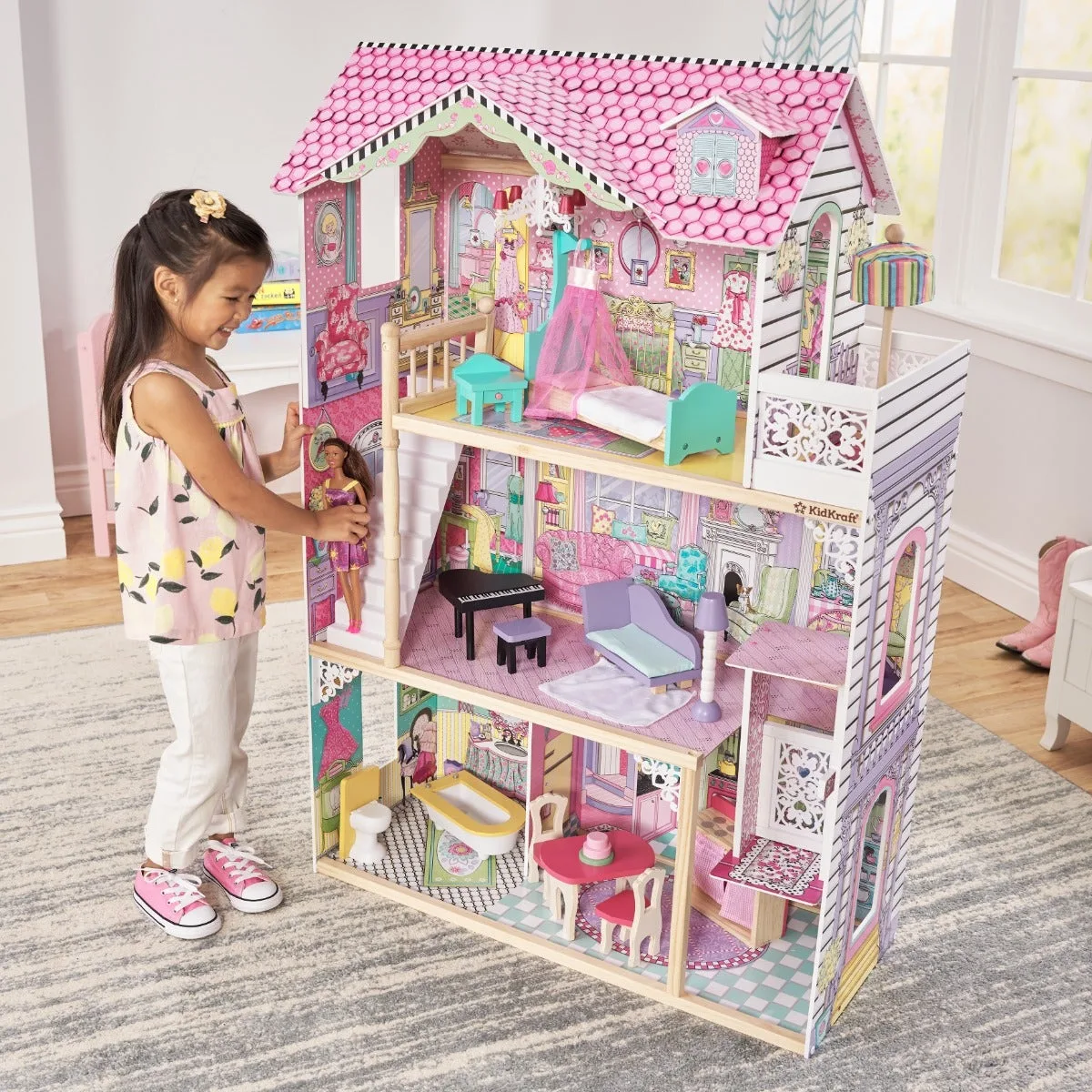
- Annabelle Dollhouse: The KidKraft Annabelle Dollhouse stands nearly four feet tall and offers three levels of fun, four spacious rooms and a balcony, with a gliding elevator and an included 17-piece furniture pack. Four rooms across three levels give enough floor area to arrange a full furniture set, and the included pack removes any guesswork about whether the first pieces will fit.
- Bookcase with Reading Nook - Espresso: The KidKraft Bookcase with Reading Nook combines a cushioned seating area with six shelves and a three-sided angled middle section. It keeps dolls, furniture, and books contained in one piece, which matters when a dollhouse collection outgrows a single room.
- Deluxe Wooden Easel - White: The KidKraft Deluxe Wooden Easel has a double-sided design with a dry-erase surface on one side and a chalkboard on the other, plus a top-mounted paper roll and spill-proof paint cups. Useful for sketching room layouts and furniture arrangements to scale before committing to a purchase.