Quick Answer
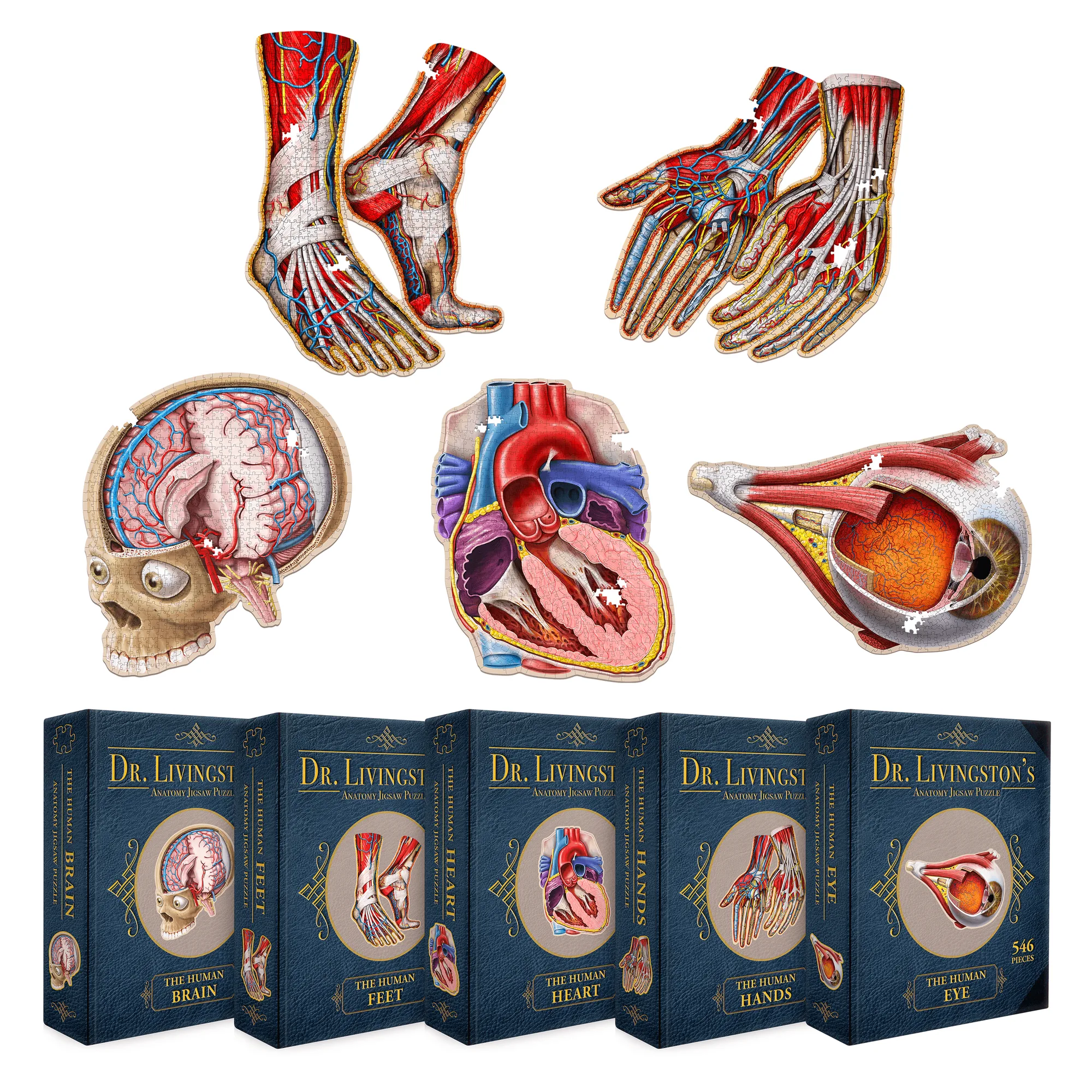
Dr. Livingston's unique shaped puzzles are die-cut so the pieces follow real anatomy rather than a uniform grid, which makes them a different build than a standard jigsaw. Choose them when you want the puzzle to teach structure as you assemble it; choose a standard puzzle when you want speed, familiar sorting, and a lower piece count.
What the Custom Die-Cut Actually Changes
In a standard jigsaw, every piece is a variation on the same knob-and-hole grid, so you sort by color and edge shape and the picture does most of the work. Dr. Livingston's puzzles are die-cut to match the anatomy being shown, so piece boundaries follow structures rather than a grid. That changes your sorting strategy: you start recognizing regions by their outline, not just by color, and the border becomes less of a reliable starting point on some volumes.
- Sort by anatomical region first, then by color.
- Expect fewer familiar edge pieces to anchor on.
- The custom cut rewards looking at the illustration, not just the shape.
Piece Count Is Not the Whole Difficulty Story
Piece count tells you how long a puzzle takes, but with a shaped anatomy cut it tells you less about difficulty than usual. A 511-piece cross-section and a 764-piece magnification puzzle can feel similarly demanding because the custom pieces remove the grid shortcuts you rely on in a standard puzzle. If you are used to finishing a 1,000-piece standard jigsaw in a weekend, budget more time per piece here, not less.
Single Volumes vs. the Full Bundle
The single-volume puzzles let you test whether the custom cut suits you before committing to a larger set. The bundle collects the Dr. Livingston organ and appendage volumes into one purchase, which makes sense if you already know you enjoy the format or you are buying for a classroom or a household that will work through them over time. If you are unsure, start with one volume and treat the bundle as a later upgrade rather than the default first buy.
Trade-Offs to Weigh
- Custom anatomy cut: Pieces follow real structures instead of a uniform grid, so you learn anatomy as you build but lose the edge-piece and color-sorting shortcuts that speed up standard puzzles. Pick this if the learning is the point, not if you want a fast finish.
- Piece count vs. actual effort: A 511-piece volume and a 764-piece volume both take longer than their counts suggest because the custom cut removes grid logic. Compare volumes by which anatomy interests you, not by which has fewer pieces.
- Single volume vs. 3,079-piece bundle: One volume is a low-risk test of the format; the bundle spreads cost across five puzzles but assumes you already enjoy the custom cut. Start with one volume unless you have already built one.
Product Facts
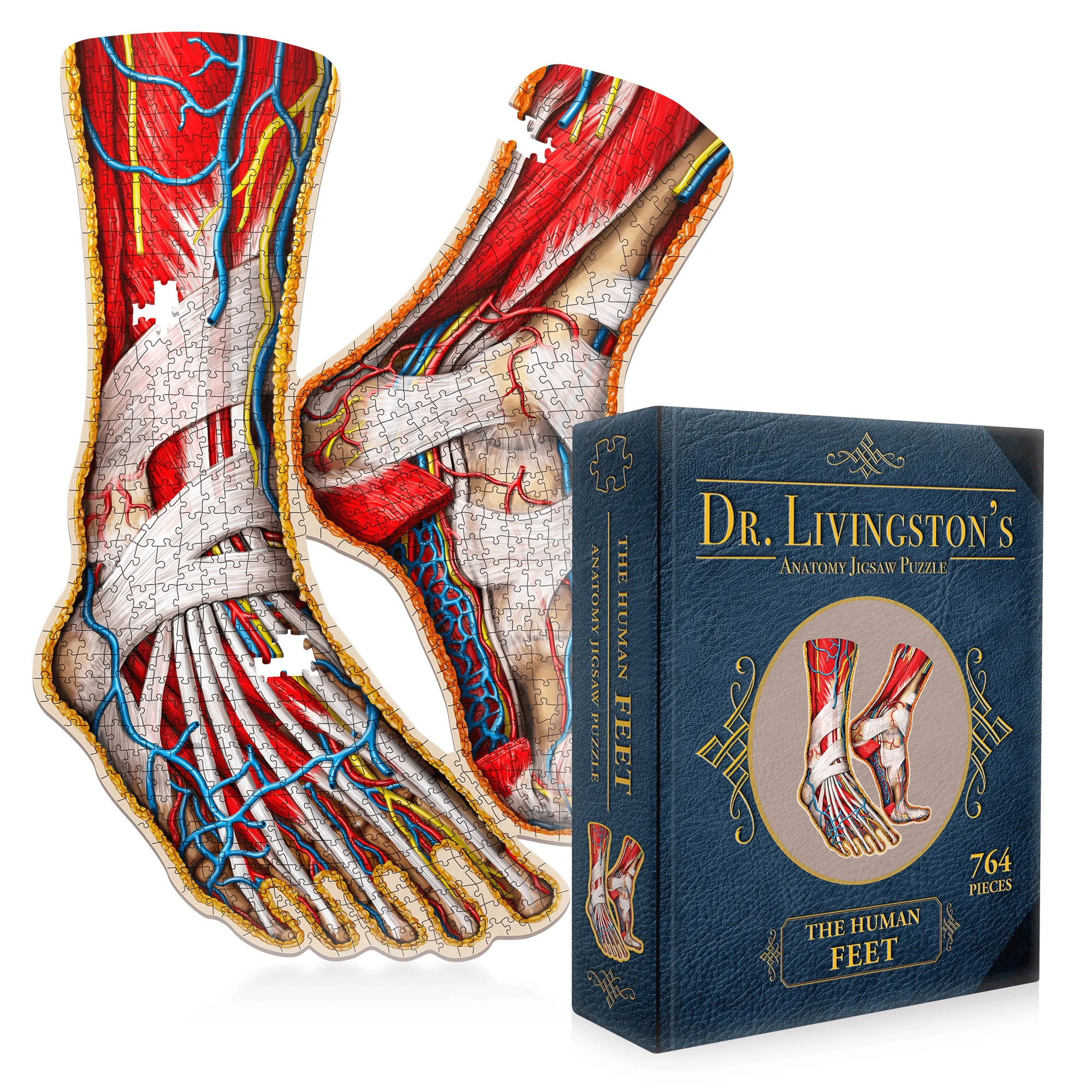
- Human Feet Anatomy Jigsaw Puzzle | Dr. Livingston's Unique Shaped Science Puzzles: 764 pieces, Set 4 of 5 in the Dr. Livingston Series, die-cut to highlight real anatomy, illustrated by Mesa Schumacher, a Certified Medical Illustrator from Johns Hopkins University. The high piece count and anatomy-specific cut make this a longer, more deliberate build than a standard puzzle of similar size.
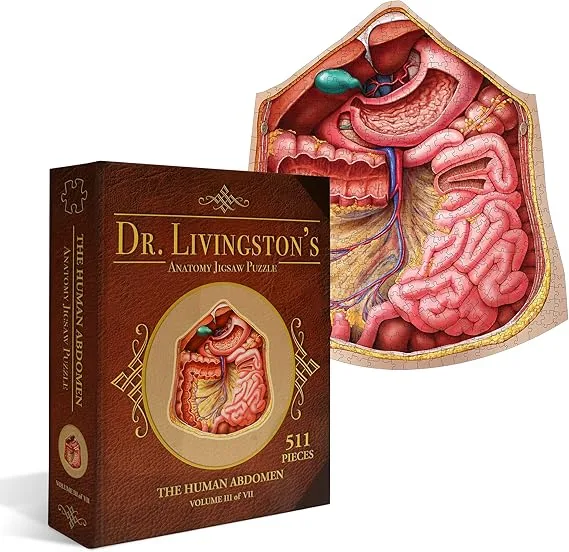
- Human Abdomen Anatomy Jigsaw Puzzle | Dr Livingston's Unique Shaped Science Puzzles, Accurate Medical Illustrations of the Body, Organs, Stomach, Liver and Intestines: 511 pieces, die-cut to match real human anatomy, illustrated by a Certified Medical Illustrator from Johns Hopkins University, and described as the third volume showing a cross-cut section of the body's largest cavity. Fewer pieces than the feet volume, but the cross-section cut still removes the grid shortcuts, so it works as a lower-commitment entry into the shaped format.
- Human Anatomy Organ Puzzle Bundle | Unique Shaped Science Puzzles: Bundle of Dr. Livingston Anatomy Jigsaw Puzzles covering human organs and appendages, 3,079 total pieces across Volumes I–V, illustrated by Mesa Schumacher, with 100% accurate magnification up to 2000%. Buying the bundle spreads the cost per puzzle and suits anyone who already knows they like the custom cut, but it is a large commitment if you have not tried one volume yet.
Who Each Option Fits
Best for
- Learners who want anatomy reinforced by the act of assembling it
- Puzzlers bored with standard grid jigsaws and looking for a different sorting challenge
- Classrooms or households that will rebuild the same puzzle more than once
Not for
- Anyone who wants a quick, familiar jigsaw they can finish in one sitting
- Puzzlers who rely on edge pieces and color sorting as their main strategy
- Buyers who want a single small puzzle rather than a multi-volume series