Quick answer
Dried red clover is a safe, vitamin-rich treat for rabbits, guinea pigs, and other small pets, but it must be fed in moderation. Use it to add variety and foraging enrichment, not as a meal replacement.
Why dried red clover works as a treat, not a staple
Small pets like rabbits and guinea pigs have sensitive digestive systems that rely on a high-fiber base diet of hay. Dried red clover is a legume, meaning it is richer in protein and calcium than most grasses. While that makes it a nutritious supplement, too much can lead to soft stools or urinary issues. The key is treating it as a small part of a balanced herbal rotation.
Red clover also provides natural foraging enrichment. Sprinkling a few blossoms around the enclosure encourages natural scavenging behavior, which supports mental health. This is especially helpful for indoor pets that may lack stimulation.
Signs your pet may be getting too much red clover
Even a safe herb can cause problems if overfed. Watch for these signs that suggest you need to cut back:
Soft or irregular droppings are the most common early indicator. If your pet's cecotropes (the small, grape-like droppings they normally re-eat) become mushy or abundant, reduce the clover portion. Lethargy or a decrease in hay consumption also means the treat is crowding out essential fiber.
If you notice any of these signs, stop offering red clover for a few days and return to plain hay. Once digestion normalizes, reintroduce clover at half the previous amount.
How to diagnose and fix red clover overfeeding
- Symptom: Your pet has soft stools, reduced hay intake, or seems less active after eating dried red clover.
- Likely cause: Red clover is higher in protein and calcium than hay, and too much can unbalance the gut. Overfeeding even a safe herb can cause digestive issues.
- Corrective action: Remove all red clover for 2–3 days and offer unlimited fresh hay and water. Once stools firm up, reintroduce clover at no more than a pinch (about 1–2 blossoms) per serving, 2–3 times per week. If symptoms persist after 48 hours of hay-only feeding, consult a veterinarian.
- When to stop and choose another option: If your pet has a history of bladder sludge or kidney issues, avoid red clover entirely. Choose a lower-calcium forage herb like blue cornflower instead. Always check with your vet before adding any new herb to a pet with known health conditions.
Product facts
-
Dried Red Clover: Dried Red Clover is packed with rich vitamins and minerals essential for small pets' diets. It is one of the safe leafy greens that can be served to rabbits, guinea pigs, rats, mice, and other small pets. This means you can use it as a nutritious treat for a variety of species, but always in moderation to avoid digestive upset.
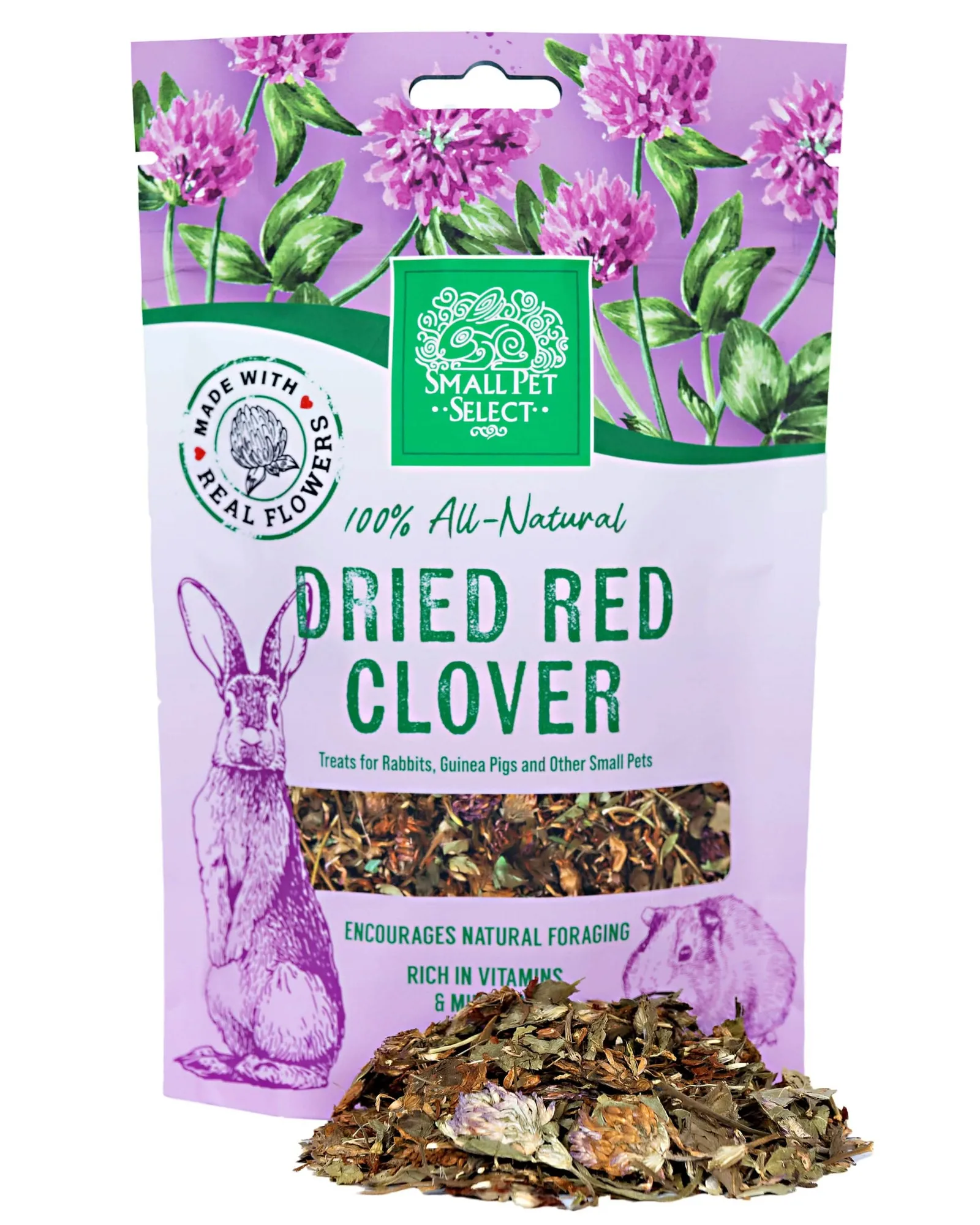
Dried Red Clover