Quick Answer
When choosing a dry senior dog food with chicken and rice, prioritize a recipe that lists meat as the first ingredient, includes joint support like glucosamine and chondroitin, and has reduced fat to match your older dog's lower activity level.
Why Senior Dogs Need Different Nutrition
As dogs age, their metabolism slows and they often become less active. This means they need fewer calories and less fat to avoid weight gain, but they still require high-quality protein to maintain muscle mass and support repair.
Senior formulas often add specific nutrients like glucosamine and chondroitin to support joint health, which becomes increasingly important for older, less active dogs.
The Role of Chicken and Rice in Senior Diets
Chicken is a lean, highly digestible source of protein, which is ideal for senior dogs that may have sensitive stomachs. Rice provides easily digestible carbohydrates for energy without putting extra strain on the digestive system.
When the recipe lists chicken as the first ingredient, it's a sign that the food is protein-forward, which helps maintain muscle tone even as activity levels decline.
Trade-offs to Consider
Some senior dog foods may have significantly reduced fat, which is great for weight management but could be too low for very active seniors. Always monitor your dog's energy levels and body condition when switching to a lower-fat formula.
If your senior dog has specific health conditions like kidney disease or allergies, consult your vet before making a switch, as a general senior formula may not address all medical needs.
Frequently Asked Questions
What should I look for in a dry senior dog food?
Look for a recipe with high-quality protein (meat as the first ingredient), reduced fat to match lower activity, and added joint support like glucosamine and chondroitin. Check the ingredient list to confirm meat is first and the fat content is lower than adult formulas.
Is chicken and rice a good combination for senior dogs?
Yes, chicken provides lean protein and rice offers easily digestible carbohydrates, making it a gentle and nutritious combination for older dogs.
How much should I feed my senior dog?
Feeding amounts depend on your dog's weight, age, and activity level. Start with the feeding guide on the package and adjust as needed to maintain a healthy body condition. Monitor your dog's weight and adjust portions to avoid overfeeding.
When should I switch my dog to senior food?
Most dogs are considered seniors around 7 years old, but this varies by breed and size. Large breeds may age faster, so consult your vet for the best timing. Talk to your vet about when to transition your specific dog to a senior diet.
Product Spotlight
-
Dry Senior Dog Food Rich in Chicken & Rice 1.7kg: This recipe includes more freshly prepared meat ingredients than ever before, with meat as the #1 ingredient, and contains a glucosamine & chondroitin blend to support joint structure and movement. This means your senior dog gets high-quality protein for muscle maintenance plus targeted joint support, all in a dry food that's easy to serve.
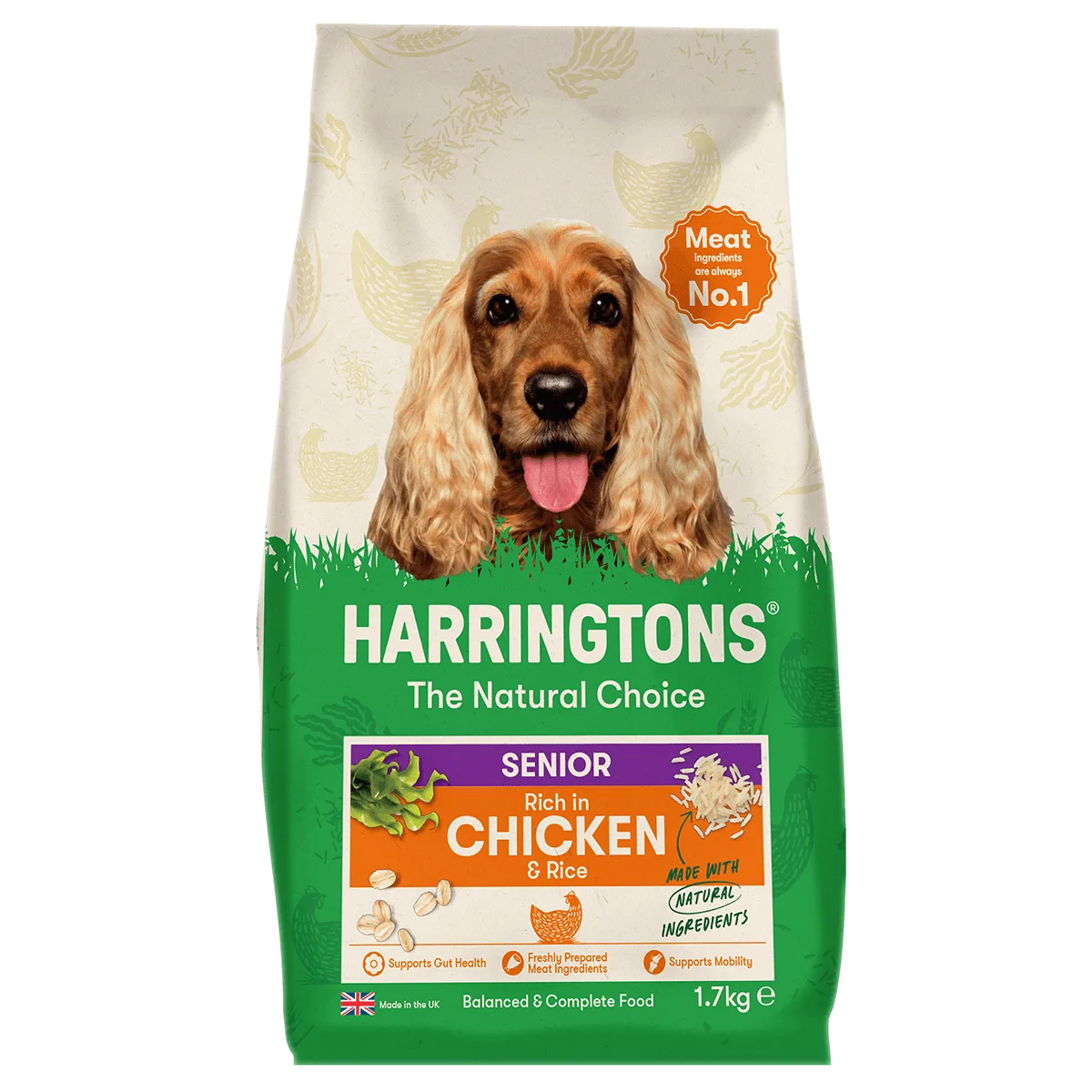
Dry Senior Dog Food Rich in Chicken & Rice 1.7kg