Quick Answer
If you need the most accurate timekeeping with minimal drift, the DS3231 is the best choice, especially for Raspberry Pi projects. For simpler Arduino data logging where cost is key, the DS1307 offers I2C with EEPROM, while the DS1302 is a budget-friendly serial option.
Accuracy and Timekeeping
The DS3231 is based on a high-accuracy IC that includes a temperature-compensated crystal oscillator, which keeps time much more precisely than the DS1307 or DS1302. This makes it ideal for projects where consistent timekeeping matters, such as data loggers or clocks that must not drift noticeably.
The DS1307 and DS1302 rely on external 32.768 kHz crystals, which are more susceptible to temperature changes and can drift over time. For most hobby projects this drift is acceptable, but if you need reliable timekeeping over months, the DS3231 is the safer bet.
Interface and Ease of Wiring
The DS3231 module in our store is designed specifically for Raspberry Pi: it plugs directly into the Pi's IO header using the I2C hardware interface, so you don't need extra wires or soldering. That's a huge convenience for Pi users.
The DS1307 also uses I2C, which is the standard for Arduino and most microcontrollers. The DS1302 uses a serial interface (not I2C), so you'll need a different library and pin wiring, which can be a minor hurdle if you're used to I2C.
Battery Backup and Extra Storage
All three modules support battery backup to keep time when main power is off, but the DS1307 module includes an AT24C32 EEPROM. This gives you extra non-volatile storage for data logging or configuration settings, which can be a distinct advantage in projects that need to store small amounts of data.
The DS3231 also has battery backup, but does not include additional EEPROM on the module. If you need both accurate time and extra storage, you might consider pairing it with a separate EEPROM or using the DS1307 if your accuracy needs are modest.
How to Choose: Trade-offs at a Glance
- DS3231 for accuracy: Choose the DS3231 when you need precise timekeeping with minimal drift, especially for Raspberry Pi or any project where the clock must stay accurate over long periods. If your project logs time-sensitive data, the DS3231 is worth the extra cost.
- DS1307 for I2C + EEPROM: Choose the DS1307 when you want I2C simplicity and also need the on-board EEPROM for storing calibration data or small logs. It's a solid choice for Arduino projects. The EEPROM can save you from adding a separate memory chip.
- DS1302 for budget: Choose the DS1302 when cost is the top priority and you're comfortable with its serial interface. It still keeps time with battery backup, but you'll need a different library and wiring. Check your microcontroller's library support before committing to the DS1302.
Product Comparison Facts
-
DS3231 RTC module for Raspberry Pi: The DS3231 RTC module is based on the high-accuracy DS3231 IC and includes battery backup. It has a header designed to plug directly into the Raspberry Pi's IO header, using I2C without extra wiring or soldering. This means you get a plug-and-play solution for Raspberry Pi with superior timekeeping accuracy, ideal for projects that need reliable timestamps.
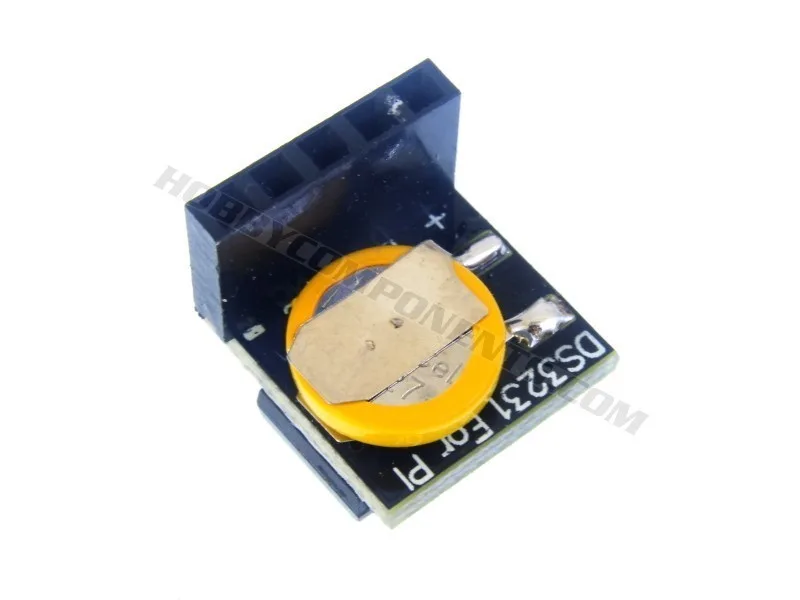
DS3231 RTC module for Raspberry Pi
-
Tiny RTC I2C AT24C32 DS1307 Real Time Clock Module with EEPROM ARM PIC: The Tiny RTC module uses the DS1307 chip, communicates via I2C, and includes an AT24C32 EEPROM for extra non-volatile storage. This combination is great for Arduino data logging projects where you want both timekeeping and a bit of on-board storage, though accuracy is lower than the DS3231.
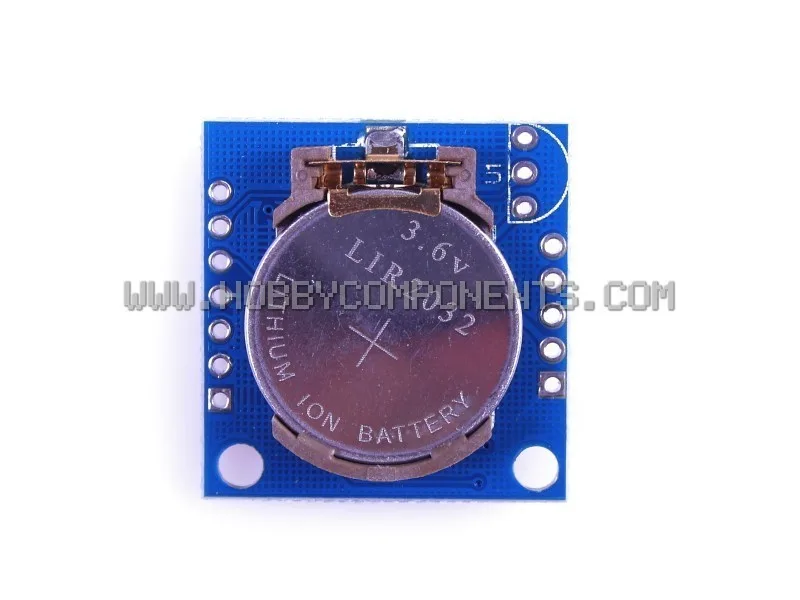
Tiny RTC I2C AT24C32 DS1307 Real Time Clock Module with EEPROM ARM PIC
Which RTC Fits Your Project?
Best for
- Raspberry Pi users who want a no-soldering, accurate RTC that plugs directly into the GPIO header
- Arduino projects that need I2C simplicity plus extra EEPROM storage for data logging
Not for
- Projects that require the absolute lowest cost and can tolerate a serial interface and lower accuracy (choose DS1302 instead)
- Applications that demand extreme long-term accuracy without any drift (the DS3231 is the only one of the three that meets that need)