Quick answer
If your factory or aftermarket system sounds muddy or unbalanced, add a DSP processor first. An amplifier upgrade delivers more volume, but a DSP fixes the core issues of time alignment, equalization, and signal correction that make music sound clear and accurate.
Why DSP First Makes Sense
A digital signal processor (DSP) gives you control over every channel's level, delay, and equalization. That means you can correct poor factory tuning, adjust for speaker placement, and create a proper soundstage. Even with a stock amplifier, a DSP like the Hertz H8 DSP can transform the listening experience by applying 31-band EQ and time alignment to each of its eight channels.
The trade-off is that a DSP alone won't make your system louder. If your current amplifier is underpowered and you need more volume to overcome road noise, an amplifier upgrade might feel more immediately satisfying. But adding power to a poorly tuned system often just makes the flaws louder.
When Amplifier First Is the Better Bet
If your speakers are already distorting at moderate volume levels because the factory amp can't deliver clean power, upgrading the amplifier first is the practical move. A more powerful, higher-quality amplifier gives you headroom and cleaner power delivery, which reduces distortion and improves dynamic range.
The downside is that without a DSP, you're still stuck with whatever time delays and equalization the factory or head unit imposes. You'll get louder, cleaner sound, but the imaging and staging may still be off. Many enthusiasts eventually add a DSP after the amplifier to fine-tune the system.
DSP vs Amplifier: The Trade-Offs
- Choose DSP first if: Your system sounds muddy, unbalanced, or lacks soundstage. A DSP like the Hertz H8 DSP corrects time alignment and equalization, making any amplifier sound better. You can add an amplifier later for more volume once the tuning is dialed in.
- Choose amplifier first if: Your speakers distort at moderate volume because the current amp is underpowered. A cleaner, more powerful amp reduces distortion and gives headroom. Plan to add a DSP later to fix imaging and staging for a complete system.
- Do both at once if: Your budget allows and you want the best results from the start. Pairing a DSP and amplifier together lets you tune the system with full power from day one. This is the most expensive path but avoids rework and component mismatch.
Product facts at a glance
-
Hertz H8 DSP 8 Channel Processor 31 Band EQ Time Align + DRC HE Remote Control: The Hertz H8 DSP is an eight-channel processor with 31-band EQ and time alignment, and includes the DRC HE remote control in the box. This makes it a complete, accessible entry point for adding DSP to a modest system without needing extra purchases.
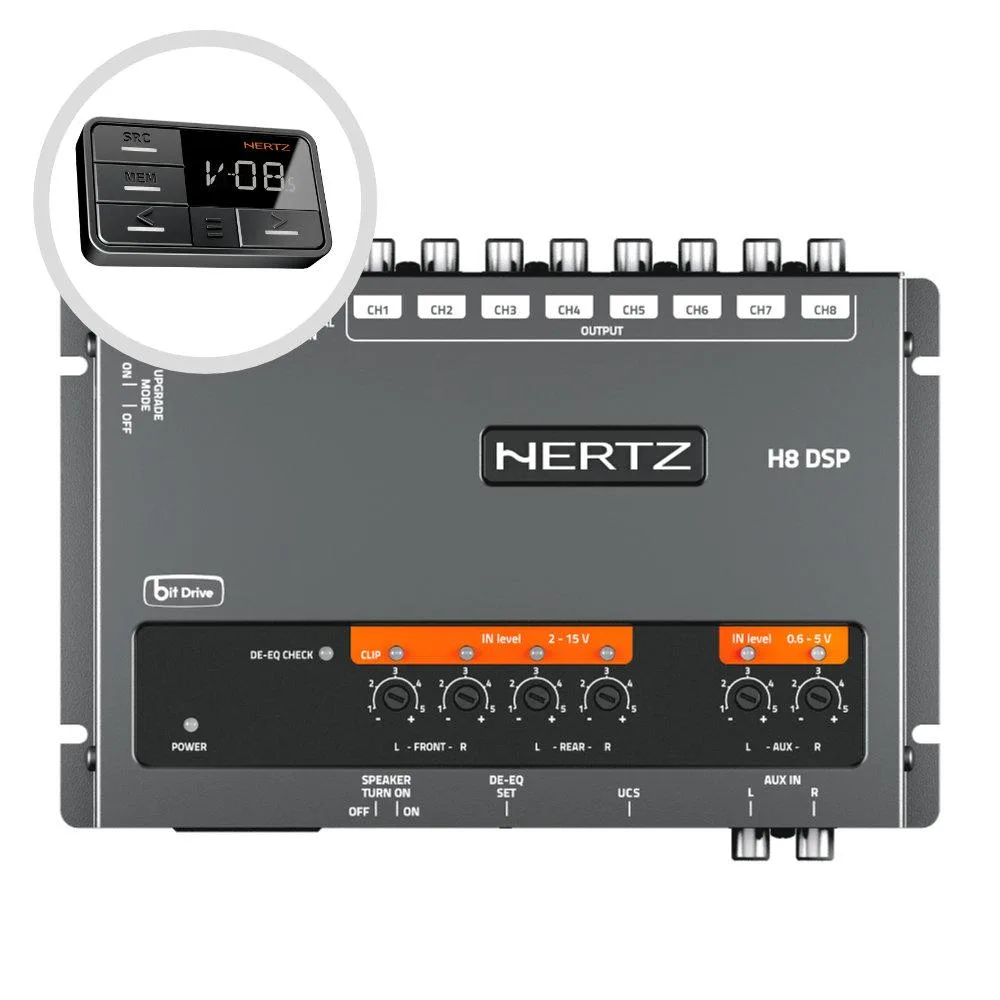
Hertz H8 DSP 8 Channel Processor 31 Band EQ Time Align + DRC HE Remote Control
-
Audison bit One HD Virtuoso 13 Channel Hi Res DSP Processor with DRC MP Remote: The Audison bit One HD Virtuoso features 12 input channels, 13 output channels, and 24-bit/96 kHz floating point processing for high-resolution audio. Its high channel count and processing power suit ambitious OEM integration projects and uncompromising high-end systems that demand maximum flexibility.
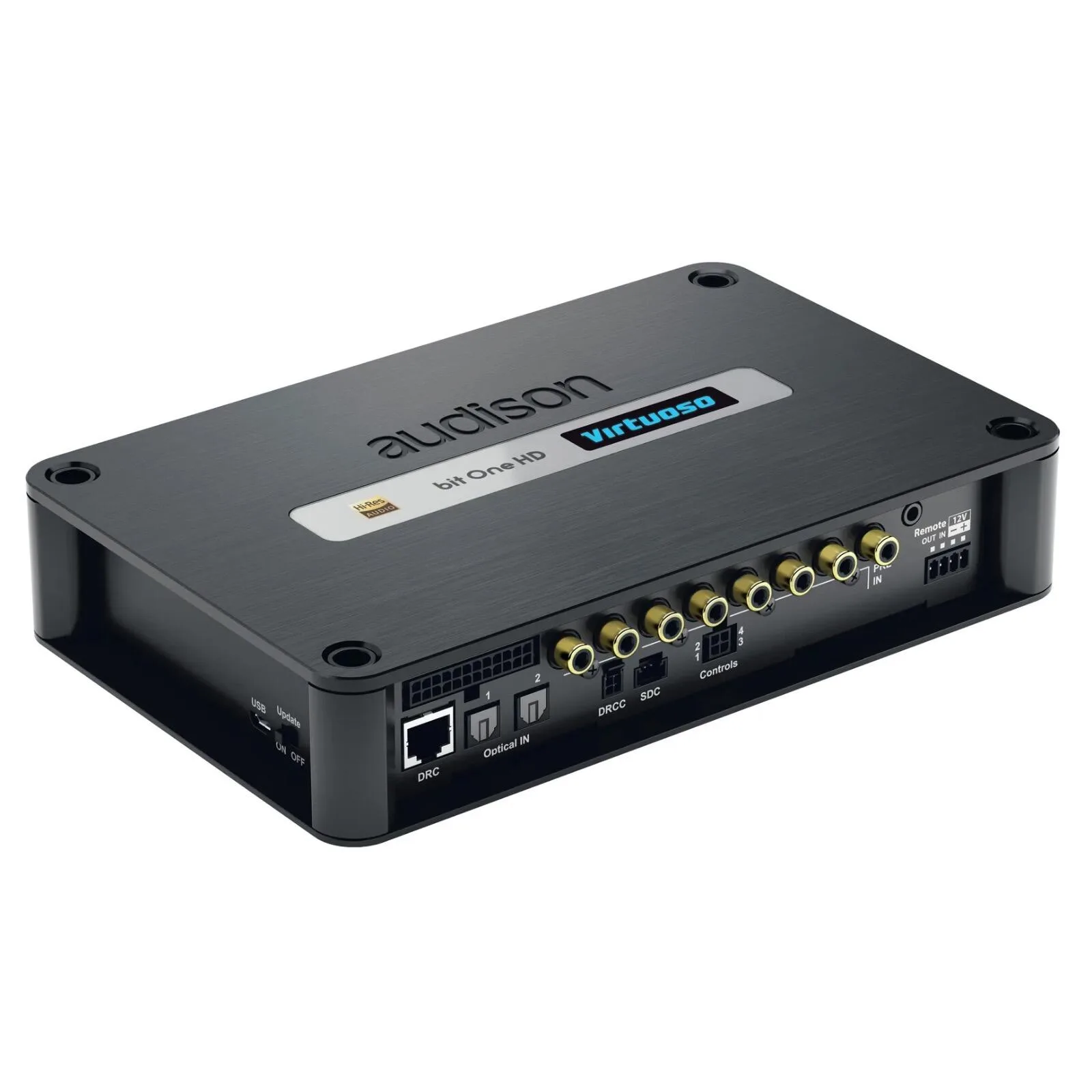
Audison bit One HD Virtuoso 13 Channel Hi Res DSP Processor with DRC MP Remote
Which upgrade fits your situation?
Best for
- Listeners who want clearer, more accurate sound from their existing speakers and amplifier
- Anyone upgrading from a factory system that sounds dull or off-center
Not ideal for
- Systems where the amplifier is already clipping or distorting at low volume
- Drivers who primarily need more volume to overcome road noise or fill a large vehicle