Quick answer
If you need the widest possible field of view from a single camera, the tri-lens PTZ camera covers more area. If you prefer a balance of wide coverage and higher resolution detail, the dual lens PTZ camera is a strong choice.
Why lens count matters for coverage
A PTZ camera's lens count directly affects how much area it can monitor at once. More lenses typically mean a wider combined field of view, but resolution and AI features also play a role in how useful that coverage actually is.
Key differences at a glance
The Defender AI Powered Guard Pro 3K PLUS Dual Lens PTZ camera uses two lenses to deliver a wider field of view compared to a standard single-lens camera. The Defender AI-Powered 3K+ Guard WiFi Tri-Lens PTZ camera adds a third lens for even broader coverage, making it ideal for monitoring large open areas.
Trade-offs at a glance
- Dual lens PTZ: wider than single, but not the widest: The dual lens design gives you a broader view than a standard camera, but it still has a narrower combined field of view than a tri-lens model.
- Tri-lens PTZ: maximum coverage, but at a resolution trade-off: The tri-lens camera covers more area, but each lens captures at 3K+ resolution, so the overall detail per square foot may be lower than a dual lens camera focusing on a smaller area. Consider whether you need to identify faces or license plates across the entire coverage area.
- AI-powered detection on both models: Both cameras use AI-powered detection to reduce false alerts by focusing on relevant motion events, so you won't get overwhelmed by notifications regardless of which lens configuration you choose.
Product facts
-
AI POWERED Guard Pro 3K PLUS Dual Lens PTZ Wi-Fi 6 Plug-in Security Camera, 2 Pack: Dual lens design provides a wider field of view compared to a single-lens camera. This means you can cover more ground with one camera, reducing the number of cameras needed for a given area.
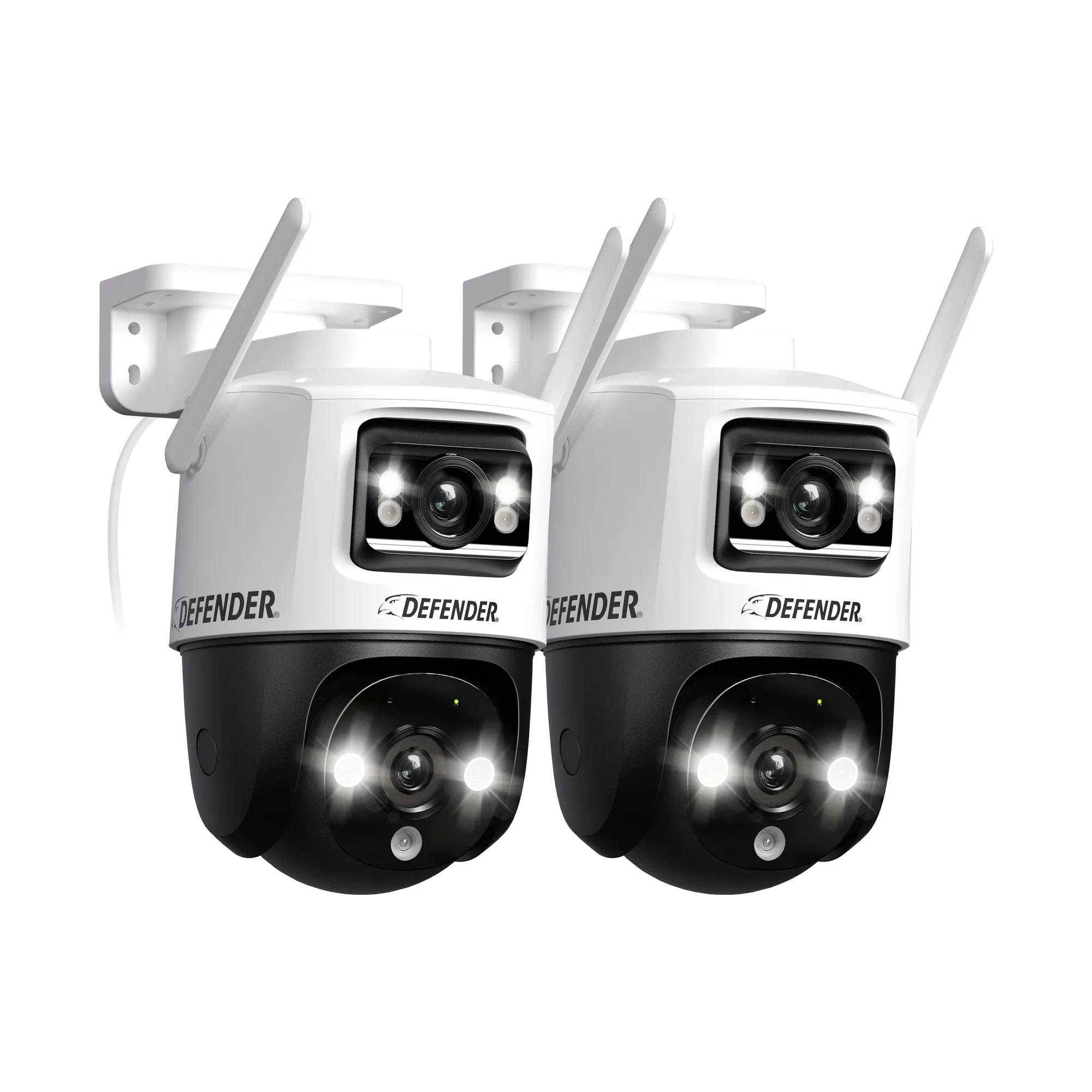
AI POWERED Guard Pro 3K PLUS Dual Lens PTZ Wi-Fi 6 Plug-in Security Camera, 2 Pack
-
AI POWERED 3K+ Guard WIFI Tri-Lens PTZ Security Camera, 2 pc: With three lenses and pan-tilt-zoom capabilities, it offers flexible coverage for key areas. The third lens extends the field of view further, making it better suited for large yards, parking lots, or open perimeters.
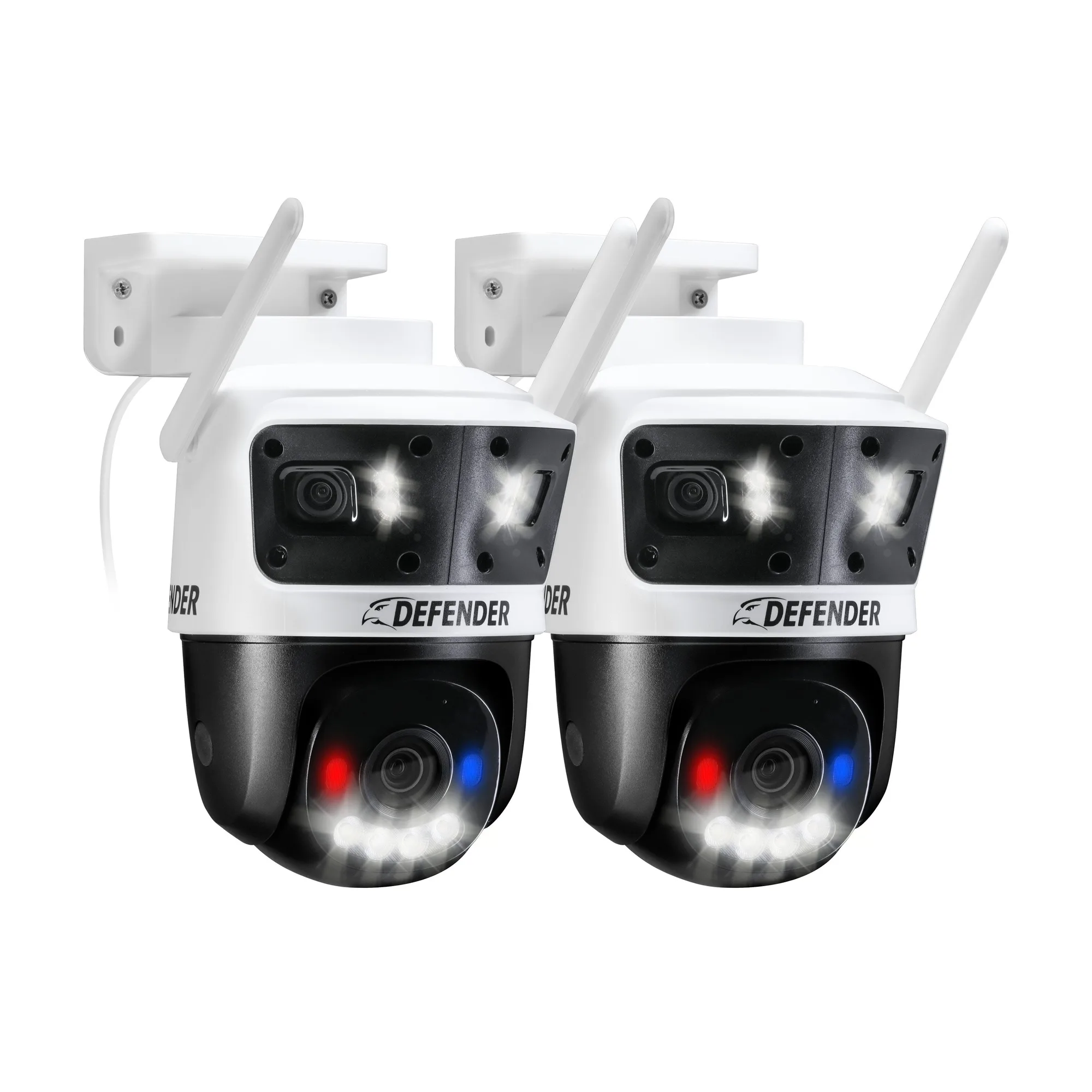
AI POWERED 3K+ Guard WIFI Tri-Lens PTZ Security Camera, 2 pc
Which one fits your setup?
Best for
- Large open areas like yards, parking lots, or perimeters where maximum coverage is the priority
- Users who want to monitor a wide scene with a single camera and don't need extreme detail on every corner
Not ideal for
- Narrow hallways or focused entry points where a single-lens or dual-lens camera with higher per-lens resolution would be more effective
- Situations where you need to read small details (like license plates) across the entire field of view