Thirdway Industries has carved a niche in the playing card world with its avant-garde designs and limited releases. Among its most intriguing series is the Dualism line, which explores the interplay of light and dark, chaos and order. Two standout decks from this series are Dualism Nightfall and Dualism Daybreak. While they share the same conceptual foundation, they offer distinct aesthetics and collecting appeal. In this detailed comparison, we'll break down their differences in design, color palette, symbolism, and overall value to help you decide which deck deserves a spot in your collection.
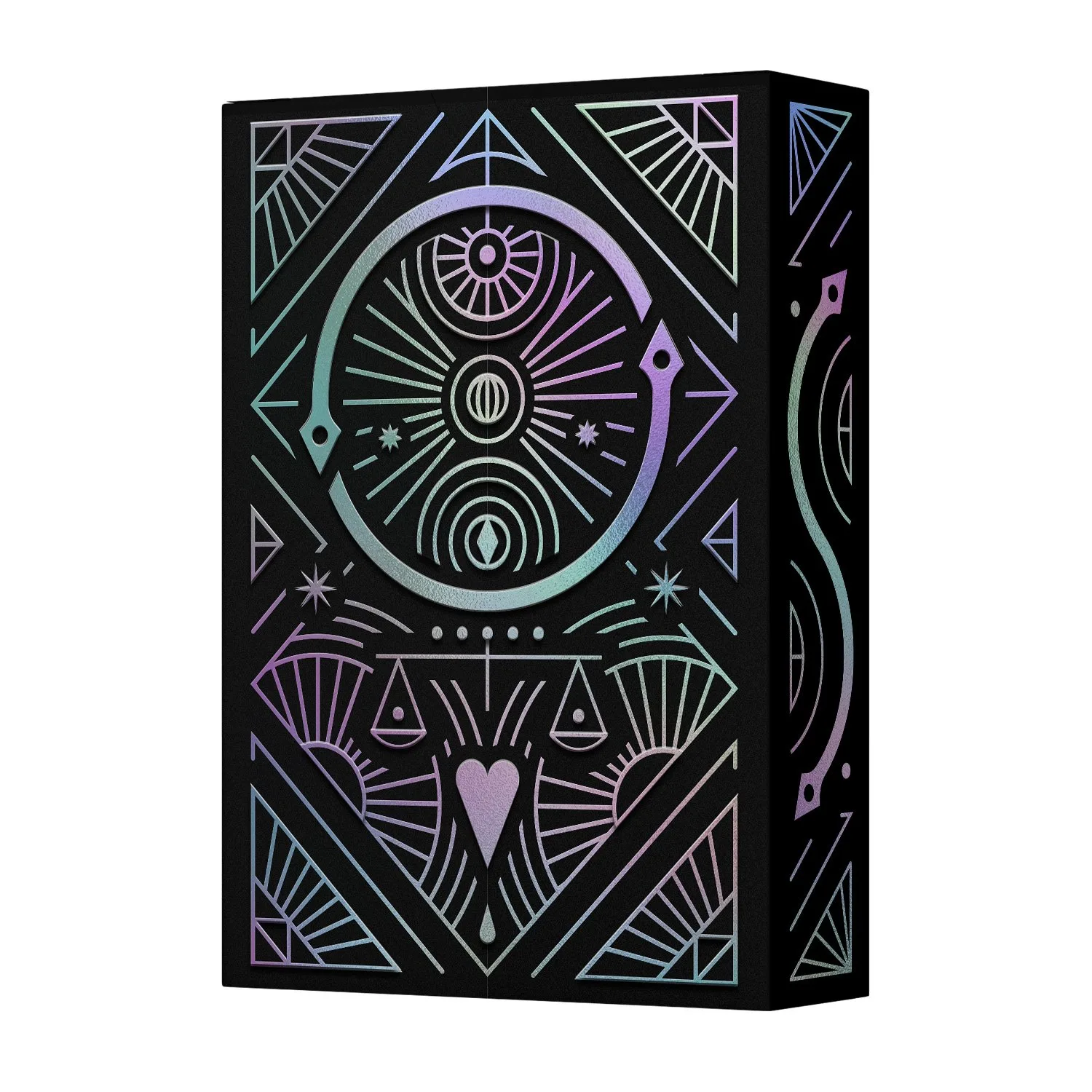
Dualism Nightfall
Whether you're a seasoned collector or a newcomer to the world of luxury playing cards, understanding these nuances can elevate your appreciation. Let's dive into the world of Dualism and see how Nightfall and Daybreak stack up against each other.
Design Philosophy: Light vs Dark
The Dualism series is built on the concept of duality—the eternal struggle between opposing forces. Dualism Nightfall embodies the darker side: deep blacks, midnight blues, and subtle silver accents evoke the mystery of the night. The artwork features celestial motifs intertwined with shadows, creating a sense of depth and intrigue. Each card is a miniature work of art, with intricate linework that rewards close inspection.
In contrast, Dualism Daybreak celebrates the dawn: warm golds, soft creams, and gentle gradients mimic the first light of morning. The designs are airy and optimistic, with sunbursts and ethereal figures that convey hope and renewal. While both decks share a symmetrical layout and elegant typography, the mood could not be more different.
- Nightfall uses a predominantly dark palette with metallic silver foil, while Daybreak opts for light tones with gold foil accents.
- Both decks feature fully custom faces, but Nightfall's are more intricate and shadow-heavy, whereas Daybreak's are cleaner and more radiant.
Color Palette and Finish
Color is the most immediate differentiator. Nightfall's palette is rich and moody: blacks, charcoal greys, and deep purples dominate, with occasional pops of electric blue. The cards are printed with a smooth, matte finish that reduces glare and enhances the dark aesthetic. This finish is ideal for cardistry, as it provides excellent grip without feeling sticky.
Daybreak, on the other hand, uses a brighter palette: ivory, champagne, and soft peach tones create a warm, inviting feel. The finish is slightly glossier, which makes the gold foil pop and adds a luxurious sheen. While both decks are printed on premium stock, the tactile experience differs—Nightfall feels more understated, while Daybreak feels more celebratory.
- Nightfall's matte finish reduces reflections, perfect for low-light cardistry performances.
- Daybreak's glossy finish highlights the gold foil, making it a stunning display piece.
Symbolism and Storytelling
Thirdway Industries is known for embedding rich narratives into its decks. Nightfall tells the story of the waning day, where shadows lengthen and secrets emerge. The court cards depict enigmatic figures cloaked in darkness, their faces partially obscured. The Ace of Spades features a striking crescent moon, reinforcing the nocturnal theme.
Daybreak, conversely, represents the triumph of light over darkness. Courts are depicted as radiant beings, their faces open and joyful. The Ace of Spades showcases a rising sun, symbolizing new beginnings. Collectors who appreciate storytelling will find both decks compelling, but they cater to different moods: Nightfall for introspection, Daybreak for optimism.
- Nightfall's tuck box features a dark, embossed design with silver foil, while Daybreak's is lighter with gold foil and a sun emblem.
- Both decks include a special double-back card, but Nightfall's is black-on-black, while Daybreak's is cream-on-gold.
Collectibility and Rarity
As with most Thirdway Industries releases, both decks are produced in limited quantities, making them sought-after collectibles. Nightfall and Daybreak are part of the same series, but they are often released separately, with different edition sizes. Nightfall typically has a slightly larger print run, making it a bit easier to find, while Daybreak is often the more elusive of the two.
For serious collectors, owning both is ideal to complete the set. However, if you have to choose, consider your personal aesthetic and how the deck will be used. Nightfall's dark elegance appeals to those who favor a gothic or mysterious vibe, while Daybreak's warmth is perfect for those who enjoy a brighter, more uplifting design.
- Check the edition numbers on the tuck box to determine rarity.
- Both decks are part of the Dualism series, which also includes a limited uncut sheet version.
In the end, the choice between Dualism Nightfall and Dualism Daybreak comes down to personal taste. Nightfall offers a brooding, sophisticated aesthetic that captivates with its depth, while Daybreak provides a radiant, hopeful alternative that celebrates light. Whichever you choose, you're adding a masterpiece to your collection. Explore the full Dualism series and other Thirdway Industries creations to find your perfect match.