Quick answer
For most short trips, a travel backpack wins if you will walk, take trains, or climb stairs with your bag on your back. A carry-on duffel wins if you mostly move between cars, taxis, and hotel rooms and want fast, wide-open access to your gear. If your trip mixes both, a backpack with a luggage pass-through, like the SWISSGEAR Stride ScanSmart Laptop Backpack, covers the most ground.
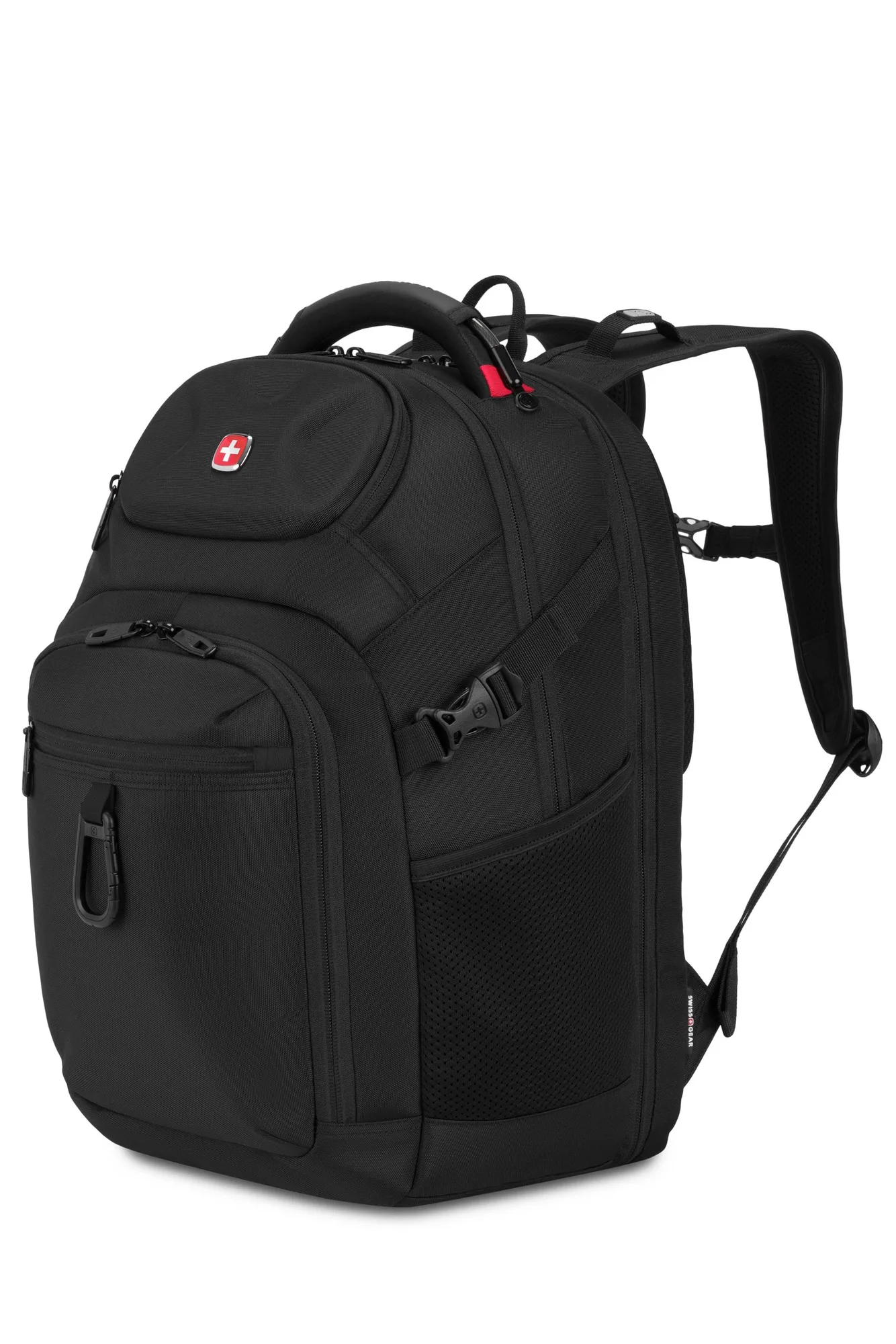
SWISSGEAR Stride ScanSmart Laptop Backpack
A two- or three-day trip rarely needs a checked bag, but it does force a real choice: carry a duffel or carry a backpack. Both fit in an overhead bin, both hold roughly the same amount of clothing, and both can be packed in under 20 minutes. The difference shows up in how you move and how you pack.
This comparison sticks to what actually changes your trip: how the bag rides on your body, how quickly you can reach your things, and how each shape handles a laptop, shoes, and a dopp kit. Two SWISSGEAR options anchor the examples: the SWISSGEAR Stride ScanSmart Laptop Backpack and the SWISSGEAR 1900 ScanSmart Laptop Backpack.
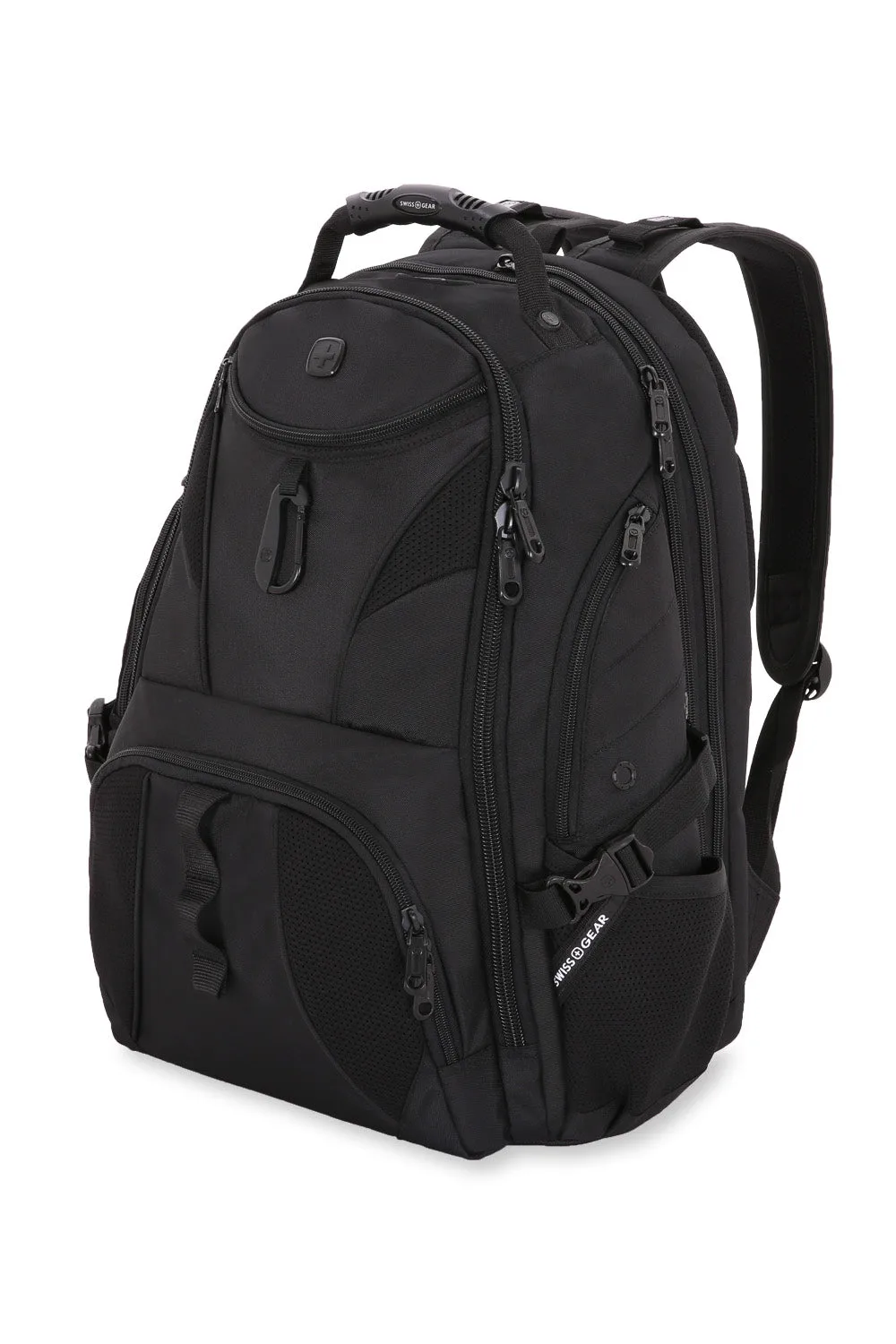
SWISSGEAR 1900 ScanSmart Laptop Backpack
Carry comfort: one shoulder vs two straps
A duffel carries its weight on one shoulder or in one hand, which is fine for a parking lot-to-lobby walk and tiring after 15 minutes. A backpack spreads the same load across both shoulders and your back, so long station walks, stairs, and cobblestones stop being a negotiation. If your short trip includes any real walking, this single difference usually decides the question.
Backpacks also free both hands, which matters when you are holding a coffee, a phone, or a boarding pass. The trade-off is bulk on your back: a loaded backpack can make you warmer and makes you turn your whole body to check a side pocket, while a duffel stays out of your way until you set it down.
- Test a loaded bag for 10 minutes before you commit: shoulder fatigue shows up fast with duffels.
- If you choose a duffel, look for a padded, removable shoulder strap rather than a thin webbing one.
Access and packing: wide mouth vs panel zip
Duffels open wide, often across the full top, so you can see and reach everything without unpacking. That makes them excellent for gym-to-trip use, for bulky items like shoes or a jacket, and for repacking in a hotel room in two minutes. The cost is that a duffel has fewer dedicated pockets, so small items can sink to the bottom unless you use pouches.
Backpacks trade that open bowl for structure: a main compartment plus laptop and tablet sleeves, organizer panels, and exterior pockets. You get a place for everything, but deep compartments mean you sometimes unpack half the bag to find a charger. Packing cubes and a dopp kit solve most of this in either bag.
- Duffel users: pack in two or three cubes so the wide opening stays an advantage, not a pile.
- Backpack users: keep cables and chargers in one exterior pocket you can reach without opening the main zip.
Airport and transit handling
At security, a checkpoint-friendly backpack can be a genuine time saver because the laptop section opens flat without removing the computer. The SWISSGEAR 1900 ScanSmart Laptop Backpack and the SWISSGEAR Stride ScanSmart Laptop Backpack both use this ScanSmart layout, which keeps your electronics cradled while the bag lies open. A duffel has no equivalent; your laptop comes out and goes into a bin.
On a plane, a duffel slides under the seat or into the overhead in one motion, and its soft sides squash to fit tight bins. A structured backpack may need a firm push, and its straps can catch on seat hardware. Neither is a dealbreaker on a two-day trip, but the duffel is simpler when you are boarding last.
- Check your airline's carry-on dimensions before buying; duffels and backpacks vary more than you expect.
- A luggage pass-through sleeve lets a backpack sit on a rolling suitcase, which is the best of both worlds.
Durability and daily use after the trip
The fabric matters more than the format. The SWISSGEAR 1900 ScanSmart Laptop Backpack uses durable 1200D ballistic polyester with rugged oversize zippers, adjustable side compression straps, and a heavily padded back panel with Airflow ventilation. That build is aimed at repeated loading and heavy gear, not just one weekend.
A duffel's weak point is usually the strap attachment and the zipper, not the body fabric. If you plan to use the same bag for the gym, the beach, and short flights, check those two areas first. A backpack that doubles as a daily commuter bag usually earns its price faster than a duffel that only leaves the closet for trips.
- Compression straps on a backpack let you shrink a half-full load so it does not shift.
- On a duffel, look for reinforced stitching where the strap meets the body.
The trade-offs, side by side
- Duffel: fast access, slower walking: Wide top opening and soft sides make packing and unpacking quick, but all the weight sits on one shoulder or one hand. Choose a duffel when your trip is car, taxi, and hotel based.
- Backpack: hands-free comfort, more structure: Two straps and a padded back panel carry the load better over distance, while dedicated laptop and organizer pockets keep gear sorted. Choose a backpack when you will walk, use trains, or bring a laptop.
- Hybrid: backpack with a pass-through: A backpack that slides onto a rolling suitcase handles airport terminals and city streets without forcing you to pick one format. Best all-rounder for mixed short trips.
Two SWISSGEAR options that show the trade-off
- SWISSGEAR Stride ScanSmart Laptop Backpack: Feature-rich everyday backpack with dedicated laptop and tablet pockets, room for cables and adaptors, and a gusseted organizer. If you carry a laptop on short trips, the separate tech pockets and organizer keep work gear from mixing with clothes, and the ScanSmart layout speeds up security.
- SWISSGEAR 1900 ScanSmart Laptop Backpack: Made from durable 1200D ballistic polyester with a large-opening main compartment, rugged oversize zippers, adjustable side compression straps, a heavily padded back panel with Airflow ventilation, and padded contour-shaped shoulder straps. This is the pick when you want backpack comfort for long walks plus a roomy main compartment; the compression straps and ventilated back panel matter most on warm, loaded travel days.
Which should you carry?
Choose a backpack if
- You will walk more than a few minutes with the bag on your back
- You travel with a laptop and want a dedicated, padded pocket
- You use trains, buses, or stairs where both hands need to be free
Choose a duffel instead if
- Your trip is mostly car, taxi, and hotel with short carries
- You want to see and reach everything through one wide opening
- You need a bag that doubles as a gym or beach bag with minimal structure
For short trips, match the bag to how you move, not to how it looks in the store. Walk-heavy itineraries and laptop travel favor a backpack like the SWISSGEAR Stride ScanSmart or the SWISSGEAR 1900 ScanSmart; car-and-hotel trips favor a wide-mouth duffel. If you are still unsure, a backpack with a luggage pass-through covers both cases.